G7 Critical Minerals Alliance Signals De-Risking Escalation from China, Linking Defense, EV, and Tech Vulnerabilities
G7's June 2026 Evian agreement establishes a critical minerals alliance with 60%/50% diversification targets by 2030+, IEA-backed platform, and stockpiling pilots—escalating de-risking from China and highlighting interconnected risks in defense, EVs, and tech supply chains.
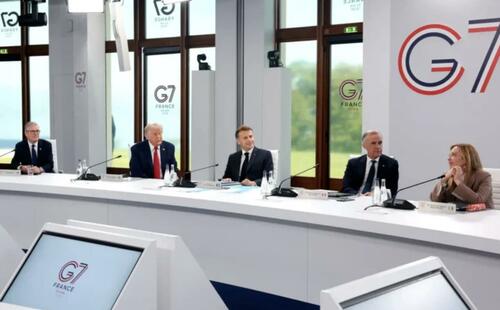
G7 leaders at the June 2026 Evian summit agreed to a coordinated push to slash reliance on any single external supplier—implicitly China—for rare earths and permanent magnets, targeting below 60% by 2030 and 50% longer-term. The plan includes harmonized stockpiling starting with lithium and nickel, a new policy coordination platform with IEA analysis and early warnings, and support for the full supply chain via public finance and private partnerships. Since early 2026, 195 related projects totaling €64 billion have been announced.
This marks an escalation in allied de-risking efforts, as Reuters reported the joint statement emphasizes avoiding over-dependence while expanding domestic capacity, recycling, and joint procurement tools. China currently dominates about 90% of global processed rare earth and magnet production, creating concentrated risks.
These dependencies cut across fragmented policy domains. Rare earth permanent magnets are essential for EV motors, wind turbines, and defense systems including precision-guided munitions, fighter jets, and submarines. Tech supply chains for semiconductors, servers, and consumer electronics also rely heavily on these materials. Recent Chinese export curbs have highlighted these exposures, prompting G7 alignment beyond mining into midstream processing and downstream manufacturing.
Analysts note challenges: diversification requires investment in processing facilities, not just extraction. Benchmark Mineral Intelligence's Neha Mukherjee stressed that policy signals must convert into concrete mid- and downstream funding. Related U.S. proposals for price supports and allied trading mechanisms face internal G7 debates on governance and costs, per industry reports.
Broader context shows this builds on earlier G7 and Quad initiatives, with Canada advancing its Critical Minerals Strategy in tandem. The move reframes critical minerals from commodity issue to core geopolitical and industrial security priority, exposing how raw material chokepoints underpin everything from green energy transitions to military readiness.
Liminal: The G7 platform could accelerate allied supply chain resilience if midstream investments materialize, but persistent China processing dominance may sustain price and availability pressures across EV, defense, and tech sectors through 2030.
Sources (4)
- [1]G7 sets up critical minerals alliance, platform to cut reliance on China(https://www.reuters.com/world/europe/g7-sets-up-critical-minerals-alliance-crisis-platform-2026-06-17/)
- [2]G7 leaders draft plan to reduce dependence on China for critical minerals(https://mezha.net/eng/bukvy/179f475c_g7_leaders_draft/)
- [3]G7 allies, mining industry question U.S. critical minerals plan(https://finance-commerce.com/2026/06/g7-critical-minerals-pricing-plan-concerns/)
- [4]G7 leaders tackle reliance on China for critical minerals(https://whbl.com/2026/06/16/g7-leaders-tackle-reliance-on-china-for-critical-minerals/)