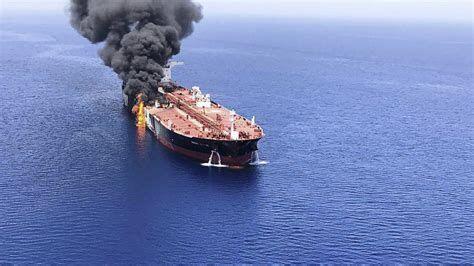
Shipping attacks near Hormuz are at wartime highs as Iran claims mines and the US enforces a blockade at sea
UKMTO and independent counts show wartime-high attacks on shipping near Hormuz, mostly logged as unknown projectiles. Iran says mines; CENTCOM and analysts say that claim is unsupported. The US is still enforcing a blockade, including a November 26 strike that disabled a ship leaving Bandar Abbas, and it struck Qeshm in limited self-defense actions earlier in the month.
Documented: Through late November 2026, attacks on commercial shipping in and around the Strait of Hormuz were running at the highest pace since the US-Iran war began in late February, according to a CNN analysis of reports to the UK Maritime Trade Operations centre. October exceeded 30 reported attacks for the first time in the war; November had at least 22 by November 22, the second-highest monthly total. Independent trackers drawing on Joint Maritime Information Center lists put confirmed merchant-ship attacks in the wider area at 124 between March 1 and November 21, with October the peak month. UKMTO notices typically describe “unknown projectiles,” not a confirmed weapon or attacker. Tankers on outbound transits near Oman’s Khasab have been repeatedly named in those notices, with crews often reported accounted for and damage or pollution left unclear.
Claimed: Iran’s Islamic Revolutionary Guard Corps and state media have said multiple tankers struck naval mines after using routes Tehran calls unauthorized, including incidents it placed near Khasab and on the eastern approaches, sometimes while under what it described as US air cover. Those statements are Iranian claims. They are not the same as UKMTO findings.
Documented counterpoint: CENTCOM has publicly called Iranian sea-mine claims false and said recognized transit routes were clear. Specialists quoted by The National, including Farzin Nadimi of the Washington Institute, said available imagery did not show mine damage and that the mine narrative looked like a pressure campaign. A separate, better-documented tactical shift did occur earlier: the Financial Times reported that in late October a small craft attached explosive devices—described by security firms as limpet mines—to the hull of the tanker Louise 1, the first such attack in the region since 2019, according to those firms and UKMTO.
Documented US actions: Washington has not been silent at sea. On November 26, CENTCOM said a US aircraft hit the stern of the Palau-flagged bulk carrier Pacific Archer in the Gulf of Oman after it left Bandar Abbas and ignored warnings not to run the naval blockade. Propulsion was disabled; the civilian crew was unharmed. CENTCOM said forces had redirected 158 compliant ships and disabled six that refused. On land, limited strikes continued into mid-November: US officials told CNN, the Times of Israel, and USA Today that jets hit targets on Qeshm Island on November 2 and again on November 17, framed as self-defense after Iranian fire at US aircraft or assets, including a reported drone attack on a radar site in Bahrain. USA Today noted President Trump’s stated preference for a limited “status quo” rather than a return to large-scale operations.
What is not established: That recent explosions are a pre-laid minefield doing “patient work,” that Washington has stopped responding in order to protect talks, or that Qatari meetings in Washington were a secret negotiation channel. Those are inferences from open reporting, not confirmed findings. Kpler figures cited in regional coverage do show a real traffic collapse—tanker crossings far below the pre-war pace of roughly 50 a day, and exports through the strait down by about half in late October versus the pre-conflict baseline—so the economic chokepoint is documented even where the weapon used in any single blast is not.
The bracket that matters: projectile strikes on outbound tankers are repeatedly logged by UKMTO; Iranian mine announcements are claims that US Central Command and outside analysts dispute; US blockade enforcement and intermittent defensive strikes on Qeshm are official or officially sourced. The gap between those layers is the story, not a settled Iranian mining campaign or an official American blackout.
Hormuz still moves a large share of seaborne oil, and documented attack rates plus a sharp drop in tanker transits raise costs and risk for shippers, insurers, and importers even when the weapon behind each blast is disputed. Crews on the outbound route near Oman are the people absorbing the immediate danger.
Sources (7)
- [1]Iranian attacks in the Strait of Hormuz are at the highest levels since the conflict began(https://www.cnn.com/2026/11/22/middleeast/hormuz-attacks-highest-levels-iran-war-intl)
- [2]Iran says three tankers hit mines in Hormuz despite U.S. escort(https://www.cnbc.com/2026/11/24/iran-trump-hormuz-crude-.html)
- [3]Iran exaggerates Hormuz sea mine threat but uses fear to tighten grip(https://www.thenationalnews.com/news/mena/2026/11/21/iran-exaggerates-hormuz-sea-mine-threat-but-uses-fear-to-tighten-grip/)
- [4]US military strikes ship in Gulf of Oman, says it tried to breach Iran blockade(https://www.jpost.com/middle-east/iran-news/article-916339)
- [5]US strikes Iran's Qeshm Island after Tehran attacks American radar site in Bahrain(https://www.timesofisrael.com/us-strikes-irans-qeshm-island-after-tehran-attacks-american-radar-site-in-bahrain/)
- [6]US attacks Iran’s Qeshm Island in latest strikes(https://www.usatoday.com/story/news/world/2026/11/17/us-strike-iran-qeshm-island/92831802007/)
- [7]Iran hits Hormuz tanker with limpet mines in apparent tactical shift(https://www.ft.com/content/66ba3e98-26f5-46f1-9af3-5854364b4e9f)