1X's NEO Factory Launch: Humanoid Scaling Accelerates Automation Risks and Technological Inequality
1X Technologies has opened America's first major vertically integrated humanoid robot factory in Hayward, CA, targeting 100,000+ NEO units per year by 2027 for home use. While presented as a leap toward abundance and labor solutions, this development accelerates AI-driven job displacement across service and care sectors, amplifying technological inequality as gains concentrate among investors and prior automation patterns suggest uneven losses for vulnerable workers.
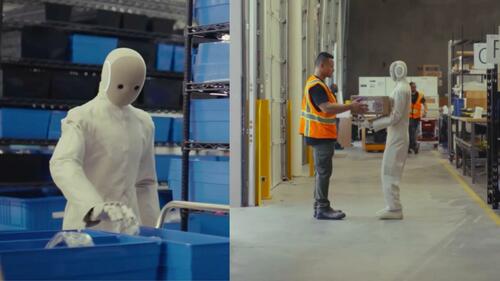
The opening of 1X Technologies' 58,000-square-foot vertically integrated factory in Hayward, California, marks a pivotal acceleration in the humanoid robotics industry. The facility, which has already begun full-scale production of the NEO humanoid, employs over 200 workers and is designed to output 10,000 units in its first year, with ambitious plans to exceed 100,000 robots annually by the end of 2027. NEO units are already assisting within the factory itself on logistics and parts handling, embodying the 'robots building robots' paradigm. The company, backed by OpenAI, emphasizes domestic manufacturing of core components including motors, batteries, sensors, and transmissions to enable rapid iteration and reduce supply chain vulnerabilities. Customer shipments are slated for late 2026, with the $20,000 robot (or $499/month subscription) targeted at home use for tasks like mobility assistance, household chores, and elder care, powered by NVIDIA's Jetson Thor for onboard AI inference and Isaac simulation tools for training.[1][2]
Mainstream coverage from Bloomberg, Interesting Engineering, and USA Today frames this development optimistically: American innovation delivering 'abundance,' solving labor shortages, and bringing safe, general-purpose humanoids into homes. 1X CEO Bernt Børnich and NVIDIA executives highlight reliability, real-time decision-making, and the shift from prototype to mass execution. Yet this narrative glosses over deeper patterns of AI-driven disruption. Past waves of industrial robot adoption have already demonstrated uneven impacts. Brookings Institution research found that each additional robot per 1,000 workers reduced local career progression value by about 1.5% and was linked to lower occupational mobility, concentrated in manufacturing-heavy areas. Studies from the American Economic Association reveal automation narrows gender gaps through disproportionate male job losses in routine roles while widening racial and ethnic disparities, as minority workers are often overrepresented in automatable positions.[3][4]
Humanoids like NEO extend this revolution beyond factories into homes and service sectors. McKinsey Global Institute estimates (widely cited in economic analyses) suggest automation including robotics and AI could displace 400-800 million jobs globally by 2030, with millions needing to switch occupations. Humanoids are poised to target precisely the 'last mile' tasks in caregiving, retail, and domestic work—roles often filled by women, immigrants, and lower-wage workers that have been somewhat insulated from prior automation. Forbes discussions around humanoid deployment explicitly acknowledge fears of sweeping job losses, even as some analysts hope for augmentation akin to how ATMs eventually expanded teller roles. However, the scale envisioned—100,000+ safe, AI-powered units entering American homes by 2027—signals a qualitative leap. BCG notes AI will reshape 50-55% of U.S. jobs in the near term, with full substitution lagging but accelerating as physical AI matures.[5][6]
The vertical integration and NVIDIA partnership at 1X enable precisely the rapid cost reduction and capability iteration needed to make humanoids economically viable at scale, moving them from novelty to ubiquitous labor substitutes. While proponents speak of abundance and addressing demographic labor shortages, heterodox analysis reveals risks of concentrated gains: productivity windfalls flowing primarily to capital owners, tech investors, and corporations, exacerbating inequality. UN and economic reports warn that technological change contributes to wage polarization, precarious work, and widened gaps between labor and capital without deliberate policy intervention such as retraining at unprecedented scale or wealth redistribution mechanisms. The optimistic portrayal in coverage of the Hayward factory rarely confronts these societal risks—the potential for technological unemployment in care economies, suppressed wage demands from the mere threat of replacement, and a future where millions face obsolescence while a technocratic elite captures returns. As NEO rolls off lines using its own kind for assembly, the feedback loop of automation intensifies, demanding scrutiny beyond celebration of engineering milestones.
LIMINAL: 1X's rapid scaling to 100,000 NEO humanoids by 2027 will quietly displace millions from home care, logistics, and service jobs, widening inequality as benefits accrue to tech owners while society grapples with structural unemployment absent radical policy shifts like UBI.
Sources (5)
- [1]Humanoid Maker 1X Opens New US Factory, Plans to Mass-Produce NEO(https://finance.yahoo.com/sectors/technology/articles/humanoid-maker-1x-opens-us-140018266.html)
- [2]US humanoid robot factory to build 100000 NEO units by 2027(https://interestingengineering.com/ai-robotics/1x-humanoid-robot-neo-factory-california)
- [3]NEO humanoid robot company plans to release 100,000 units by late 2027(https://www.usatoday.com/story/tech/2026/05/01/neo-humanoid-robot-company-1x-releasing-100000-units-by-2027/89891813007/)
- [4]Robotization and occupational mobility(https://www.brookings.edu/articles/robotization-and-occupational-mobility/)
- [5]AI Will Reshape More Jobs Than It Replaces(https://www.bcg.com/publications/2026/ai-will-reshape-more-jobs-than-it-replaces)