Ex-NSA consultant tells CNN an AI agent swarm ransomed a client in 14 minutes; independent reports document other AI-assisted intrusions in hours, not weeks
David Kennedy’s CNN account of a 14-minute AI-agent ransomware hit is a single unnamed case without a public forensic report. Separate Unit 42 and FBI reporting already documents AI-assisted intrusions compressing weeks of tradecraft into under 10 hours, and some ARTEX-linked cases reaching privileged access in under three hours.
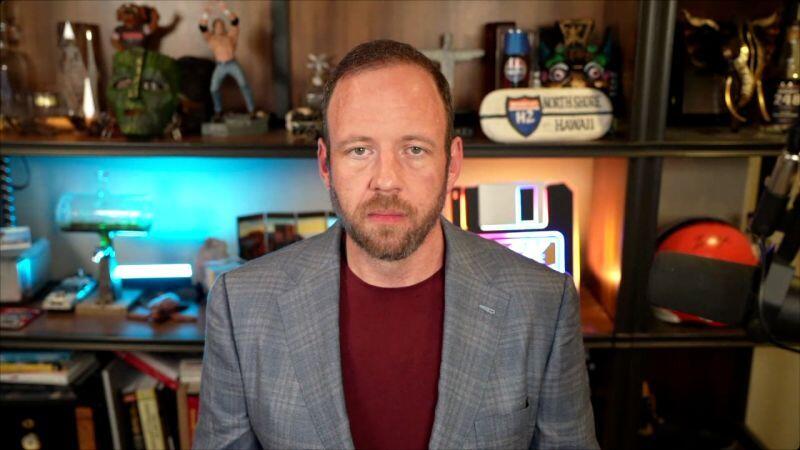
Documented: On or about November 20, 2026, David Kennedy, founder of TrustedSec and a former NSA contractor, told CNN’s Erin Burnett that he was responding to a live incident at an unnamed client. He claimed more than 30 AI agents, using valid stolen credentials, probed the environment at once, found a flaw in how the company implemented two-factor authentication, bypassed that control, exfiltrated data, and encrypted the file system in 14 minutes. He said the victim did not notice until an outage roughly four and a half hours later, by which time the operators were gone. CNN’s OutFront account published the clip; India Today and other outlets repeated the interview. Kennedy later wrote on X that “multiple agents” hitting infrastructure at once is a fair description of what he saw, and that response teams are built for hours or days, not 14 minutes. He did not name the victim, publish logs, or release an incident report. The account remains a single practitioner’s description of one engagement.
Documented, separately: Security vendors and the FBI have already described AI-assisted intrusions that compress work once measured in weeks. On September 2, 2026, Palo Alto Networks Unit 42 published an investigation of a ransom intrusion in which a human operator used frontier models and agentic frameworks. Unit 42 wrote that agents mapped the network, raided source repositories, seized root credentials, and triggered unauthorized CI/CD builds, using more than 50 MITRE ATT&CK techniques in less than 10 hours—work it estimated would take coordinated human red teams about two weeks. The attacker, Unit 42 said, left an roughly 80-page technical report of findings. On November 13, 2026, the FBI issued FLASH-20261113-001 on ARTEX, an open-source autonomous penetration-testing framework released on GitHub in mid-2026 and later abused. The FBI said malicious actors, including in campaigns tracked by Microsoft and CrowdStrike, have used it since at least August 2026, and that some intrusions reached privileged access in under three hours. The Record reported the alert’s core claim: ARTEX can chain intrusion phases “at machine speed.” Google’s November 2026 AI Threat Tracker separately noted Chinese state-linked and criminal actors experimenting with ARTEX and similar multi-agent offensive frameworks. Unit 42 also reported that Chinese-speaking operators used the open-source Cairn framework in August–September 2026 against at least 19 organizations, with confirmed access or data retrieval at 10.
Claimed, not independently verified: Kennedy’s specific figures—30-plus agent types, a 14-minute end-to-end path from login through encryption, and a 4.5-hour detection gap—are his description of one client. No public forensic report, victim disclosure, or second firm has confirmed that incident. He framed the 2FA failure as an application flaw in how the company used the control, not as a break of the cryptographic protocol itself. He also described a familiar criminal division of labor: phishing crews sell credentials to groups that can actually operate inside a network. Whether those operators were fully autonomous or a human directing agent loops is not established in the interview.
Speculated: The phrase “agent swarm” is Kennedy’s analogy, which he has said he did not invent as a formal category. It is not evidence that a new class of fully unsupervised destructive AI has replaced human ransomware crews. What the public record does support is a speed shift: documented AI-assisted cases already move from initial access toward privilege and data theft in hours, while defenders still staff for multi-hour or multi-day response. Kennedy’s 14-minute claim, if accurate, would sit at the extreme of that compression, not outside the pattern Unit 42 and the FBI have already described.
Companies that still assume they have hours to detect a breach are already behind documented AI-assisted cases that reach deep access in a few hours. Kennedy’s 14-minute claim, if it holds, would mean encryption and data theft can finish before a typical on-call team even opens a ticket.
Sources (5)
- [1]An AI-Assisted Cyber Attack: Inside a Unit 42 Investigation(https://unit42.paloaltonetworks.com/ai-assisted-cyber-attack-inside-a-unit-42-investigation/)
- [2]FBI flash alert says Artex tool automating cyberattacks at machine speed(https://therecord.media/fbi-flash-alert-artex-tool-automating-cyberattacks-machine-speed)
- [3]Never seen anything that fast: Ex-NSA hacker says swarm of AI agents breached company systems in 14 minutes(https://www.indiatoday.in/technology/news/story/never-seen-anything-that-fast-ex-nsa-hacker-says-swarm-of-ai-agents-breached-company-systems-in-14-minutes-3042969-2026-11-20)
- [4]Chinese state group developing automated attack tool for cyber espionage, Google says(https://therecord.media/chinese-state-group-developing-automated-attack-tool-espionage)
- [5]Attackers Use Autonomous AI to Target Semiconductor, Defense and Civil Society Sectors(https://unit42.paloaltonetworks.com/cairn-framework-ai-autonomous-attacks/)