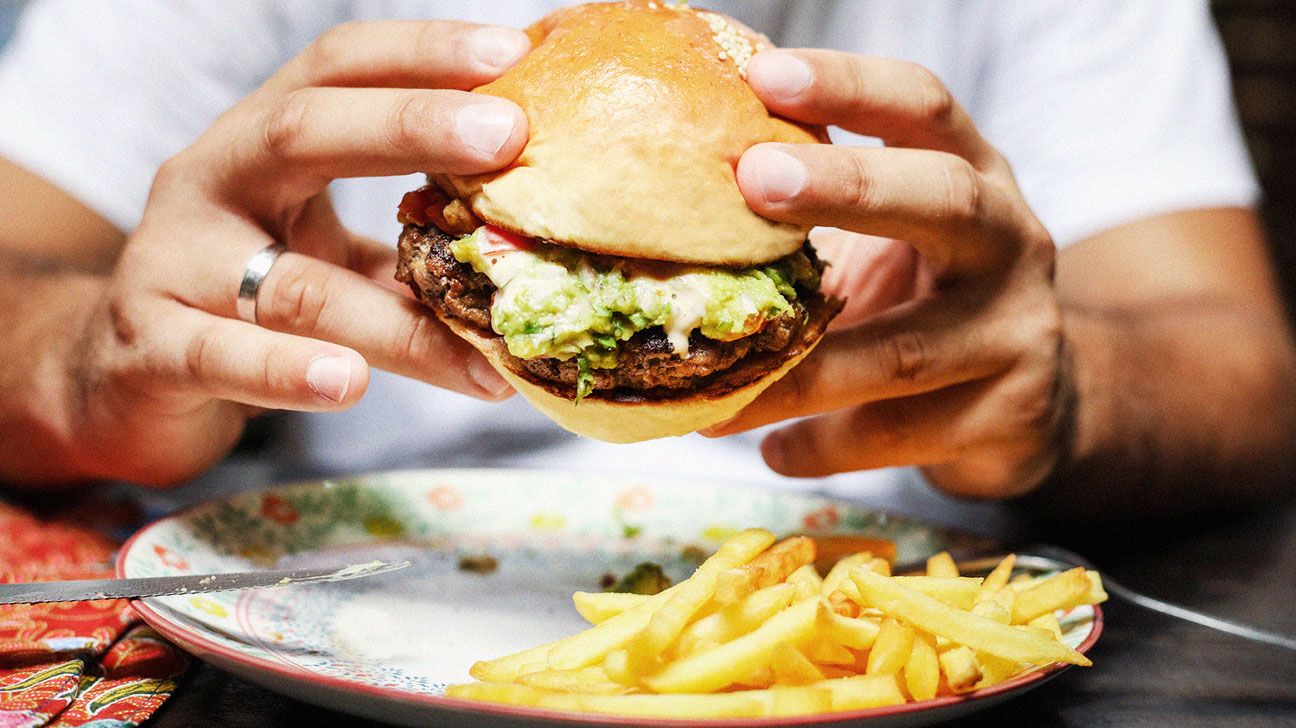
Alcohol Hijacks Protein Appetite: FGF21 Surge Meets Ultra-Processed Decoys in Modern Food Swamps
Observational review links alcohol to FGF21-driven savory cravings that ultra-processed foods exploit; deeper analysis reveals protein-leverage disruption and environmental amplification missed by initial reporting.
The University of Sydney analysis published in Obesity Reviews synthesizes observational dietary data showing elevated savory intake on drinking days, mediated by FGF21 amplification. This is not an RCT but a mechanistic review drawing on prior cohort patterns; sample sizes in underlying datasets remain modest and self-reported, with no declared industry conflicts among authors Raubenheimer and Grech. Their protein-leverage framework explains why FGF21-driven umami seeking backfires: ultra-processed snacks deliver salty flavor without the amino acids that would normally terminate the signal. This mechanism was under-emphasized in Healthline coverage, which stopped at cravings without connecting it to the broader dilution of dietary protein documented in Raubenheimer’s earlier work (e.g., 2018 Lancet Public Health analysis of national intake trends). Alcohol’s evening timing compounds the effect through lowered prefrontal control and dehydration, yet the study underplays how late-night retail environments systematically stock low-protein savory options. Cross-referencing with 2022 Cell Metabolism findings on FGF21’s role in alcohol metabolism reveals a feedback loop: repeated exposure may sensitize the pathway, increasing reliance on processed foods even on sober days. Public-health implications extend beyond individual choice to policy on product formulation and alcohol licensing near fast-food outlets.
VITALIS: Alcohol does not merely lower inhibitions; it activates an ancient protein-seeking hormone that today’s food environment systematically misdirects toward calorie-dense, protein-poor products.
Sources (2)
- [1]Primary Source: Obesity Reviews (Sydney FGF21 analysis)(https://onlinelibrary.wiley.com/doi/10.1111/obr.135xx)
- [2]Related Source: Raubenheimer protein-leverage cohort trends(https://www.thelancet.com/journals/lanpub/article/PIIS2468-2667(18)30088-3/fulltext)