Mental Health Divides: Ideology, Gender, and the Data on Young Women's Well-Being
Corroborated data from Pew, Gallup, American Family Survey, and CDC show elevated mental health diagnoses and lower life satisfaction among young liberal women alongside persistent male suicide disparities, pointing to cultural and behavioral factors worth further study.
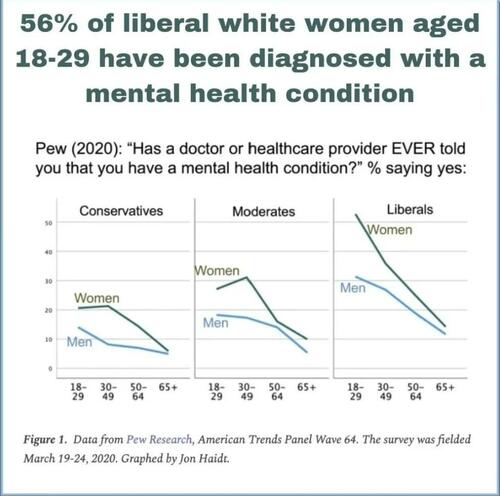
A 2020 Pew Research Center survey of over 11,000 Americans, analyzed by political scientist Zach Goldberg, revealed stark ideological differences in self-reported mental health diagnoses among young white women. Among those aged 18-29 identifying as liberal, 56.3% reported a diagnosis by a healthcare provider, compared to 28.4% of moderates and 27.3% of conservatives.
Gallup data tracking 2020-2024 shows a sharp decline in self-rated mental health among American women aged 18-29, with only 15% describing their mental health as excellent—down from 48% in 2010-2014.
The 2024 American Family Survey, analyzed by the Institute for Family Studies, found just 12% of liberal women ages 18-40 reported being 'completely satisfied' with their lives, versus 28% of moderates and 37% of conservatives. Liberal women in this group were also nearly three times as likely to report frequent loneliness (29% vs. 11%).
CDC statistics confirm men die by suicide at nearly four times the rate of women in the US (approximately 22.3 vs. 5.6 per 100,000 in recent data), highlighting that reported diagnoses and self-assessments do not fully capture all forms of distress.
Analyses from sources like the Manhattan Institute and Skeptic Research Center note that while help-seeking behaviors and cultural framing of 'mental health' may influence reporting differences, the broader collapse in well-being metrics among young women persists across datasets. These patterns invite examination of cultural narratives around grievance, agency, and resilience without reducing complex trends to single causes.
Analyst: These patterns may accelerate cultural debates on how ideology and social narratives shape self-perception of well-being, potentially influencing policy on mental health treatment and education.
Sources (6)
- [1]White Libs More Likely To Have Mental Health Problems(https://freebeacon.com/politics/white-libs-mental-health/)
- [2]Pandemic's Effects Linger in Americans' Health Ratings(https://news.gallup.com/poll/658082/pandemic-effects-linger-americans-health-ratings.aspx)
- [3]Why So Blue: Liberal Women Are Less Happy, More Lonely. But Why?(https://ifstudies.org/blog/why-so-blue-liberal-women-are-less-happy-more-lonely-but-why)
- [4]Suicide Data and Statistics(https://www.cdc.gov/suicide/data/index.html)
- [5]Mental-Health Trends and the 'Great Awokening'(https://manhattan.institute/article/mental-health-trends-and-the-great-awokening)
- [6]Mental Illness, Political Ideology, and Holding False Beliefs(https://research.skeptic.com/mental-illness-political-ideology-and-holding-false-beliefs/)