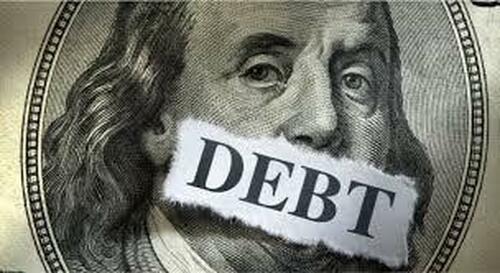
Federal Reserve Policies Fuel Record-Low Consumer Sentiment and Structural Economic Discontent
Consumer sentiment has hit record lows amid high prices and stagnant real wages, directly traceable to Federal Reserve monetary policies that enable government debt, inflation as a regressive tax, and debt bubbles. Mainstream stats understate the pain, revealing a structural driver of public unhappiness rarely framed so explicitly.
Recent data from the University of Michigan’s Surveys of Consumers reveals consumer sentiment plunging to a record low of 44.8 in May 2026, driven primarily by persistent high prices and erosion of purchasing power despite official narratives of a resilient job market. While mainstream commentary often expresses puzzlement at this disconnect, the structural culprit is clear: decades of Federal Reserve monetary expansion, accelerated after the 1971 end of the dollar’s gold convertibility, has removed natural restraints on currency creation. This has enabled sustained price increases that outpace real wage growth for many Americans, as confirmed by Federal Reserve PCE inflation readings hovering near 3.8% annually—well above the Fed’s 2% target—with cumulative effects compounding since the fiat era began.
Broader labor underutilization metrics tell a more sobering story than the headline unemployment rate. The BLS U-6 measure, which includes discouraged workers and part-time employees seeking full-time work, stood at 8.2% in April 2026, signaling hidden slack that alternative analyses suggest is even more pronounced. This contributes to a debt-dependent economy where households have taken on record real levels of auto, credit card, and student loans, echoing conditions preceding the Great Recession according to Federal Reserve data analyses. The central bank’s bond-buying and low-rate policies have simultaneously inflated asset bubbles while functioning as a hidden tax that disproportionately burdens those without access to financial hedges.
Mainstream outlets like The Wall Street Journal have documented this “vibecession,” noting sentiment falling below levels seen in prior crises due to cost-of-living pressures. Federal Reserve officials themselves have acknowledged in speeches that inflation erodes real wages and purchasing power, particularly in the short term when nominal incomes lag. Yet policy responses often favor further fiscal accommodation enabled by monetary easing, perpetuating the cycle. This framework subsidizes the largest government in history—now approaching $40 trillion in debt—through inflation rather than transparent taxation, funding expansive welfare and defense commitments without immediate political accountability.
Connections rarely drawn in conventional coverage include how this monetary regime creates moral hazard for endless deficit spending, distorts price signals, and fosters dependency on credit. With prices several times higher than in 1971, the loss of dollar purchasing power is not abstract; it manifests in widespread frustration that propelled political promises of affordability in recent elections. As debt dynamics intensify, a future dollar crisis appears inevitable, forcing spending cuts or systemic reset. The outcome—toward restored sound money and liberty or escalated authoritarian controls—will hinge on public understanding of these monetary roots of discontent.
[LIMINAL]: Fed-driven inflation and debt monetization are structurally eroding real living standards and public trust, priming a fiscal-monetary crisis that could force either authoritarian consolidation or a liberty-oriented monetary reset within the decade.
Sources (5)
- [1]Surveys of Consumers - University of Michigan(https://www.sca.isr.umich.edu/)
- [2]April’s Consumer Sentiment Is the Lowest on Record(https://www.wsj.com/economy/consumers/aprils-consumer-sentiment-is-the-lowest-on-record-66652d01)
- [3]Inflation (PCE) - Federal Reserve(https://www.federalreserve.gov/economy-at-a-glance-inflation-pce.htm)
- [4]U6 Unemployment Rate - FRED(https://fred.stlouisfed.org/series/U6RATE)
- [5]Recent Inflation and the Dual Mandate - Federal Reserve Speech(https://www.federalreserve.gov/newsevents/speech/jefferson20230227a.htm)