Iran's Ceasefire Declaration Exposes Real-Time Geopolitical Risk Transmission to Oil and Global Markets
Iran's announcement ending military operations against Israel triggered immediate oil price pullbacks and equity futures rebounds, demonstrating the direct, real-time linkage between Middle East military actions, energy supply risks via the Strait of Hormuz, and global market pricing amid the ongoing 2026 conflict.
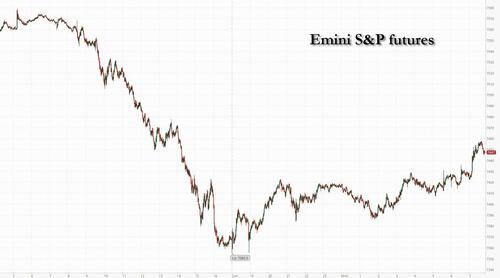
In the early hours of June 8, 2026, Iran’s central military command declared an end to its military operations against Israel following a major overnight escalation, prompting an immediate reversal in global market moves. According to multiple reports, Brent crude, which had spiked as much as 5.4% amid fears of wider conflict, quickly pared gains to around 1.75-2% as risk sentiment improved. US stock futures rebounded, with S&P contracts up 0.7% and Nasdaq 100 up 1.4%, while European equities rose and safe-haven assets like gold and Bitcoin saw mixed but stabilizing flows. This episode illustrates a deeper pattern: Iran-related military developments function as a direct valve on oil prices and correlated asset classes, transmitting geopolitical risk into financial markets with remarkable speed.
The incident occurs against the backdrop of the larger 2026 Iran war that began in February with US-Israeli strikes, resulting in significant disruption to the Strait of Hormuz—through which roughly 20% of global oil and LNG transit. This has already driven Brent prices above $100 and as high as $126 at peaks earlier in the year, according to Britannica and Congressional Research Service analysis. The latest flare-up, involving missile exchanges, temporarily revived fears of renewed closure or attacks on energy infrastructure, lifting oil and pressuring equity sectors exposed to higher energy costs such as travel and technology manufacturing. South Korea’s KOSPI plunged over 8% at open on AI-chip weakness before a trading halt, showing how Middle East tensions now ripple into concentrated tech bets.
Mainstream coverage often frames these moves as transient 'headline risk,' yet the pattern reveals structural vulnerabilities that are repeatedly sanitized. As detailed in IMF analysis from April 2026, even contained conflicts elevate energy prices, complicate central bank decisions on rates, and threaten to push global growth below 3% while lifting inflation. The Guardian, Financial Times, and CNA all reported that Iran’s announcement followed direct appeals from President Trump to de-escalate, with the Islamic Republic warning of harsher responses if Israel resumed operations in Lebanon. This calibrated pause allowed markets to price in reduced immediate supply threat, but it also underscores how energy infrastructure has become a de-facto geopolitical weapon.
Deeper connections emerge when examining the interplay with monetary policy and sector rotation. The original ZeroHedge reporting noted rising Treasury yields and renewed bets on Fed rate hikes amid the uncertainty, a dynamic corroborated by Irish Times and DW coverage showing oil briefly testing $97 before retreating. Energy and fertilizer stocks rose while travel names fell, reflecting classic geopolitical sector shifts. Oxford Economics and Goldman Sachs research emphasize that prolonged Hormuz disruptions could add sustained inflation pressure, erode consumer spending, and disproportionately harm emerging markets and AI-dependent supply chains reliant on stable energy.
What others miss is the predictive power of these micro-escalations: each Iran-Israel flare-up since the February 2026 initiation has produced measurable, near-instantaneous oil spikes followed by relief rallies on de-escalation signals. This real-time risk barometer exposes the fragility of post-2024 market assumptions—whether around AI exuberance or disinflation—far more transparently than delayed macroeconomic data. While the ceasefire brings temporary calm, the underlying pattern suggests investors should treat Middle East military signaling as a leading indicator for energy-driven volatility rather than episodic noise. Sources confirm this transmission mechanism has already reshaped 2026 outlooks at the IMF, with adverse scenarios showing global growth falling to 2% and inflation exceeding 6%.
LIMINAL: Iran's swift declaration of ended operations acts as a real-time pressure release valve on oil and equities, exposing how mainstream 'headline risk' framing sanitizes deeper patterns of energy infrastructure weaponization and persistent Hormuz fragility that can instantly reprice global inflation and Fed expectations.
Sources (5)
- [1]Oil price falls back and markets recovering after Iran announces 'end of military operations' against Israel(https://www.theguardian.com/business/live/2026/jun/08/stock-markets-fall-oil-jumps-middle-east-conflict-ai-boom-falters-live-news-updates)
- [2]Iran announces end of military operations against Israel(https://www.channelnewsasia.com/world/iran-war-israel-attack-trump-stop-shooting-lebanon-6169126)
- [3]Iran and Israel call halt to military operations(https://www.ft.com/content/d97c7243-19a2-49da-9e10-a565a2204bc0)
- [4]2026 Iran war | Explained, United States, Israel, Strait of Hormuz(https://www.britannica.com/event/2026-Iran-war)
- [5]War Darkens Global Economic Outlook and Reshapes Policy Priorities(https://www.imf.org/en/blogs/articles/2026/04/14/war-darkens-global-economic-outlook-and-reshapes-policy-priorities)