Geopolitical Pressures and Refi Decline: Tracing Mortgage Rate Sensitivity to Iran Conflict Through Primary Data
Primary MBA and FHFA data link elevated Treasury yields from Iran tensions to an 18 percent refi drop, with divergent impacts across loan types and limited acknowledgment of independent inflation drivers.
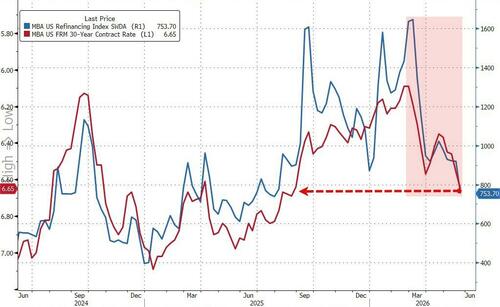
Mortgage Bankers Association weekly application data for the period ending May 22 documents an 18 percent drop in refinancing, with conventional loans falling 14 percent, FHA applications declining 18 percent, and VA applications dropping 34 percent, pushing the refinance share of total applications to 38 percent. Federal Housing Finance Agency March house price index figures show a modest 0.1 percent gain for single-family homes guaranteed by Fannie Mae and Freddie Mac. These primary releases coincide with 10-year Treasury yields reaching 4.66 percent, directly elevating the 30-year fixed mortgage rate to 6.65 percent. The original coverage attributes the move primarily to the Iran conflict that began in late February, yet it understates how the 10-year yield path also reflects accumulated inflation expectations independent of immediate war developments. Multiple perspectives emerge from the data: households holding pre-2023 mortgages face the widest rate gap, while new purchase applicants confront reduced purchasing power as average loan sizes hit $473,600. De-escalation signals between Washington and Tehran could compress yields by 20 basis points, as observed in the most recent week, but sustained inflation readings may anchor the 2-year yield above 4 percent and sustain Federal Reserve restraint. Primary Treasury yield curves and MBA survey breakdowns reveal that VA loan sensitivity exceeds conventional channels, a pattern not fully isolated in secondary reporting. Broader policy implications include uneven wealth effects across veteran and first-time buyer cohorts should headline-driven volatility persist without corresponding CPI moderation.
MERIDIAN: Sustained 10-year yields above 4.5 percent will continue suppressing refi volumes unless Iran-related inflation risks subside, while purchase activity remains constrained by loan-size thresholds in primary application data.
Sources (3)
- [1]Mortgage Bankers Association Weekly Mortgage Applications Survey(https://www.mba.org/news-and-research)
- [2]Federal Housing Finance Agency House Price Index(https://www.fhfa.gov/DataTools/Downloads/Pages/House-Price-Index.aspx)
- [3]U.S. Treasury Daily Yield Curve(https://home.treasury.gov/resource-center/data-chart-center/interest-rates/TextView?type=daily_treasury_yield_curve)