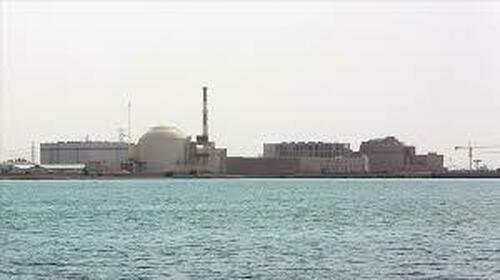
Russia's Nuclear Extraction from Bushehr: De-escalation, Reconfiguration, or Tactical Shield for Iran's Program?
Beyond the logistics of evacuating 175 Rosatom staff from strike-affected Bushehr via Armenia, this signals possible Iranian nuclear reconfiguration under Russian influence, synthesizing TASS, IAEA, and MFA documents while highlighting missed contextual links to JCPOA erosion, Zaporizhzhia precedents, and energy market shifts across multiple stakeholder perspectives.
Russia's evacuation of 175 Rosatom nuclear specialists from Iran's Bushehr Nuclear Power Plant via a lengthy overland route through Armenia, as detailed in the TASS dispatch and amplified by ZeroHedge, represents more than emergency personnel extraction following reported US-Israeli strikes. This operation, executed with buses departing roughly 20 minutes after an impact and facilitated by Armenian authorities at the Norduz-Agarak crossing, fits a pattern of Russian logistical support seen in prior extractions and echoes Moscow's similar requests for localized ceasefires around Ukrainian nuclear sites such as Zaporizhzhia.
Primary documents, including the Russian Foreign Ministry's official acknowledgment thanking Yerevan for expedited procedures and Rosatom Director General Alexey Likhachev's statements confirming partial staff retention with the first power unit remaining operational, reveal a selective drawdown rather than wholesale abandonment. The original coverage correctly notes IAEA Director General Rafael Grossi's call for 'maximum restraint' to avert radiological risks but misses the broader reconfiguration signals: this move occurs against documented IAEA reports (GOV/2024/15 and subsequent quarterly updates) detailing Iran's near-60% uranium enrichment levels and unresolved verification issues at undeclared sites, patterns persisting since the JCPOA's effective collapse in 2018-2019.
What the initial reporting underemphasized is the diplomatic choreography and historical context. Russia has been central to Bushehr since the 1995 contract, delivering fuel and overseeing operations under strict IAEA safeguards for the civilian reactor. Synthesizing the TASS account, Grossi's public statements, and the Russian MFA's October 2024 briefing on consular protections, multiple perspectives emerge. From Moscow's viewpoint, the extraction protects allied personnel while preserving strategic leverage in Iran's civilian nuclear infrastructure amid its own Ukraine commitments. Iranian authorities frame continued partial operations as proof of program resilience. Western assessments, reflected in related U.S. State Department readouts, interpret strikes and this withdrawal as evidence that pressure is degrading Iran's latency capacity, potentially creating space for renewed diplomacy.
Armenia's role as conduit is instructive, illustrating Yerevan's hedging between CSTO obligations, Iranian energy ties, and EU outreach. This event connects to wider energy geopolitics: Bushehr supplies roughly 2% of Iran's electricity; any prolonged disruption could shift Tehran toward greater fossil fuel exports, influencing global oil benchmarks and China's Belt and Road energy corridors. The selective retention of key Russian personnel suggests a hybrid model—reduced footprint to lower escalation risks while maintaining Moscow's foothold, possibly as a backchannel for future multilateral talks.
Patterns from the 2015 JCPOA negotiations, the 2022 Vienna indirect talks, and recent Grossi-mediated technical discussions indicate such extractions can serve as de-escalatory off-ramps. Yet competing views persist: some see this as Iran dispersing talent to hardened underground facilities, others as genuine reconfiguration under Russian patronage to signal restraint to Washington. Primary records show no confirmed full ceasefire at the site, and Israel's stated policy of preventing nuclear thresholds leaves ambiguity. The lasting implications touch global security architectures, NPT credibility, and Eurasian energy flows, underscoring how localized nuclear logistics intersect with great-power realignment.
MERIDIAN: Russia's selective extraction of nuclear scientists from Bushehr via Armenia points to a tactical de-escalation that may allow Iran to reconfigure its program under tighter Russian oversight, lowering near-term radiological risks while reshaping diplomatic and energy leverage across Eurasia.
Sources (3)
- [1]Russia Ferries 175 Russian Nuclear Scientists Out Of Iran Via Land Border With Armenia(https://www.zerohedge.com/geopolitical/russia-ferries-175-russian-nuclear-scientists-out-iran-land-border-armenia)
- [2]Statement by IAEA Director General on the Situation in Iran(https://www.iaea.org/newscenter/pressreleases/statement-by-iaea-director-general-rafael-m-grossi-on-the-situation-in-iran)
- [3]Rosatom Confirms Partial Evacuation from Bushehr NPP(https://www.rosatom.ru/en/press-centre/news/rosatom-statement-on-bushehr-npp-operations/)