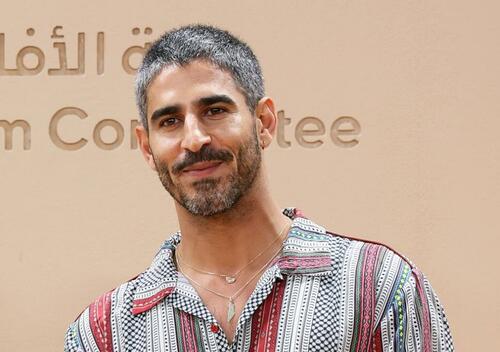
Kuwait's Arrest of Journalist Ahmed Shihab-Eldin Exposes Gulf States' Systematic Suppression of War Realities in US-Iran Conflict
Kuwait's March 2026 detention of dual-national journalist Ahmed Shihab-Eldin for reporting on a confirmed US-Kuwaiti friendly-fire shootdown of three F-15Es during the Iran war reveals systemic Gulf efforts to suppress military embarrassments and local war impacts, a pattern underreported by mainstream media amid broader regional opacity.
The detention of Palestinian-American journalist Ahmed Shihab-Eldin in Kuwait since March 3, 2026, underscores a broader pattern of opacity and information control across Persian Gulf states amid the US-Israel war with Iran, known as Operation Epic Fury. Shihab-Eldin, a Columbia Journalism School graduate with bylines at The New York Times, Al Jazeera, Vice, and HuffPost, was arrested shortly after sharing verified footage of a US F-15E Strike Eagle crashing in al-Jahra, west of Kuwait City, along with commentary on Iran's retaliatory strikes against Kuwaiti targets including Ali Al Salem Air Base, Camp Buehring, and the Mina Al-Ahmadi refinery. According to the Committee to Protect Journalists, he faces vague charges of spreading false information, harming national security, and misusing his mobile phone—standard pretexts for silencing independent reporting in the region.
US Central Command confirmed on March 2 that three F-15E Strike Eagles were shot down over Kuwait in a friendly-fire incident by Kuwaiti air defenses, with all six crew members ejecting safely. Some reports indicate a Kuwaiti F/A-18 Hornet was involved in the air-to-air engagement, highlighting severe coordination failures within the anti-Iran coalition despite Kuwait's longstanding security ties to Washington. This blue-on-blue tragedy occurred amid Iranian attacks that killed US personnel and damaged infrastructure, yet Kuwait has maintained a public posture of neutrality while reportedly serving as a launchpad for strikes, including alleged HIMARS launches into Iran.
Shihab-Eldin's reporting pierced this fiction, much like his documentation of local impacts that Gulf governments have sought to conceal. His case is not isolated: multiple detentions have occurred across the UAE, Saudi Arabia, and Kuwait targeting those sharing videos of blast damage, missile intercepts, or US troop movements. Legacy media has largely overlooked these crackdowns and the friendly-fire episode, focusing instead on Tehran-centric narratives while downplaying coalition frictions and the human costs borne by host nations. This selective silence reveals deeper structural issues—Gulf monarchies' delicate balancing of US alliances against domestic stability and Iranian retaliation fears.
The incident connects to longstanding patterns of suppressed military truths, from unacknowledged civilian tolls in past Gulf conflicts to minimized friendly-fire events that erode operational trust. New draconian security laws in Kuwait, enabling rapid referrals to state security courts, institutionalize this opacity. International calls for Shihab-Eldin's release from CPJ, MENA Rights Group, and outlets like The Guardian and BBC emphasize how such actions chill journalism precisely when public scrutiny of war mechanics is most needed. By turning a credentialed, respected reporter into an example, Kuwait signals that even dual nationals with Western ties are not exempt, potentially deterring deeper investigations into staging roles, misfires, and the true scope of regional entanglement.
This episode illustrates how information warfare now permeates every layer of Middle East conflicts: what cannot be hidden militarily is buried legally and narratively. Legacy outlets' relative disinterest perpetuates the cycle, leaving alternative voices and primary-source footage to fill the void—until they too are detained.
LIMINAL: Kuwait's crackdown on reporting coalition friendly-fire disasters and staging roles will accelerate distrust in official Gulf narratives, empowering decentralized media networks to expose hidden alliance fractures that legacy outlets continue to sidestep.
Sources (5)
- [1]Kuwait Detained Journalist After Comments on Iran War(https://www.nytimes.com/2026/04/15/world/middleeast/kuwait-shihab-eldin-journalist-detained.html)
- [2]Detention of journalist in Kuwait raises questions about freedom of speech(https://www.theguardian.com/world/2026/apr/14/detention-journalist-ahmed-shihab-eldin-kuwait-crackdown-freedom-speech-iran-war)
- [3]US-Kuwaiti journalist detained in Kuwait after social media posts, watchdog says(https://www.bbc.com/news/articles/cx2dd0lz1m2o)
- [4]Three U.S. F-15s Involved in Friendly Fire Incident in Kuwait; Pilots Safe(https://www.centcom.mil/MEDIA/PRESS-RELEASES/Press-Release-View/Article/4418568/three-us-f-15s-involved-in-friendly-fire-incident-in-kuwait-pilots-safe/)
- [5]Journalist Ahmed Shihab-Eldin detained in Kuwait after posting Iran war video(https://www.cnn.com/2026/04/14/media/ahmed-shihab-eldin-kuwait-iran-war-detained)