Housing Stratification: Why Even Upper-Middle-Class Incomes Can't Buy Family Homes in Major Metros, Accelerating Fertility Collapse
Major US metros like San Francisco, San Jose, and New York show extreme cost-per-square-foot metrics making family-sized homes unattainable even for upper-middle-class earners, directly contributing to over half the nation's fertility decline per peer-reviewed research and marking the erosion of the suburban family model.
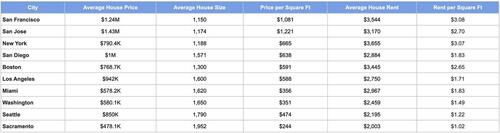
In San Francisco, buyers pay over $1,000 per square foot for homes averaging just 1,100 square feet at $1.24 million, while San Jose exceeds $1,200 per square foot with median prices near $1.4 million. New York City leads in rental costs above $3,600 monthly for notably smaller units. Boston, Los Angeles, and San Diego follow similar patterns of eroded space value, according to 2026 housing analyses. These figures reflect not just absolute prices but a deeper stratification: even households earning $150,000–$250,000—the upper-middle class in tech, finance, and professional services—find family-sized homes (typically 3+ bedrooms with yard space suitable for children) financially prohibitive in coastal innovation hubs without massive trade-offs like dual high incomes, extended commutes, or delayed family formation.
This crisis extends far beyond sticker shock. Rigorous economic research links it directly to America's fertility decline. A University of Toronto study concluded that rising housing costs since 1990 explain roughly 51% of the fertility rate drop between the 2000s and 2010s. Had costs remained stable, an estimated 13 million more children would have been born by 2020. The mechanism is straightforward: expensive space delays first births by 3–4 years, encourages smaller apartments over family homes, and leads professionals to share housing into their 30s. Western states with the steepest housing inflation have recorded some of the sharpest fertility drops.
The phenomenon signals the end of the postwar suburban American dream. That model rested on affordable single-family homes in metropolitan-adjacent areas enabling the normative 2–3 child household. Zoning that reserves ~75% of urban residential land for single-family use, combined with pandemic-era low rates that inflated prices faster than wages, has locked in scarcity. Post-COVID remote work offered temporary escape to lower-cost regions, yet many high-productivity jobs remain tethered to expensive metros where the marginal cost of additional square footage for children has become prohibitive.
Connections others miss include the feedback loop with economic dynamism: cities with the highest wages also impose the harshest family penalties, sorting young adults into childless or one-child trajectories while pushing larger families to lower-opportunity areas. National reports document a 7.2 million unit shortage of affordable rentals for extremely low-income households, but the squeeze now reaches middle and upper-middle strata. Without policy shifts on supply—particularly zoning reform for family-scale units—the result is accelerating demographic contraction, strained entitlement systems, and a cultural pivot away from the independent nuclear-family household that defined 20th-century American prosperity. Incremental 2026 forecasts of modest price stabilization and rate relief offer limited relief in the highest-cost metros where the per-square-foot premium persists.
Demographic Forecaster: Even six-figure households in key metros are opting out of multi-child families due to space costs, locking in long-term population decline and the permanent downsizing of the suburban middle-class ideal.
Sources (5)
- [1]Rising Housing Costs Are Main Driver of Fertility Rate Falling, Study Finds(https://www.realtor.com/news/trends/housing-costs-fertility-rate-falling-study/)
- [2]Families say cost of housing means they'll have fewer or no children(https://www.npr.org/2025/10/31/nx-s1-5551108/housing-costs-birth-rate)
- [3]Housing costs drove the majority of nation’s fertility drop(https://www.pacificresearch.org/housing-costs-drove-the-majority-of-nations-fertility-drop/)
- [4]NLIHC Releases The Gap 2026: A Shortage of Affordable Homes(https://nlihc.org/news/nlihc-releases-gap-2026-shortage-affordable-homes)
- [5]Where homes are most (and least) affordable(https://www.axios.com/2026/01/19/affordable-homes-metro-income)