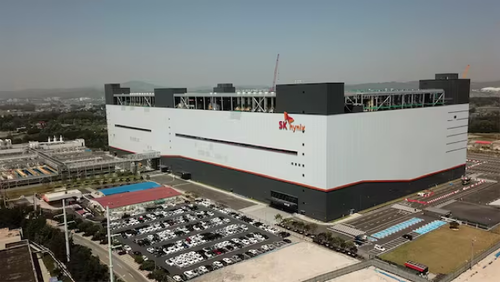
SK Hynix Cheongju Incident Reveals Systemic Fragility in AI-Driven Semiconductor Supply Chains
A toxic gas leak and fire at SK Hynix's key Cheongju plant evacuated thousands and injured several but spared production; viewed through supply chain fragility, it exposes risks from AI-driven tightness, geographic concentration, and recurring chemical hazards with tech and defense implications.
On June 1, 2026, a fire in a sixth-floor gas room at SK Hynix's Cheongju semiconductor complex triggered a leak of toxic hydrogen fluoride (HF), leading to the precautionary evacuation of approximately 3,600 workers and hospitalization of six to seven employees exhibiting symptoms such as eye irritation. The blaze was swiftly suppressed by the facility's automated sprinkler system, and SK Hynix has stated that core production lines for DRAM and high-bandwidth memory (HBM) chips remained unaffected, with workers returning after air quality checks. While mainstream reporting frames this as a contained industrial accident, the event underscores deeper, underappreciated vulnerabilities in global semiconductor supply chains—particularly as AI demand pushes memory markets to extreme tightness. SK Hynix, controlling roughly 32% of the global DRAM market and a leading position in HBM critical for AI accelerators, sits at a critical bottleneck alongside Samsung and Micron, which together dominate over 90% of DRAM production. Recent warnings from both Samsung and SK Hynix indicate that AI-driven shortages of advanced memory could persist into 2027, with customers reserving supplies years in advance and fulfillment rates at historic lows. This incident follows closely on labor threats at Samsung, amplifying concerns over single-point failures in a geography already concentrated in South Korea. Hydrogen fluoride, routinely used in semiconductor etching processes, carries well-documented risks; a 2012 HF release in Gumi, South Korea, demonstrated its potential for severe health impacts including hypocalcemia and respiratory damage. Past chemical safety reports highlight recurring HF exposure incidents in industrial settings, suggesting these are not isolated but symptomatic of inherent hazards in high-precision fabs operating near capacity. The ripple effects extend beyond commercial AI data centers to defense applications, where advanced chips underpin everything from guidance systems to secure communications. Geopolitical tensions in East Asia only heighten the stakes, as disruptions in Korean memory production could cascade into broader tech and military supply constraints—issues often downplayed in coverage that treats each event in isolation rather than as part of a pattern revealing over-reliance on a fragile ecosystem. While no immediate production halt occurred, market sensitivity to such events remains high, as even brief uncertainty can influence DRAM pricing amid the ongoing AI buildout. This latest episode serves as a reminder that the infrastructure powering modern computing and defense is more brittle than surface-level assessments suggest.
[Chain Fracture Analyst]: Minor fab incidents at chokepoints like SK Hynix can amplify price volatility and expose how AI/defense reliance on Korean memory creates cascading global risks far beyond any single event.
Sources (5)
- [1]SK Hynix Cheongju plant fire triggers HF leak(https://www.digitimes.com/news/a20260601PD237/sk-hynix-fire-plant-2026-hospital.html)
- [2]Five dead in Hanwha Aerospace factory fire, SK hynix employees evacuated from nearby plant(https://koreajoongangdaily.joins.com/news/2026-06-01/national/socialAffairs/Five-dead-in-Hanwha-Aerospace-factory-fire-SK-hynix-employees-evacuated-from-nearby-plant/2605994)
- [3]Gas leak at SK Hynix chip factory injures six people, Yonhap reports(https://www.thestar.com.my/business/business-news/2026/06/01/gas-leak-at-sk-hynix-chip-factory-injures-six-people-yonhap-reports/)
- [4]7 taken to hospital after fire breaks out at S. Korean plant of SK hynix(https://www.globaltimes.cn/page/202606/1362465.shtml)
- [5]Samsung and SK hynix warn AI-driven memory shortages could last until 2027(https://www.tomshardware.com/tech-industry/artificial-intelligence/samsung-and-sk-hynix-warn-ai-driven-memory-shortages-could-last-until-2027-and-beyond-as-hbm-demand-explodes-customers-already-reserving-supply-years-ahead-while-the-wider-dram-market-begins-to-tighten)