Cascading Chokepoints: How Hormuz Disruptions Reveal Overlooked Links Between Regional Conflict and Global Plastics Supply Chains
Gulf conflict-induced force majeures on MEG and PTA are transmitting energy shocks into global plastics production, exposing vulnerabilities in consumer and industrial supply chains often overlooked in standard oil-market analysis.
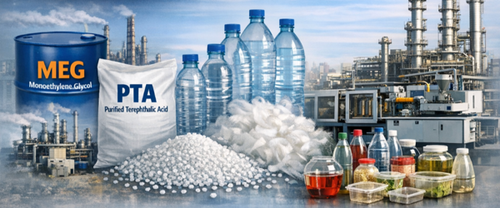
While mainstream oil-price reporting has concentrated on gasoline and energy costs following the recent escalation in the Strait of Hormuz, the wave of force majeure declarations by producers of monoethylene glycol (MEG) and purified terephthalic acid (PTA) illustrates a deeper vulnerability: the integration of geopolitical risk into everyday industrial feedstocks. This dimension, often absent from pure commodity coverage, shows how regional conflicts cascade into consumer goods ranging from PET bottles and packaging to polyester textiles and automotive components.
Synthesizing the primary Bloomberg customer letters referenced in the ZeroHedge report, S&P Global Chemweek documentation of Indorama Ventures' European PET unit force majeures, and JPMorgan's mapping of the shockwave's geographic progression (Asia first, followed by Europe and selective U.S. exposure), a more nuanced picture emerges. SABIC explicitly cited 'unforeseen supply chain disruptions in the Strait of Hormuz' in its MEG and diethylene glycol notices, while Hainan Yisheng Petrochemical flagged similar issues for PTA contracts. These primary notifications reveal not merely price adjustments but temporary halts in contractual obligations whose duration 'cannot be reasonably determined.'
The original coverage correctly identifies immediate spot price surges in ethylene, methanol, and polymer-grade propylene, yet understates historical patterns and structural alternatives. Similar disruptions occurred during the 2019 tanker incidents in the same waterway and the 2022 post-COVID petrochemical volatility, where inventory buffers and diversion to U.S. Gulf Coast capacity partially mitigated Asian shortfalls. What coverage missed is the differential impact: China's dominance in plastics production and consumption (per OECD 2023 statistical data on global material flows) places its manufacturing sector at higher risk than North American counterparts with greater ethane-based cracker flexibility.
Multiple perspectives exist on resolution pathways. Industry executives such as Dow CEO Jim Fitterling project up to nine months for normalization, emphasizing just-in-time supply chain fragility. Trade analysts note potential acceleration of diversification toward non-Gulf sources, while some policy voices in Taipei and Beijing have already signaled capacity expansions in ethylene output. Conversely, downstream manufacturers warn of compounded inflation on low-margin goods like food packaging and apparel, with EGC Consulting highlighting near-term effects on snacks and protein products. Environmental analysts separately argue this could inadvertently spotlight over-reliance on virgin petrochemicals, though substitution remains limited in the short term.
This episode fits a recurring pattern whereby control of maritime chokepoints amplifies second- and third-order effects far beyond headline energy prices, underscoring the need for supply chain mapping that extends past crude benchmarks to derivative chemicals essential to modern economies.
MERIDIAN: Prolonged Hormuz restrictions will likely accelerate corporate efforts to diversify petrochemical feedstocks away from Gulf sources, though full supply chain reconfiguration could take 18-36 months and raise baseline costs for plastics-dependent industries.
Sources (3)
- [1]Gulf Energy Shock Spreads To Global Plastics As War Sparks Force Majeure Wave(https://www.zerohedge.com/commodities/gulf-energy-shock-spreads-global-plastics-war-spark-force-majeure-wave)
- [2]Oriental Union Chemical, Hainan Yisheng and SABIC Force Majeure Notices(https://www.bloomberg.com/news/articles/2026-03-10/meg-producers-issue-force-majeure-on-hormuz-disruptions)
- [3]Middle East Tensions Impact on Asian Petrochemical Markets(https://www.spglobal.com/commodityinsights/en/research-analysis/mideast-conflict-petchem-supply-march-2026)