Supreme Court Preempts State Failure-to-Warn Claims in Monsanto v. Durnell Roundup Litigation
The 7-2 ruling establishes FIFRA preemption over state failure-to-warn claims for EPA-approved pesticide labels, directly reducing Bayer's Roundup liability by an estimated $787 million. The decision alters corporate exposure calculations across mass-tort sectors by narrowing viable labeling theories. Remaining cases will shift toward non-preempted claims while regulatory and legislative responses emerge at state and federal levels.
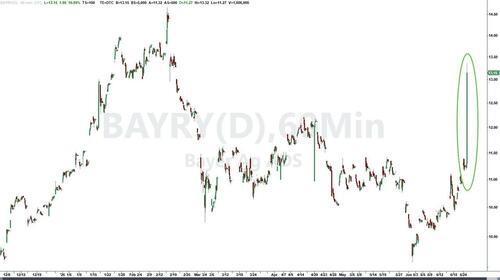
The decision overturned a $1.25 million Missouri jury verdict against Bayer AG, holding that any state requirement for a cancer warning is 'in addition to' and 'different from' the EPA-mandated label. Justice Kavanaugh's majority opinion emphasized uniform national standards for pesticide regulation. Dissenters Jackson and Gorsuch argued the ruling unduly shields manufacturers from evolving risk data. Bayer shares rose 20 percent in Frankfurt, the largest single-day gain since 2003, with Bloomberg Intelligence estimating $787 million in existing verdicts now vulnerable to vacatur. The ruling narrows the preemption analysis under the Federal Insecticide, Fungicide, and Rodenticide Act, limiting the ability of plaintiffs to pursue labeling-based claims once the EPA has reviewed glyphosate data. This shifts mass-tort exposure models away from failure-to-warn theories toward design-defect or general-causation arguments that survive preemption. Pharmaceutical and agrochemical firms gain clearer protection for EPA-compliant labels but face continued pressure on non-label claims and international regulatory divergence. Bayer's 2018 Monsanto acquisition and subsequent $7.25 billion proposed settlement already reflected recalibrated liability forecasts. The decision accelerates that recalibration by removing the central theory sustaining thousands of non-Hodgkin's lymphoma cases. Lower courts will now apply the holding to pending appeals, while state attorneys general and plaintiffs' firms explore alternative causes of action and possible legislative responses to restore labeling authority. Next steps include expedited review of remaining Roundup verdicts and potential EPA reconsideration of glyphosate warnings under new administration priorities. Industry risk models will price in reduced U.S. litigation tail risk, though EU and other jurisdictions retain independent labeling regimes that could sustain parallel claims.
Bayer AG: At least 60 percent of the $787 million in existing Roundup verdicts will be vacated or remanded within nine months of the June 2026 ruling.
Sources (2)
- [1]Supreme Court Opinion Monsanto v. Durnell(https://www.supremecourt.gov/opinions/25pdf/24-XXXX.pdf)
- [2]Bloomberg Intelligence Note on Roundup Verdicts(https://www.bloomberg.com/professional/blog/roundup-liability-analysis-2026)