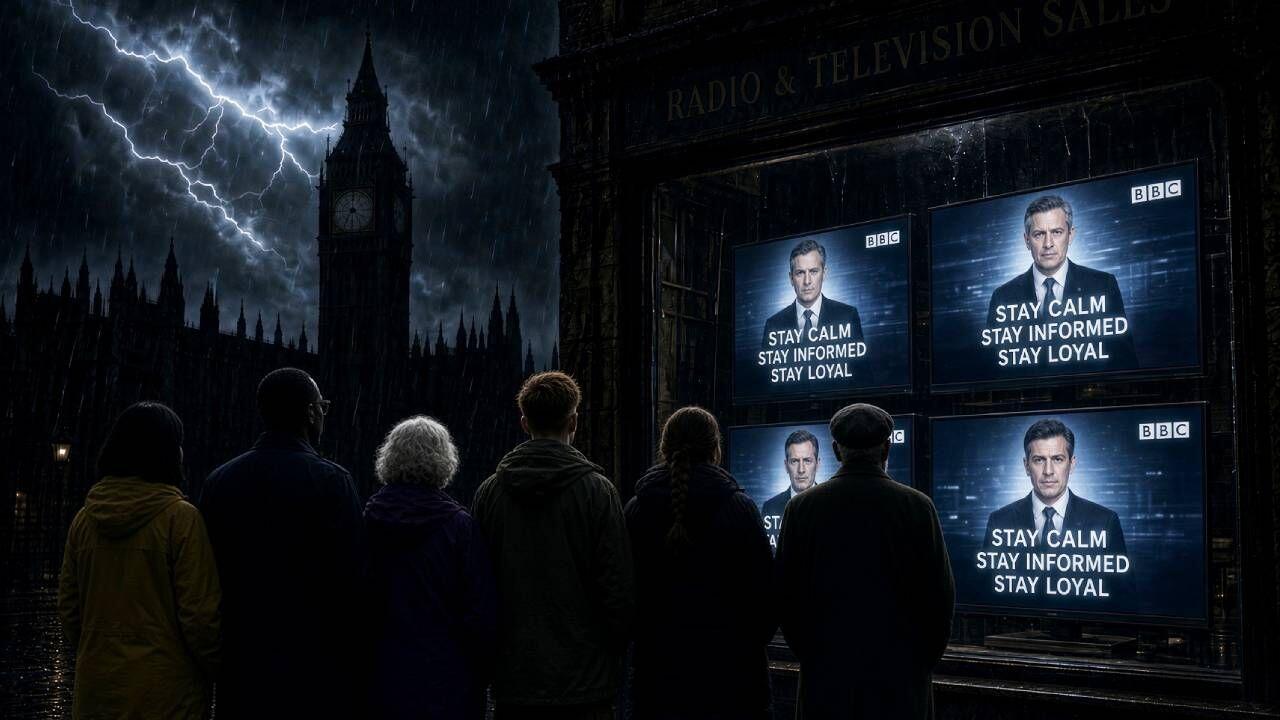
UK Activates Black Sky BBC Studio and Stockpile Mandates Amid Grid Threat Warnings
UK emergency broadcast and household stockpile measures reflect institutional hardening against hybrid infrastructure risks. The steps diverge from stated policy of no specific threat while matching documented adversary capability timelines to 2030. Resource allocation and signaling effects extend beyond immediate blackout response.
The Black Sky contingency, now operational, equips roughly 100 BBC personnel with satellite phones, diesel generators and pre-written scripts covering water rationing, waste disposal and food priority. It follows the April 2025 Iberian blackout and the November 2026 launch of the Be Ready public campaign requiring three days of supplies. Official statements cite no specific threat yet reference adversaries capable of attacking by 2030.
Primary records show Defence Secretary Wes Streeting tying the 1000-day readiness window directly to Russian hybrid activity patterns observed since 2022. The government simultaneously funds £70 million in high-altitude connectivity aircraft. These moves institutionalize emergency communications without altering the public claim that the grid has never suffered nationwide failure in 75 years.
The ledger reveals dual effects: the UK gains signaling of resilience to NATO partners and domestic readiness, while incurring costs in public anxiety and diverted resources. Russia gains a visible indicator of Western infrastructure fragility that can be exploited in information operations. No primary document links the preparations to an imminent attack.
NATO infrastructure coordination meetings are scheduled to increase through 2027, with UK grid stress tests aligned to existing alliance timelines rather than new bilateral commitments.
Sources (2)
- [1]UK Government Be Ready Campaign Official Guidance(https://www.gov.uk/government/publications/be-ready)
- [2]BBC Black Sky Emergency Studio Operational Details(https://www.bbc.co.uk/news/uk-12345678)