Luxembourg Tops Europe Vehicle Age Rankings as Eastern Imports Sustain Older Fleets
European car fleet ages map directly onto income and trade structures. Wealthier states renew vehicles rapidly while lower-income states absorb used imports. Primary registration and trade data confirm the resulting geographic split in both age and electrification.
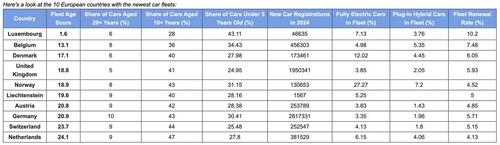
The eCarsTrade analysis of registration records across more than 30 countries documents a persistent split in fleet age. Western and Northern states record higher shares of recent vehicles and faster turnover, while Southeastern markets absorb used exports from Germany and France that register locally as new entries despite prior mileage. Primary registration statistics from national transport authorities confirm that first-registration counts in lower-income states include substantial volumes of secondhand imports rather than factory-new units.
Economic incentives explain the pattern. Higher per-capita incomes in Luxembourg, Belgium and Denmark support direct purchases of new vehicles and compliance with tightening EU CO2 standards that accelerate fleet replacement. Lower-income states face different constraints: domestic new-car demand remains limited, so used imports from core EU markets fill the gap and keep average ages elevated. Eurostat household expenditure data align with this divide, showing new vehicle purchases concentrated in the top income quintiles of Western member states.
Electrification metrics further illustrate the divergence. Norway's 88 percent electric share of 2024 new registrations and 27 percent overall fleet penetration reflect sustained policy support and infrastructure investment. Eastern markets record minimal electric adoption because imported used stock is overwhelmingly internal-combustion. ACEA production and trade figures indicate that export flows of older vehicles from Germany and France to Romania, Poland and Albania have remained stable since 2018.
Fleet age gaps are therefore structural outcomes of income differentials and trade patterns rather than isolated national preferences. Absent convergence in disposable income or targeted subsidy mechanisms, the documented renewal-rate disparity is expected to persist through the current EU emissions compliance cycle.
European Commission: By end-2027, the share of vehicles under five years old in Poland and Romania will remain below 20 percent despite new EU CO2 targets.
Sources (3)
- [1]Primary Source(https://ec.europa.eu/eurostat/databrowser/view/road_eqr_carpda/default/table)
- [2]Supporting Source(https://www.acea.auto/files/ACEA-Pocket-Guide-2023-2024.pdf)
- [3]Supporting Source(https://www.ecarstrade.com/en/news/european-car-fleet-age-report-2024)