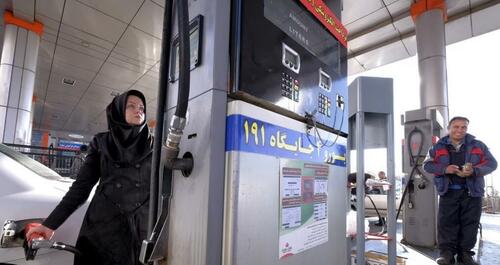
Iran Signals Gasoline Price Hike Amid Sanctions Pressure and Wartime Shortages
Pezeshkian acknowledges sanctions' economic toll on Iran, proposes doubling third-tier gas prices amid shortages blamed on U.S. actions and war; corroborated by multiple outlets linking it to broader fiscal and geopolitical strains.
Iranian President Masoud Pezeshkian has made a notable admission that U.S. sanctions are exerting real pressure on the economy, stating in a state TV interview that "some say sanctions have no effect at all; to those people, I really don’t know what to say. We are in a war situation, and we must accept these wartime conditions." This marks a shift from his earlier stance that recent sanctions "will not achieve anything."
The comments come amid reports of lengthening lines at gas stations and a daily gasoline deficit of 14-15 million liters, driven by wartime damage to infrastructure, a U.S. naval blockade limiting imports, and surging demand. Pezeshkian proposed raising the price of the third-tier gasoline quota from 5,000 tomans to 10,000 tomans per liter—a 100% increase—to curb consumption and address falling trade volumes of 25-35%.
U.S. Treasury Secretary Scott Bessent has outlined an aggressive "Economic D-Day" or "Operation Economic Outcast" campaign, expanding secondary sanctions on entities aiding Iran and targeting sectors like shipping, aviation, and finance. This builds on existing measures and follows months of conflict involving U.S. and Israeli actions.
The subsidy system, which keeps fuel among the world's cheapest, is straining government finances amid high inflation (nearly 90%) and a plunging rial. Officials, including Vice President Mohammad Jafar Ghaempanah, have cited the blockade as a key barrier to imports, while alternatives like rationing or quota adjustments are under consideration to prevent further unrest—echoing past protests over price changes.
These pressures highlight how sanctions and conflict ripple into daily life, potentially affecting regional stability through economic discontent and supply disruptions.
Financial Times: Heightened domestic economic hardship from fuel adjustments could amplify internal pressures on the Iranian government, influencing negotiations or stability in the broader region amid sustained external sanctions.
Sources (6)
- [1]Iran's president admits sanctions impacting economy(https://www.anews.com.tr/world/2026/08/29/irans-president-admits-sanctions-impacting-economy)
- [2]Pezeshkian: Iran will raise gasoline prices(https://shafaq.com/en/Middle-East/Pezeshkian-Iran-will-raise-gasoline-prices)
- [3]Pezeshkian’s Deputy Signals Fuel Price Hikes Amid Shortages(https://iranwire.com/en/news/156847-pezeshkians-deputy-signals-fuel-price-hikes-amid-shortages/)
- [4]Iran’s government signals fuel price hike on eve of new US sanctions(https://www.aljazeera.com/economy/2026/8/23/iran-government-signals-fuel-price-hike-on-eve-of-new-us-sanctions)
- [5]Iranians queue for petrol as US blockade bites(https://www.ft.com/content/e08d7f0e-f9fb-45a4-a1ef-025a75a5b776)
- [6]Did Iran President Masoud Pezeshkian admit that US sanctions affecting Tehran's economy?(https://www.wionews.com/world/did-iran-president-masoud-pezeshkian-admit-that-us-sanctions-affecting-tehran-s-economy-here-s-what-he-said-1788003944885)