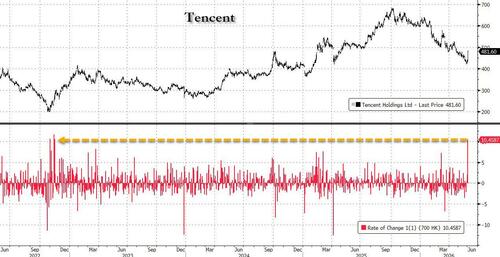
Tencent's WeChat AI Agent Deployment Signals Shift From Model Race to Platform Distribution in China's AI Strategy
Tencent's WeChat AI agent offers instant scale to 1.4B users, highlighting distribution advantages in China's regulated ecosystem versus Western fragmentation.
Tencent's planned integration of an AI agent into WeChat, accessible via swipe on the main screen and tied to mini-apps for tasks like ordering, represents a direct path to consumer-scale usage that prioritizes distribution over foundational model supremacy. Primary documents such as Tencent's 2023 annual report emphasize ecosystem lock-in through payments and social features, contrasting with ByteDance's focus on content algorithms and Alibaba's enterprise cloud emphasis. Western reporting often frames this as catch-up, yet overlooks how China's data localization rules, detailed in the 2021 Personal Information Protection Law, enable seamless agent access unavailable in fragmented EU or US markets. Market reactions from sources like Citigroup note the timing surprise, while Goldman Sachs highlights execution risks amid regulatory compliance steps. Perspectives from state-backed outlets stress self-reliance in AI to counter export controls, whereas investor analyses from Saxo Markets point to monetization potential via engagement metrics. This move aligns with broader patterns in the 14th Five-Year Plan prioritizing consumer AI applications over pure research advances.
WeChat AI Agent: Direct embedding bypasses app ecosystems, enabling rapid task automation for 1.4B users under domestic compliance frameworks that differ from global norms.
Sources (3)
- [1]Financial Times Report on Tencent AI Prototype(https://www.ft.com/content/tencent-wechat-ai-agent)
- [2]Tencent 2023 Annual Report(https://www.tencent.com/ir/reports.shtml)
- [3]China 14th Five-Year Plan AI Section(https://www.gov.cn/zhengce/2021-03/13/content_5592681.htm)