Artemis II: From Lunar Flyby to Blueprint for Collaborative Deep-Space Colonization
Artemis II represents a shift toward collaborative deep-space exploration, but original coverage overlooked international partner roles, technical limitations, and connections to long-term colonization patterns established by the ISS and Artemis Accords.
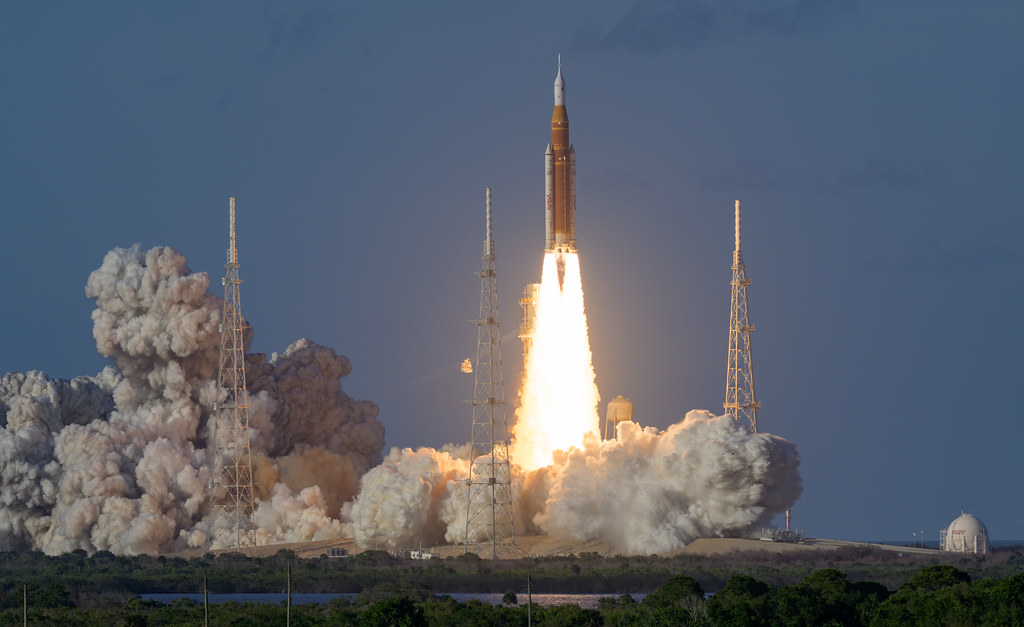
NASA's launch of Artemis II marks the first crewed lunar flyby since Apollo 17 in 1972, with the SLS rocket carrying four astronauts on a 10-day mission to test the Orion spacecraft beyond low-Earth orbit. While the primary NASA release celebrates American ingenuity and the precise 6:35 p.m. liftoff from Kennedy Space Center, it underplays the mission's deeper significance within long-term patterns of space exploration. The coverage misses how this flight builds on the International Space Station's collaborative model rather than Apollo's Cold War competition, and it glosses over persistent technical and diplomatic hurdles.
Synthesizing the official NASA Artemis II update with the 2023 GAO report on SLS cost and schedule challenges (GAO-23-105413, which analyzed 5 years of program data and noted $7 billion in overruns) and a 2022 peer-reviewed article in Space Policy journal on the Artemis Accords (volume 61, examining 13 signatory nations at the time), a clearer picture emerges. The original source correctly notes the historic nature but fails to highlight that the European Service Module—critical for propulsion and life support—is built by ESA, with contributions from the Canadian Space Agency and JAXA. This reflects the Artemis Accords' focus on sustainable exploration, yet reports often ignore tensions with non-participating nations like China, whose independent lunar program could fragment future efforts.
From a research perspective, Artemis II functions as a human-in-the-loop test with a very small sample size of four crew members, collecting data on radiation exposure, communication delays, and spacecraft performance in cis-lunar space. Limitations are substantial: unlike peer-reviewed Earth-based simulations, this is a single high-stakes flight with no control group, and it remains a flyby rather than a landing, leaving surface habitation questions unanswered. These gaps connect to broader patterns—post-ISS cooperation has proven more durable for sustaining momentum than solo missions, potentially paving the way for lunar bases by the 2030s and eventual Mars colonization.
What most coverage gets wrong is framing this solely as a NASA triumph. In reality, success depends on maintaining international alignment amid budget pressures and geopolitical friction. If the mission returns robust data on deep-space human factors, it could accelerate timelines for permanent off-world presence; if not, it risks repeating the post-Apollo hiatus.
HELIX: Artemis II is more than a nostalgia launch; it tests whether international coalitions can deliver sustainable deep-space presence, potentially shortening the path to lunar bases if radiation and systems data prove reliable.
Sources (3)
- [1]Primary Source(https://www.nasa.gov/news-release/liftoff-nasa-launches-astronauts-on-historic-artemis-moon-mission/)
- [2]GAO Report on SLS Challenges(https://www.gao.gov/products/gao-23-105413)
- [3]Artemis Accords and International Space Policy(https://www.sciencedirect.com/science/article/pii/S026596132200045X)