130 Countries Advance CBDC Pilots as US Cash Use Falls 60% Since 2017
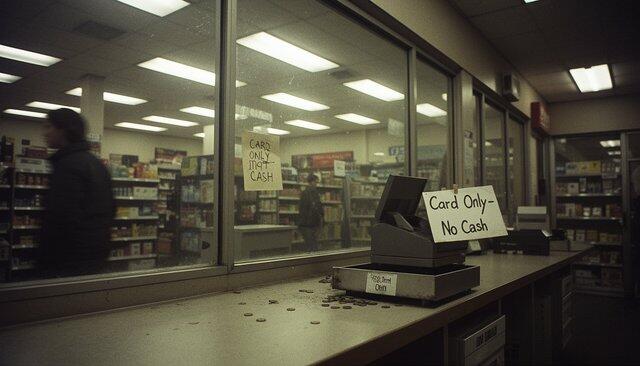
CBDC development across 130 countries coincides with documented cash decline and programmable-money language in official BIS and ECB texts. States secure surveillance and selective control tools; users lose unmonitored exchange capacity. Primary documents indicate the transition is incremental and irreversible once cash infrastructure contracts.
Central banks coordinate through the BIS to embed programmable features that allow restrictions by time, location, or merchant category. The European Central Bank limits offline digital euro holdings and requires online verification for larger amounts. The Federal Reserve's July 2023 FedNow launch supplies the instant settlement rail that later supports account-based digital currency. These steps convert every transaction into a logged, potentially reversible entry tied to verified identity.
States gain visibility into capital flows and the capacity to enforce targeted restrictions without legislative action. Individuals lose the option of unrecorded exchange once cash volumes fall below operational thresholds for merchants. The pattern repeats across China’s digital yuan rollout, Nigeria’s eNaira, and Bahamas Sand Dollar: convenience claims precede expanded data access and conditional spending rules.
Primary records show no reversal mechanism once infrastructure is live. The US government’s 207,000 seized bitcoin holdings, formalized as a strategic reserve in March 2025, further centralize assets originally designed for disintermediation. Continued decline in cash usage removes the practical base for anonymous settlement before policy locks in the alternative.
BIS: Operational CBDCs with programmable restrictions will exist in at least five G20 economies by end-2027.
Sources (3)
- [1]BIS Annual Economic Report 2023(https://www.bis.org/publ/arpdf/ar2023e.htm)
- [2]ECB Digital Euro Project Documentation(https://www.ecb.europa.eu/euro/digital_euro/html/index.en.html)
- [3]Federal Reserve FedNow Service Launch(https://www.federalreserve.gov/newsevents/pressreleases/other20230720a.htm)