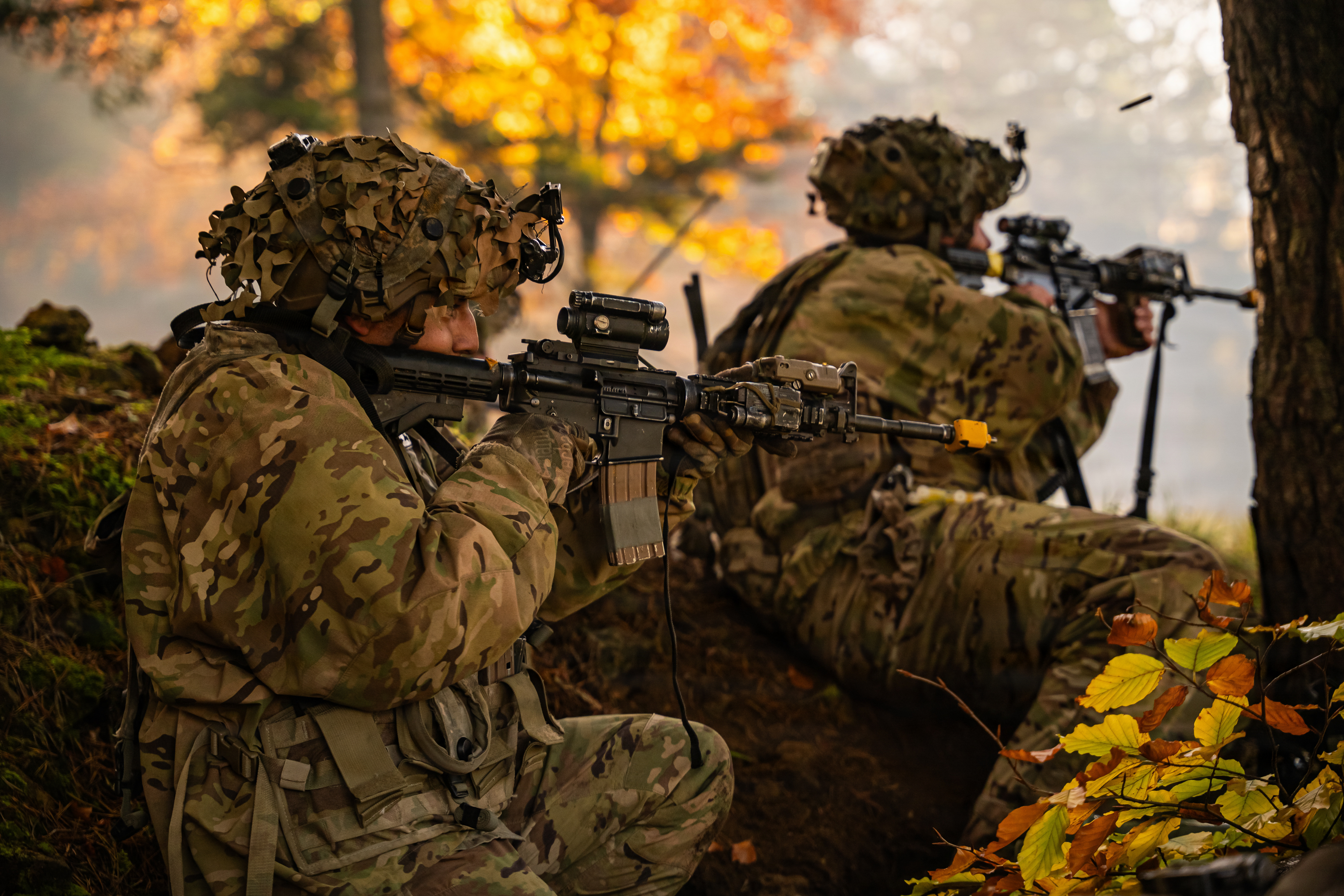
US Troops in Germany: Strategic Anchor or Political Pawn Amid NATO Tensions?
US troops in Germany, numbering 35,000, are vital for NATO deterrence, training, and learning from Ukraine’s war, but Trump’s threatened pullback raises risks of degraded readiness, strained alliances, and geopolitical realignment. Beyond operations, the bases are economic and symbolic anchors, and their reduction could fracture transatlantic unity while emboldening adversaries.
The presence of approximately 35,000 US troops in Germany, as highlighted by senior officers at the Hohenfels training facility, is more than a military deployment—it is a linchpin of NATO’s deterrence strategy and a critical node for transatlantic military interoperability. Officers emphasized the strategic benefits of training on European terrain, learning from the ongoing Ukraine conflict, and countering evolving threats like drone warfare. However, President Donald Trump’s recent threats to reduce troop numbers cast a shadow over this presence, raising questions about the future of US commitment to European security at a time when NATO faces internal strains and external pressures from Russia. Beyond the immediate operational impacts, such a pullback could signal a broader realignment of US foreign policy, prioritizing domestic political narratives over long-standing alliances.
What the original coverage misses is the deeper geopolitical context: Germany is not just a training hub but a logistical and symbolic cornerstone of US power projection in Europe. The Hohenfels facility, for instance, is uniquely positioned to simulate combat scenarios relevant to Eastern European theaters, incorporating real-time lessons from Ukraine—such as the cat-and-mouse game of drone warfare and electronic countermeasures. A reduction in troop numbers could degrade these capabilities, undermining NATO’s readiness at a time when Russia’s hybrid warfare tactics are intensifying. Furthermore, the original story overlooks the economic dimension: US bases in Germany contribute significantly to local economies, with billions in annual spending. A pullback could strain bilateral relations, especially as Germany struggles to meet NATO’s 2% GDP defense spending target, a recurring point of contention with the US.
Historical patterns amplify these concerns. Trump’s rhetoric echoes his 2020 decision to withdraw 12,000 troops from Germany—a move partially reversed by the Biden administration—reflecting a recurring tension between US isolationist impulses and alliance commitments. This push-and-pull dynamic mirrors broader NATO strains, evident in European debates over ‘strategic autonomy’ and reliance on US military power. As the Ukraine war grinds on, Europe’s defense dependencies are starkly exposed; a 2023 RAND Corporation study warned that a diminished US presence could embolden adversaries while leaving European forces unprepared to fill the gap. Meanwhile, a 2022 report from the Center for Strategic and International Studies (CSIS) noted that US bases in Germany are critical for rapid response to crises in Eastern Europe and the Middle East, a role that cannot be easily replicated elsewhere.
The unspoken risk is a cascading effect on alliance cohesion. If the US reduces its footprint, countries like Poland and the Baltic states—already on the frontline of Russian aggression—may push for compensatory deployments, straining NATO’s resource allocation. Alternatively, a perception of US retreat could accelerate European efforts to build independent defense capabilities, potentially fracturing transatlantic unity. The officers’ silence on Trump’s remarks, as noted in the original story, likely reflects military professionalism but also underscores the political sensitivity of their position. Ultimately, the US presence in Germany is not just about troop numbers; it’s about the credibility of deterrence and the future of collective security in a multipolar world.
SENTINEL: A US troop reduction in Germany could trigger a domino effect, weakening NATO’s eastern flank deterrence and pushing Europe toward fragmented defense strategies. Expect heightened tensions in alliance burden-sharing debates over the next 12 months.
Sources (3)
- [1]Some US troops cite benefits of Germany presence as Trump threatens pullback(https://www.defensenews.com/news/pentagon-congress/2026/05/01/some-us-troops-cite-benefits-of-germany-presence-as-trump-threatens-pullback/)
- [2]RAND Corporation: The Future of NATO and European Defense(https://www.rand.org/pubs/research_reports/RRA1333-1.html)
- [3]CSIS: US Military Posture in Europe(https://www.csis.org/analysis/us-military-posture-europe)