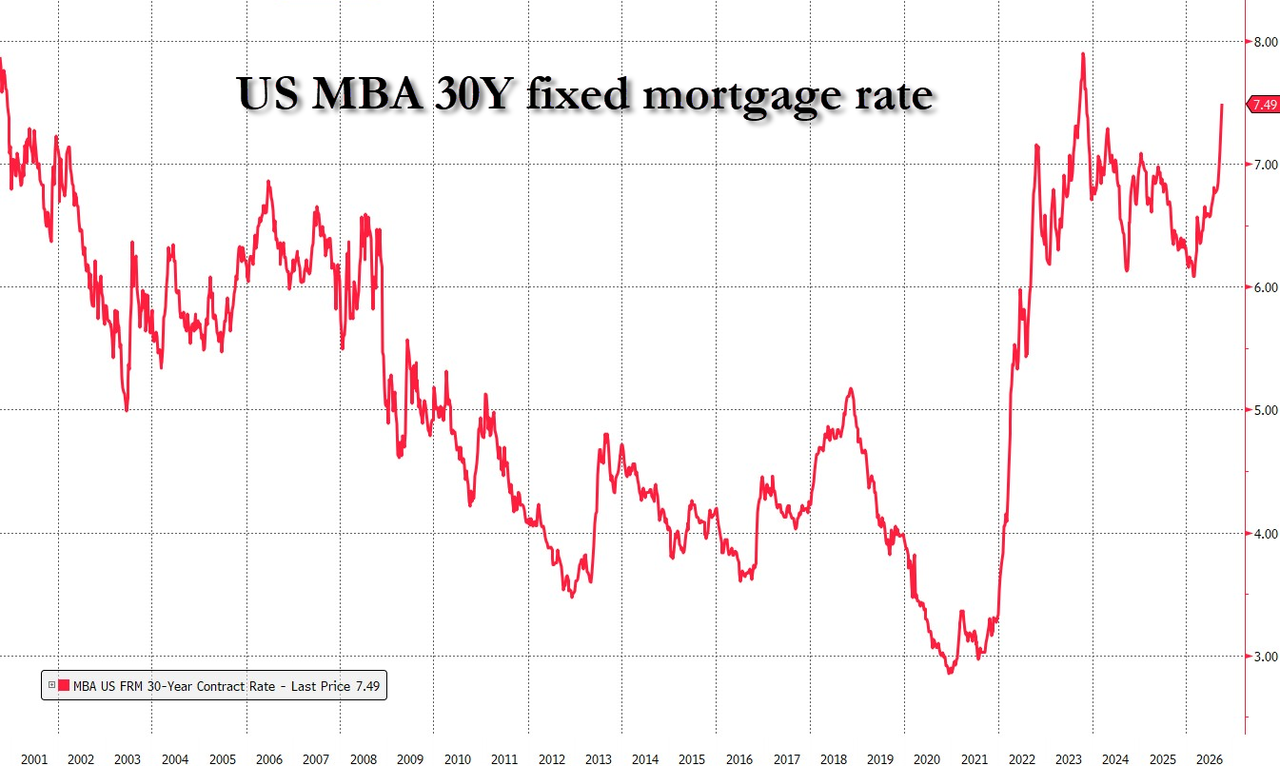
Mortgage Rates Surge to 3-Year Highs as Bond Yields Spike, Slamming Housing Market Activity
Verified surge in U.S. mortgage rates to 7.49% (MBA) and 7.28% (Freddie Mac) amid 10Y yields near 5.3%, with applications dropping 4.2% and housing activity weakening due to affordability and lock-in effects.
U.S. 30-year fixed mortgage rates have climbed sharply to multi-year highs, driven by a global bond market rout and rising Treasury yields. According to the Mortgage Bankers Association (MBA) weekly survey for the week ending October 2, 2026, the average contract rate on 30-year fixed-rate mortgages reached 7.49%, up 19 basis points from the prior week and the highest level since November 2023. This marks a significant increase from earlier in the year when rates had eased toward 3-year lows.
The surge aligns closely with movements in the 10-year Treasury yield, which traded near 5.3% in early October 2026—the highest since 2002—amid concerns over inflation, resilient economic growth, geopolitical tensions in the Middle East, and heavy Treasury supply. Freddie Mac's separate Primary Mortgage Market Survey reported a 7.28% average for the week ending October 1, also a multi-year peak and up notably from prior weeks.
Housing market repercussions are evident. MBA data showed total mortgage applications falling 4.2% week-over-week, with purchase applications down 2% and refinancing activity declining sharply (down 7.5% or more in some reports). Overall application volume hit its lowest point since early 2025. Real estate agents have noted a sharp drop in buyer showings as affordability worsens; on a $400,000 loan, monthly principal and interest at 7.49% exceeds $2,790, roughly 15% higher than at 6.1% earlier in the year.
The 'lock-in effect' persists or has intensified, with homeowners holding low-rate mortgages from 2020-2021 reluctant to sell and trade up. Broader context includes elevated global long-term yields (UK gilts at 28-year highs in some reports) and reduced foreign demand for U.S. Treasuries. Analysts note this environment pressures both buyers and sellers, potentially keeping inventory constrained and transaction volumes low despite any seasonal factors.
[Housing Economist]: Persistent high rates will extend the lock-in effect, suppressing existing home sales and keeping inventory low well into 2027 absent a sharp yield reversal.
Sources (5)
- [1]MBA Weekly Mortgage Applications Survey(https://www.mba.org/news-and-research/newsroom/news/2026/10/07/mortgage-applications-decrease-in-latest-mba-weekly-survey)
- [2]NewsNation: US mortgage rates surge to 7.49%(https://www.newsnationnow.com/business/your-money/mortgage-rates-rise-2/)
- [3]Realtor.com: Mortgage Applications Continue to Drop(https://www.realtor.com/news/trends/mortgage-applications-apply-for-loan-october-7-2026/)
- [4]Freddie Mac Primary Mortgage Market Survey Archive(https://www.freddiemac.com/pmms/archive)
- [5]Trading Economics: US MBA 30-Yr Mortgage Rate(https://tradingeconomics.com/united-states/mortgage-rate)