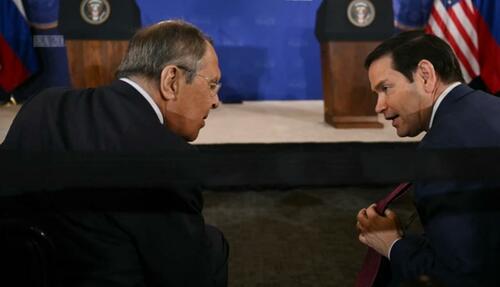
Lavrov's Blunt Warning to Rubio Exposes Unsanitized Escalation Between Nuclear Powers
Lavrov's direct May 2026 call to Rubio warning of systematic strikes on Kyiv decision centers and urging US evacuation represents unusually raw escalation signaling between nuclear powers. Corroborated by Reuters, Bloomberg, Guardian and others, it follows Ukrainian attacks on Russian territory and reveals deconfliction efforts alongside willingness to hit urban military targets despite foreign presence—dynamics often downplayed in official narratives.
In a development that cuts through the usual diplomatic euphemisms surrounding the Ukraine conflict, Russian Foreign Minister Sergei Lavrov directly informed US Secretary of State Marco Rubio during a May 25, 2026 phone call that Moscow intends to launch "systematic and consistent strikes" on military-industrial targets, decision-making centers, and command posts in Kyiv. This explicit heads-up, confirmed across multiple outlets, was accompanied by a public Russian Foreign Ministry advisory urging all foreign diplomats, citizens, and international organizations to evacuate the Ukrainian capital immediately.[1][2]
The warning appears triggered by a Ukrainian drone strike on a college dormitory in Russian-controlled Luhansk that killed and injured dozens, which Moscow labeled the "last straw" in a pattern of alleged deliberate civilian targeting. Rather than vague statements, Russia has framed forthcoming operations as focused retribution against UAV production and command infrastructure scattered throughout Kyiv. What stands out to analysts is the direct Lavrov-to-Rubio channel: this is not filtered through spokespeople or lower-level diplomats but a top-level notification between the foreign ministers of nuclear powers. Such raw signaling is rare even after more than four years of war and suggests both an effort at deconfliction (to avoid hitting US personnel) and a deliberate demonstration that Moscow will not be constrained by Western presence in Kyiv.[3][4]
Mainstream coverage from Reuters, Bloomberg, CNBC, The Guardian, and Al Jazeera corroborates the Russian readout, though Western responses have been measured. The US State Department confirmed the call occurred at Lavrov's request but has offered limited public condemnation of the planned strikes, while Ukrainian officials dismissed it as "blackmail" and urged allies to maintain embassies. This contrast highlights how official channels often sanitize the nuclear-adjacent tension: public narratives emphasize Ukrainian resilience or Russian aggression in isolation, while the direct diplomatic exchange reveals pragmatic recognition of escalation thresholds that could rapidly involve NATO if embassy casualties or broader infrastructure hits occur.[5]
Deeper context reveals this fits a pattern of intensifying Russian strikes on Kyiv following Ukrainian deep strikes into Russian territory. By pre-announcing systematic campaigns rather than sporadic retaliation, Russia is attempting to reset the rules of engagement, signaling that civilian-adjacent military targets in the capital are now fair game. For nuclear powers, this creates dangerous proximity risks—decision-making centers could be interpreted broadly, and miscalculation remains high. Media often frames such events as routine battlefield updates, missing the significance of Lavrov personally pressing Rubio on evacuation as a form of raw, unsanitized communication that bypasses sanitized press briefings. The move also pressures the Trump administration's reported interest in negotiations, using kinetic facts on the ground to shape diplomatic outcomes.
This episode underscores a truth frequently ignored in coverage: behind polished statements lies a direct dialogue between adversaries managing existential risks, where one side is explicitly preparing urban bombardment while notifying the other's top diplomat in advance. The absence of strong immediate US pushback may indicate tacit acceptance of certain Russian red lines, or simply war fatigue after years of conflict.
LIMINAL: This direct Lavrov-Rubio notification on impending Kyiv strikes creates a narrow deconfliction window but sharply raises miscalculation risks, potentially forcing either accelerated diplomacy or broader NATO entanglement as urban targeting thresholds are crossed.
Sources (5)
- [1]Lavrov tells Rubio of Russian decision to strike Kyiv sites linked to military(https://www.reuters.com/world/lavrov-tells-rubio-russian-decision-strike-kyiv-sites-linked-military-2026-05-25/)
- [2]Lavrov Urges US to Evacuate Diplomats, Citizens from Kyiv as Strikes Continue(https://www.bloomberg.com/news/articles/2026-05-25/lavrov-tells-rubio-to-evacuate-us-diplomats-citizens-from-kyiv-mplnvqzc)
- [3]Russia's Lavrov tells Rubio Americans should leave Kyiv(https://www.cnbc.com/2026/05/26/russia-ukraine-war-rubio-trump-lavrov-kyiv.html)
- [4]Ukraine war briefing: Russia pressures US to clear way for strikes on Kyiv(https://www.theguardian.com/world/2026/may/26/ukraine-war-briefing-russia-pressures-us-embassy-evacuate-attacks-kyiv)
- [5]'Leave Kyiv': Why Russia's latest Ukraine threat is a major escalation(https://www.aljazeera.com/news/2026/5/26/leave-kyiv-why-russias-latest-ukraine-threat-is-a-major-escalation)