AfD's Record Win in Saxony-Anhalt Shatters Germany's Post-War Political Firewall, Signaling Deeper Shifts in European Politics
AfD's 43.8% victory in Saxony-Anhalt marks a breakthrough for Germany's far-right, falling just short of majority rule amid a CDU rout and high turnout. It intensifies pressure on Chancellor Merz's government, challenges the anti-AfD firewall, and foreshadows shifts in European politics through heightened polarization and policy uncertainty.
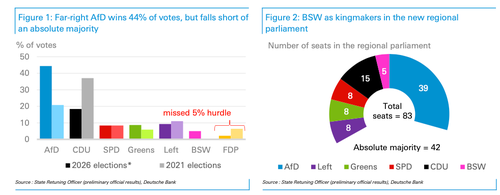
The Alternative für Deutschland (AfD) secured 43.8% of the vote in the September 6, 2026, Saxony-Anhalt state election, its strongest-ever result in any German state contest and a historic first-place finish that more than doubled its 2021 share. The CDU, long dominant in the eastern state, collapsed to 17.2%—its worst performance there—while turnout surged to 77.8%. AfD captured 39 of 83 seats, three short of an absolute majority, with the populist BSW holding five decisive seats as potential kingmaker.
Mainstream parties maintain a strict "firewall" refusing coalitions with AfD, whose Saxony-Anhalt branch is classified as right-wing extremist by state authorities. This leaves options including an AfD minority government tolerated by BSW, cross-party deals with individual MPs, or a stalemate triggering snap elections that could boost AfD further. National co-leader Tino Chrupalla declared the result a mandate for AfD leadership, while lead candidate Ulrich Siegmund signaled reluctance for major compromises.
Chancellor Friedrich Merz's federal CDU faces immediate pressure, with the result underscoring voter discontent over economic stagnation, migration, and governance. The outcome challenges Germany's traditional multi-party consensus and the post-1945 taboo on far-right state-level power, potentially influencing upcoming elections in Berlin and Mecklenburg-Vorpommern. Economically, an AfD-led state government could deter investment and exacerbate skilled labor shortages locally, though Saxony-Anhalt's small GDP share limits national spillover.
Broader European implications include strained alliances, as AfD's anti-migration, pro-Russia stance clashes with EU norms. Neighbors like Poland and France have voiced concerns. The result accelerates the fragmentation of centrist dominance, testing democratic resilience and migration policies across the continent.
[Deutsche Bank Analyst]: Regional AfD governance experiments could accelerate federal reform pressures on Merz while testing EU cohesion on migration and fiscal policy without immediate national economic contagion.
Sources (5)
- [1]Vorläufiges Wahlergebnis: AfD gewinnt Landtagswahl in Sachsen-Anhalt(https://www.zeit.de/politik/deutschland/2026-09/landtagswahl-sachsen-anhalt-afd-cdu-koop-positionen)
- [2]Germany's AfD falls short of absolute majority in state election(https://dpa-international.com/politics/urn:newsml:dpa.com:20090101:260907-930-644289/)
- [3]Germany's far-right AfD hails big victory in east, but falls short of majority(https://www.bbc.co.uk/news/articles/cy4zejgz3z9o)
- [4]2026 Saxony-Anhalt state election(https://en.wikipedia.org/wiki/2026_Saxony-Anhalt_state_election)
- [5]Far-right AfD wins historic victory in German state election(https://www.reuters.com/world/germanys-far-right-afd-seeks-landmark-state-victory-saxony-anhalt-votes-2026-09-06/)