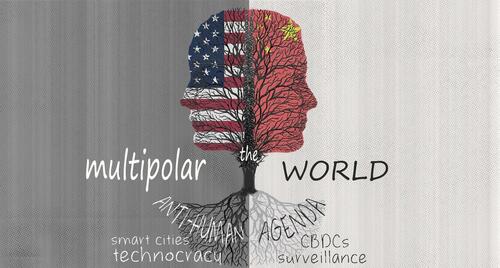
The Real Cost of Multipolarity: Proxy Conflicts, Fragmented Supply Chains, and Persistent Inflation
Multipolarity rhetoric from Putin, Xi, and global forums masks rising inflation, supply disruptions, and managed conflicts that raise everyday costs, as detailed in WEF, Munich Security Report, and Foreign Affairs analyses. The shift fragments cooperation while normalizing higher prices as the price of power realignment.
While world leaders from Vladimir Putin and Xi Jinping to Western politicians hail the dawn of a multipolar world order as a liberating shift from American unipolar dominance, a closer examination reveals deeper economic and human costs that mainstream analysis often glosses over. Recent events underscore this transition: in May 2026, Putin and Xi signed a joint declaration in Beijing explicitly calling for a 'multipolar world and a new type of international relations,' framing it as the end of hegemony and the rise of polycentric power. Similar rhetoric has echoed at the Munich Security Conference, the World Economic Forum, and in reports from major financial institutions.
Yet beneath the diplomatic language lies a pattern of what critics term 'fake wars'—prolonged, managed conflicts that fall short of total war but effectively fragment global trade, drive energy and commodity prices higher, and sustain inflationary pressures. The Munich Security Report 2025 frames multipolarization as a double-edged reality, where shifting power among more actors complicates collective responses to crises, often exacerbating divisions rather than fostering cooperation. Far from a peaceful redistribution of prosperity, this fragmentation correlates with sustained geoeconomic confrontation.
The World Economic Forum has directly addressed these everyday impacts. Its analysis on the real costs of geoeconomic confrontation details how supply chain breaks from geopolitical rivalries translate into volatile prices for food, fuel, and healthcare. Businesses are advised to prepare for 'sustained inflation and price volatility' amid military spending, energy transitions, and repeated supply shocks—precisely the conditions observed since the acceleration of proxy engagements in Ukraine, the Middle East, and elsewhere. These are not abstract risks; households experience them as higher grocery bills, job insecurity in disrupted sectors, and eroded purchasing power.
Reports from Foreign Affairs and JPMorgan Chase's collaboration with the Tony Blair Institute describe a 'multi-speed, multipolar order' where cooperation occurs only in narrow interest-based coalitions, while rivalry intensifies elsewhere. This is no benign 'return to normal' as some academics claim. Instead, it enables powers like Russia and China to reroute discounted energy exports to allies while Western economies absorb higher costs through sanctions and realignments. The missed connection is how inflation functions as a stealth transfer mechanism during this power shift: eroding savings in the West, fueling commodity nationalism elsewhere, and justifying further militarization.
Xi's broader push for a 'new global order' prioritizing the Global South, as reported by Reuters, and the WEF's own materials systems report calling for 'agile interest-based cooperation in a multipolar world' both acknowledge fragmentation but underplay its role in entrenching higher baseline prices. What multipolarity truly signals is not the end of conflict but its recalibration—regional proxy struggles that drain resources without decisive victories, paired with deglobalization that raises costs for the average citizen while elites navigate new coalitions.
This heterodox lens reveals what hype obscures: the multipolar transition extracts a hidden toll through perpetual tension and monetary erosion. Without addressing these mechanics, celebratory rhetoric from summits risks masking a future of diminished living standards amid great-power repositioning.
LIMINAL: Multipolarity will lock in higher structural inflation and low-level proxy conflicts as mechanisms for economic realignment, quietly eroding living standards while new power blocs consolidate influence.
Sources (5)
- [1]Multipolar world: What Xi and Putin announced after Beijing summit(https://www.aljazeera.com/news/2026/5/20/multipolar-world-what-xi-and-putin-announced-after-beijing-summit)
- [2]Counting the everyday costs of geoeconomic confrontation(https://www.weforum.org/stories/2026/05/real-cost-geoeconomic-confrontation-price-people-pay/)
- [3]Munich Security Report 2025: Multipolarization(https://securityconference.org/en/publications/munich-security-report-2025/)
- [4]Making Multipolarity Work: How America Should Navigate a More Divided World(https://www.foreignaffairs.com/united-states/making-multipolarity-work)
- [5]China's Xi pushes a new global order, flanked by leaders of Russia and India(https://www.reuters.com/world/china/chinas-xi-pushes-new-global-order-flanked-by-leaders-russia-india-2025-09-01/)