AfD Surge to 27% in Germany Reveals Immigration-Driven Political Realignment Across Europe
YouGov poll confirms AfD at 27% leading CDU/CSU amid 79% government dissatisfaction in Germany, reflecting immigration backlash and a wider European populist realignment that mainstream outlets often frame as extremism rather than legitimate policy discontent.
A YouGov poll conducted between April 10-13, 2026, shows Germany's Alternative for Germany (AfD) party reaching 27% support, placing it four points ahead of Chancellor Friedrich Merz's CDU/CSU bloc at 23%. This represents the lowest recorded support for the conservatives in YouGov surveys since December 2021. Overall dissatisfaction with the federal government has climbed to 79%, up sharply from 55% in June 2025, with even CDU voters turning critical. Other parties trail, with Greens at 14%, SPD at 13%, and The Left at 10%. While AfD has led in several recent polls averaging 25-26%, this margin underscores its momentum as the clearest frontrunner nationally.
This surge is not occurring in isolation. Recent state elections, including AfD more than doubling its vote in Rhineland-Palatinate to 19.5%—its strongest result yet in a western German state—illustrate expanding appeal beyond eastern strongholds. These gains coincide with persistent public concern over immigration levels, integration failures, rising crime linked to migration in official statistics, and economic pressures exacerbated by energy costs and international conflicts. Merz's government, despite vows to maintain a 'firewall' excluding AfD from coalitions, faces mounting pressure as traditional alliances become arithmetically untenable if trends hold into federal elections.
Viewed through a wider lens, Germany's shift mirrors a continental pattern of voter realignment. Similar dynamics have propelled right-leaning populist parties in France, Italy, the Netherlands, and elsewhere, where immigration skepticism has eroded support for centrist and center-left establishments. Mainstream coverage frequently pathologizes these movements as 'far-right' threats to democracy, yet corroborating data from multiple polling firms and election results reveal a pragmatic backlash against policies perceived as prioritizing open borders over citizen security, cultural cohesion, and fiscal sustainability. Recent analyses note that while some populist efforts faced headwinds in early 2026 votes, underlying drivers like migration pressures and elite disconnect remain potent forces reshaping European politics.
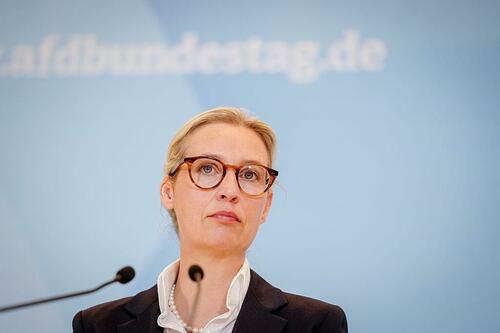
The AfD's co-leader Alice Weidel has called for an end to undemocratic barriers, arguing a political turnaround is overdue. If sustained, this could compel coalitions or policy pivots on asylum, deportation, and EU migration frameworks—connections often downplayed in legacy reporting that prioritizes labeling over examining root voter grievances. This realignment suggests European electorates are increasingly rejecting post-2015 migration orthodoxies, forcing a reckoning with sovereignty and national priorities that transcends any single nation's borders.
Liminal: AfD's sustained lead and parallel trends across Europe signal that voter backlash against mass immigration has reached a tipping point, likely forcing mainstream parties toward stricter policies or unstable governments as cordons sanitaires crumble under electoral math.
Sources (4)
- [1]Opinion polling for the next German federal election(https://en.wikipedia.org/wiki/Opinion_polling_for_the_next_German_federal_election)
- [2]Far-right AfD tops German poll as coalition support drops(https://www.yahoo.com/news/articles/far-afd-tops-german-poll-065229054.html)
- [3]Merz's conservatives win key state vote despite far-right surge(https://www.politico.eu/article/friedrich-merz-cdu-rhineland-palatinate-germany-election-afd/)
- [4]Opinion | Orban Lost. But Populism Is Very Much Alive.(https://www.nytimes.com/2026/04/17/opinion/populism-orban-trump.html)