Iranian Tanker Seizure Escalates Tensions in Strait of Hormuz, Risks Global Oil Supply Chain
Iran's seizure of an oil tanker in the Gulf of Oman on May 8, 2026, amid U.S.-Iran military exchanges, heightens risks to global oil supplies through the Strait of Hormuz. Beyond immediate tensions, the event reflects Iran's strategic use of maritime leverage, regional OPEC dynamics, and looming economic impacts, with Brent crude already at $100 per barrel.
On May 8, 2026, Iranian army commandos seized the oil tanker OCEAN KOI (also known as JIN LI) in the Gulf of Oman, accusing it of disrupting Iranian oil exports, according to Iran's state news agency, IRNA. This incident, occurring against a backdrop of heightened military activity in the Strait of Hormuz, underscores the fragility of global oil supply routes amid escalating geopolitical tensions in the Middle East. The seizure follows recent U.S. strikes on Iranian military assets after missile and drone attacks on U.S. warships in the Hormuz corridor, as reported by CENTCOM, and Iranian claims of U.S. attacks on civilian areas and oil tankers, per Press TV. This tit-for-tat escalation risks further destabilizing a chokepoint through which approximately 20% of the world's oil transits daily.
Beyond the immediate event, the seizure highlights a broader pattern of Iran leveraging maritime assets as tools of geopolitical pressure. Since 2019, Iran has intermittently targeted tankers in the Gulf to retaliate against sanctions or perceived provocations, such as the 2019 seizure of the British-flagged Stena Impero following the detention of an Iranian tanker near Gibraltar. The current context is further complicated by the UAE's exit from OPEC, as noted in UBS Energy Research discussions, which diminishes the cartel's ability to stabilize oil prices amid regional conflict. This exit, combined with Iran's actions, could accelerate efforts to develop alternative export infrastructure, such as pipelines bypassing the Strait of Hormuz, though such projects are years away from fruition.
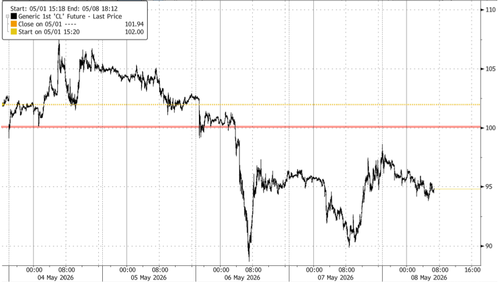
What original coverage missed is the potential economic ripple effect on energy markets and the strategic calculus behind Iran's timing. Brent crude futures have already spiked to $100 per barrel, reflecting market fears of sustained disruption. Yet, the seizure may also be a signal to domestic audiences in Iran, projecting strength amid economic hardship and international isolation. Missing from early reports is the role of regional actors like Saudi Arabia and the UAE, who, despite their own capacity to ramp up production quickly (as per UBS analysis), face political and logistical constraints in offsetting a prolonged Hormuz closure. Additionally, the Polymarket odds (73% 'No' on normal traffic by May's end) suggest low confidence in a swift resolution, aligning with historical patterns of protracted standoffs in the region.
This incident also intersects with U.S. domestic politics, as President Trump's insistence on a ceasefire and warnings of harsher strikes indicate a balancing act between de-escalation and projecting strength ahead of potential election cycles. The interplay of these factors—maritime security, oil market dynamics, and political posturing—suggests that the Strait of Hormuz will remain a flashpoint, with global implications for energy security and inflation pressures.
MERIDIAN: I anticipate that Strait of Hormuz disruptions will persist beyond May 2026, with a high likelihood of intermittent tanker seizures or military skirmishes driving oil prices above $110 per barrel by Q3 if no diplomatic breakthrough occurs.
Sources (3)
- [1]Iranian State News Agency (IRNA) Report on Tanker Seizure(https://en.irna.ir/news/85109432/Army-commandos-seize-violating-oil-tanker-in-Gulf-of-Oman)
- [2]U.S. Central Command (CENTCOM) Statement on Iranian Attacks(https://www.centcom.mil/MEDIA/PRESS-RELEASES/Press-Release-View/Article/3795123/statement-on-iranian-attacks-on-us-warships/)
- [3]UBS Energy Research Summary on Middle East Oil Dynamics(https://www.ubs.com/global/en/wealth-management/insights/market-news/article.1623457.html)