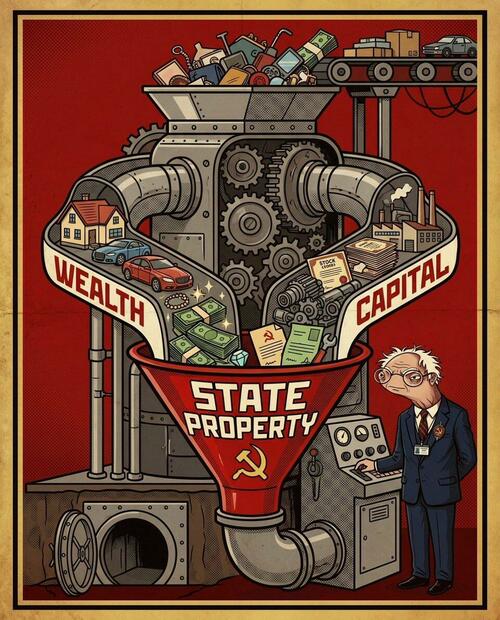
NYC's Block by Block Plan and the Rising Trend of Government-Directed Property Transfers to Nonprofits
Mayor Mamdani's NYC housing blueprint uses enforcement and transfers to shift neglected properties to CLTs and nonprofits, mirroring a national pattern of local governments prioritizing community stewardship models over traditional private ownership, with potential to reshape urban property norms nationwide.
New York City Mayor Zohran Mamdani's newly released "Block by Block: The Housing Plan for A New Era" outlines an ambitious strategy to build and preserve 400,000 affordable units over the next decade. A particularly controversial element involves using enhanced code enforcement and legal action against negligent landlords, followed by transferring ownership of chronically neglected buildings to "responsible stewards" such as community land trusts (CLTs), nonprofits, or tenant groups. This approach, detailed in the official city report, aims to address housing code violations and prevent displacement but has raised alarms about undermining private property rights.[1][2]
The plan does not exist in isolation. It reflects a deeper, undercovered national pattern in which local governments leverage regulatory tools like rent stabilization, tax liens, or bankruptcy proceedings to shift distressed properties away from traditional private owners toward mission-driven nonprofits and CLTs. In NYC, the Mamdani administration has already moved to steer the sale of troubled East Harlem rent-stabilized buildings—laden with thousands of code violations—toward community land trusts rather than speculative investors. This builds on years of advocacy for models that "decommodify" housing, ensuring permanent affordability by separating land ownership from building ownership.[3]
Similar dynamics appear across U.S. cities. Municipalities from Seattle and Houston to Albany and San Francisco have enacted policies providing discounted public land, right-of-first-refusal rules, and dedicated funding streams to CLTs. Reports from the Lincoln Institute of Land Policy document a shift where cities evolve from passive supporters to active instigators and governors of CLT initiatives, often directing land banks to prioritize transfers that lock in community control over market-rate sales. A National League of Cities guide explicitly advises local governments on starting and funding CLTs to create permanently affordable housing that survives beyond typical subsidy timelines.[4][5]
Critics argue this represents an erosion of traditional ownership norms. By combining rent freezes (with limited carveouts for distressed owners) and aggressive enforcement, cities can induce financial stress on landlords, creating conditions for "rescue" via nonprofit transfer. Proponents, including tenant organizers and officials, frame it as correcting market failures and prioritizing community stewardship over profit. Mamdani's plan also expands programs like "Our Home" for permanently affordable co-ops and increases support for CLTs, echoing campaigns in Washington, D.C., and other cities that use tenant opportunity to purchase acts to channel properties into collective ownership.[6]
The national implications are significant. As housing crises deepen in high-cost metros, this model—favoring nonprofit and community-controlled stewardship—could spread, challenging conventional real estate financing, insurance, and investment assumptions. While addressing legitimate neglect, it risks politicizing property enforcement and concentrating control in entities aligned with local government priorities. What begins as targeted intervention in "chronic neglect" cases may evolve into a broader redefinition of housing as a public good rather than a private asset.
[LIMINAL]: This policy framework normalizes the use of regulatory pressure to reroute private housing stock into nonprofit and community-controlled models, likely inspiring parallel efforts in other progressive cities and contributing to a long-term reconfiguration of American residential property rights toward collective stewardship.
Sources (5)
- [1]Mayor Mamdani Releases “Block by Block: The Housing Plan for A New Era”(https://www.nyc.gov/mayors-office/news/2026/05/mayor-mamdani-releases--block-by-block--the-housing-plan-for-a-n)
- [2]Mamdani administration eyes new effort to steer sale of NYC rent-stabilized apartments(https://gothamist.com/news/mamdani-administration-eyes-new-effort-to-steer-sale-of-nyc-rent-stabilized-apartments)
- [3]The City–CLT Partnership(https://www.lincolninst.edu/app/uploads/legacy-files/pubfiles/the-city-clt-partnership-full.pdf)
- [4]Community Land Trusts: A Guide for Local Governments(https://www.nlc.org/wp-content/uploads/2021/08/Community-Land-Trusts_A-Guide-for-Local-Governments_Report-1.pdf)
- [5]Nonprofit Quarterly: A Community Land Trust Movement Rises in New York City(https://www.neweconomyproject.org/2025/12/nonprofit-quarterly-a-community-land-trust-movement-rises-in-new-york-city-leadership-lessons/)