Iranian Attacks Surge in Strait of Hormuz, Choking Oil Exports Amid Escalating Geopolitical Tensions
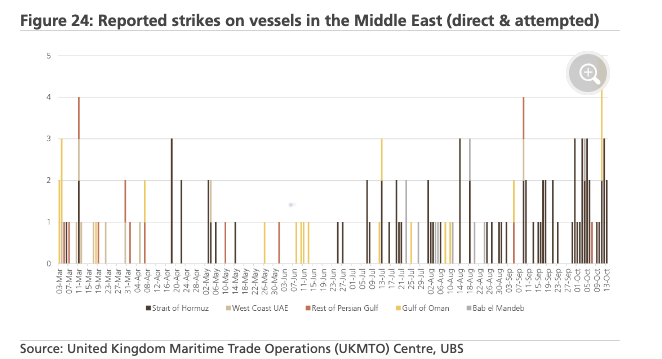
Credible reports confirm a surge in Iranian attacks on Hormuz shipping, reducing oil flows and amplifying geopolitical risks to energy markets ahead of key political events.
A sharp increase in Iranian drone and missile strikes on commercial vessels in the Strait of Hormuz has disrupted Middle Eastern energy exports, with reports of up to 24 attacks in recent weeks and multiple ships sunk or damaged. Maritime tracking data from firms like Kpler and warnings from the UK Maritime Trade Operations (UKMTO) indicate a dramatic drop in tanker transits, with daily flows through the strait falling sharply from peaks near 17 million barrels per day to averages around 11-13 million or lower in mid-October 2026. UBS analyst Henri Patricot highlighted flows exiting the Gulf of Oman dipping to 9.1 million barrels per day recently, down from a weekly average of 13.5 million and an early-October peak of 17 million. This aligns with broader data showing crude and product exports through Hormuz and bypass routes declining to 9.5 million barrels per day over the past week.
The attacks coincide with the ongoing US-Israel conflict with Iran, as Tehran uses the waterway to assert control and deter shipping, including new tactics like small-boat spotters and targeting vessels on unauthorized routes. Two Emirati-linked container ships were reportedly struck and sank in the past 24 hours, contributing to at least two sinkings this week. LNG flows have held steadier but at only about 25% of pre-conflict levels, while oil loadings show volatility with some rebound in Gulf crude excluding Iran.
Market impacts include Brent crude futures repricing higher for longer-dated contracts amid supply uncertainty, with the International Energy Agency warning of a persistent global diesel squeeze into 2027. The surge ties into US midterm elections, as Iran appears to demonstrate leverage before potential political shifts. Broader connections include risks to global supply chains, elevated energy prices affecting economies worldwide, and interplay with other chokepoints like the Red Sea. While some bypass routes and ship-to-ship transfers provide resilience, analysts note downside risks if attacks intensify.
Javier Blas (Bloomberg energy analyst): Attacks are pressuring flows but total Middle East exports (ex-Iran) remain resilient at ~75% of pre-war levels for now, with downside risk if strikes continue; expect lumpier tanker schedules and sustained price volatility.
Sources (5)
- [1]Iran steps up Hormuz surveillance: Attacks soar, oil flows crash again(https://www.aljazeera.com/news/2026/10/14/iran-steps-up-hormuz-surveillance-attacks-soar-oil-flows-crash-again)
- [2]Two container ships sink near strait of Hormuz amid surge in Iranian attacks(https://www.theguardian.com/world/2026/oct/14/container-ship-sinks-strait-of-hormuz-surge-iranian-attacks-iran-us-midterm-elections)
- [3]Ships in Hormuz strait hit by worst spate of attacks since start of war(https://www.ftchinese.com/story/001111094/en)
- [4]Strait of Hormuz: After more oil left the Gulf, Iran tries to regain its stranglehold on shipping(https://www.cnn.com/2026/10/11/middleeast/iran-hormuz-oil-analysis-intl)
- [5]Oil Flows Are Up, but Iran Is Still Menacing the Strait of Hormuz(https://www.nytimes.com/2026/10/02/world/middleeast/iran-strait-hormuz-attacks-oil.html)