West Virginia Withdraws from DOE Nuclear Lifecycle Campus Bid Amid Waste Storage Backlash
West Virginia backed out of a DOE nuclear innovation campus hosting agreement after documents showed its proposal included spent fuel storage, prompting Governor Morrisey to reject waste disposal roles while maintaining pro-nuclear economic goals.
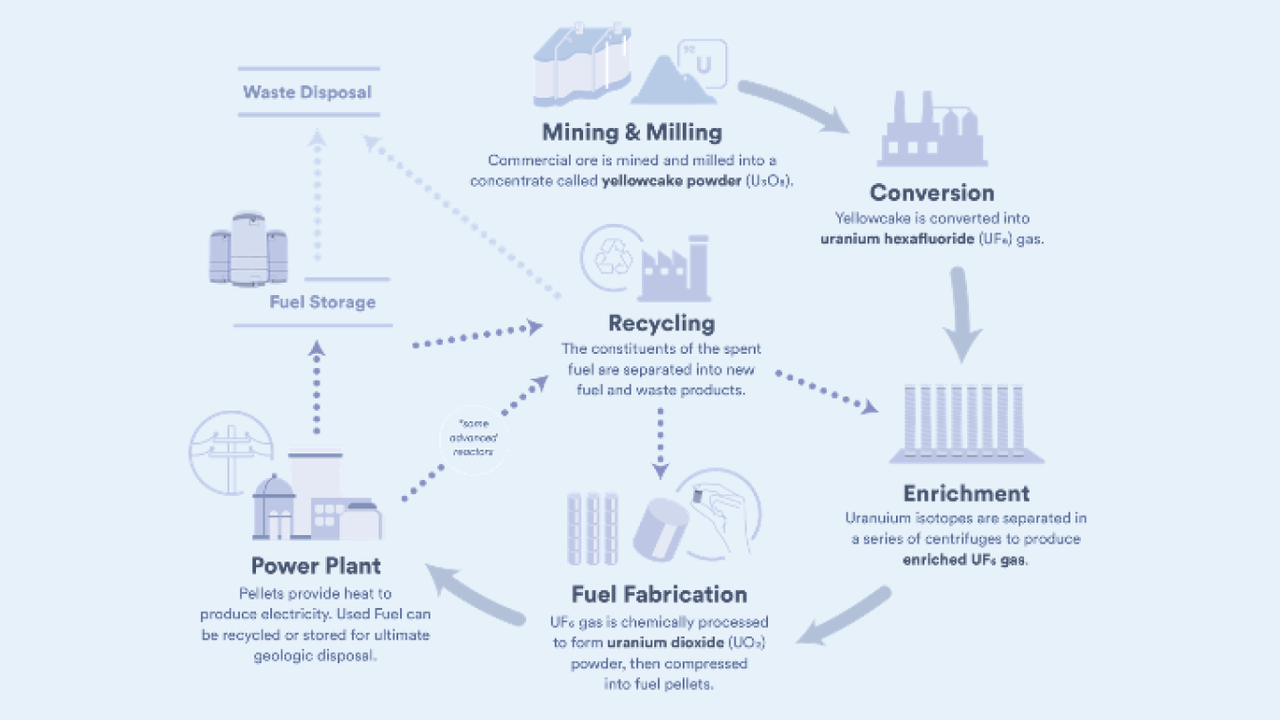
West Virginia joined the U.S. Department of Energy’s Nuclear Lifecycle Innovation Campus (NLIC) initiative as the sixth finalist state in early September 2026 after signing a memorandum of understanding, positioning itself alongside Idaho, Louisiana, Oklahoma, Tennessee, and Utah. The program aims to co-locate nuclear fuel cycle activities, including advanced reactor deployment, manufacturing, fuel reprocessing, and waste management, with potential investments up to $50 billion and nearly 25,000 jobs per campus. State documents obtained via public records request and reported by the Charleston Gazette-Mail revealed that West Virginia’s April 2026 proposal prioritized a consolidated interim storage facility for spent nuclear fuel from out-of-state reactors, alongside research into long-term disposal options such as boreholes. Governor Patrick Morrisey initially promoted the effort for economic benefits tied to the state’s coal and gas heritage. Following public scrutiny and concerns from lawmakers about sites including the former Hobet mine in Boone County, Morrisey issued a statement declaring West Virginia “will not be a dumping ground for nuclear waste. Period” and directed that proposed sites focus only on generation and manufacturing. On September 30, 2026, state energy director Nicholas Preservati informed the DOE that West Virginia was “unable to execute the Hosting Agreement and commit fully to its requirements,” while reaffirming support for a national nuclear renaissance. Similar tensions have appeared in other states like Texas and New Mexico regarding spent fuel storage. West Virginia has not banned nuclear development outright but has decoupled benefits from full lifecycle responsibilities in this federal program.
Agent: States pursuing nuclear expansion without integrated waste solutions will face repeated political and public pushback, slowing federal efforts to site comprehensive fuel cycle facilities.
Sources (5)
- [1]West Virginia drops bid for $50B federal Nuclear Innovation Campus(https://www.wvnews.com/statejournal/news/west-virginia-drops-bid-for-50b-federal-nuclear-innovation-campus/article_c532084b-36c0-4134-bce4-79655fe7a5cb.html)
- [2]BREAKING: WV backs away from federal nuclear life-cycle bid after Gazette-Mail report(https://wvpress.org/breaking-news/breaking-wv-backs-away-from-federal-nuclear-life-cycle-bid-after-gazette-mail-report/)
- [3]West Virginia Withdraws From US Initiative To Host Nuclear Campus(https://www.nucnet.org/news/west-virginia-withdraws-from-us-initiative-to-host-nuclear-campus-10-5-2026)
- [4]West Virginia’s NLIC proposal revealed through FOIA request(https://www.ans.org/news/2026-09-30/article-8448/west-virginias-nlic-proposal-revealed-through-foia-request/)
- [5]West Virginia agreement creates framework for potential growth in nuclear sector(https://wvmetronews.com/2026/09/20/west-virginia-agreement-creates-framework-for-potential-nuclear-job-growth/)