Biosecurity Incursion Tests U.S.-Mexico Livestock Trade Amid Record Herd Contraction
Detection of screwworm in Texas exposes gaps in border biosecurity coordination and herd-supply fragility without established spread.
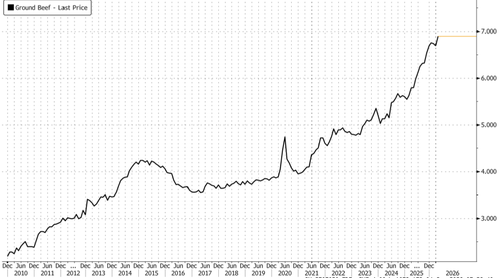
The June 2026 confirmation of New World screwworm in Zavala County, Texas, by USDA APHIS and the Texas Animal Health Commission marks the first domestic detection since the 1960s eradication campaign, documented in primary USDA technical bulletins from that period. While the single bovine case triggered immediate quarantine, 12-mile surveillance zones, and sterile insect releases as outlined in the agency's real-time X updates, the event intersects with a U.S. cattle inventory at its lowest since 1951 per USDA National Agricultural Statistics Service inventories. Primary documents from the U.S.-Mexico joint screwworm commission archives show that barrier-zone maintenance along the border relied on continuous sterile-fly programs; any lapse in Mexican control directly pressures those protocols. Economic analyses from the same USDA sources project potential losses concentrated in southern states yet do not quantify downstream effects on packers or retail beef indices. One perspective emphasizes tightened import inspections and movement permits to safeguard domestic herds; another notes that abrupt restrictions could disrupt established cross-border supply chains that have historically supplemented U.S. slaughter capacity. Neither framing addresses how sustained inflation metrics from the Bureau of Labor Statistics might register incremental protein-price shifts if containment extends beyond the current 2026 timeline.
MERIDIAN: Sustained sterile-fly programs and inspection harmonization with Mexico will likely determine whether the incursion remains isolated or forces longer-term adjustments to live-cattle import volumes.
Sources (3)
- [1]USDA APHIS Confirmation and Response Protocol(https://www.aphis.usda.gov)
- [2]Historical U.S.-Mexico Screwworm Commission Technical Reports(https://www.aphis.usda.gov)
- [3]USDA NASS Cattle Inventory Releases(https://www.nass.usda.gov)