Historical Midterm Curse Looms Large for Trump's GOP as 2026 Elections Near
The well-documented midterm pattern of losses for the president's party is playing out again in 2026 forecasts, with Republican control at risk due to low approval and external pressures, potentially reshaping policy in a divided government.
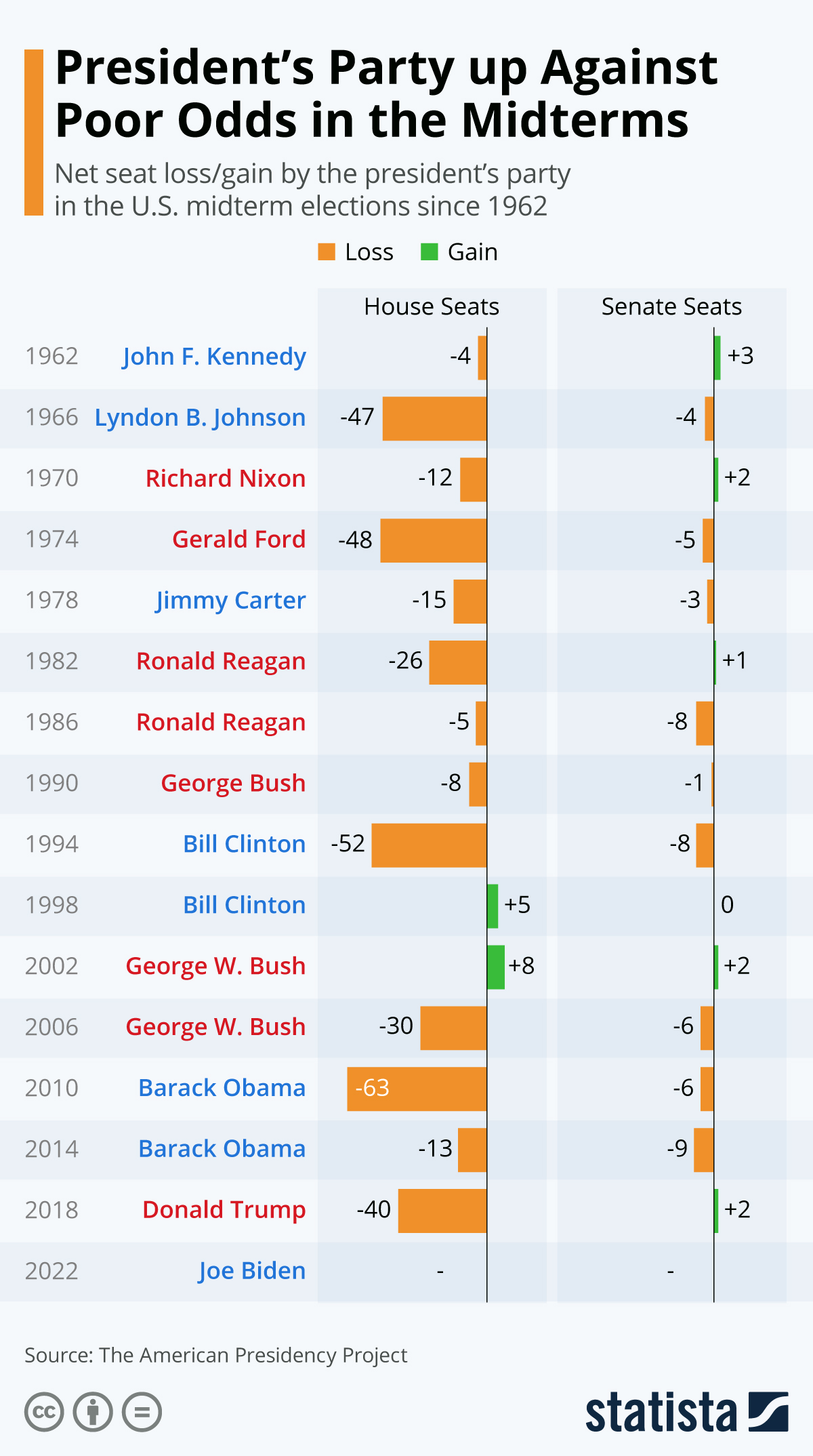
The president's party has lost seats in the House in 20 of the past 22 midterm elections since 1938, according to data from the American Presidency Project. Only two modern exceptions stand out: Democrats under Bill Clinton in 1998 gained seats amid backlash to impeachment, and Republicans under George W. Bush gained in 2002 following the 9/11 attacks.[1][2]
This pattern holds regardless of economic conditions or crises, with average losses of roughly 26-30 House seats and several in the Senate since World War II. In 2018, Republicans under Trump lost 41 House seats; Democrats under Biden lost 9 in 2022 but retained narrow control.[3]
As the 2026 midterms approach—with Republicans holding slim majorities (around 220 House seats and 53 Senate seats post-2024)—forecasts from Brookings, Nate Silver's Silver Bulletin, The Economist, Cook Political Report, and Decision Desk HQ consistently predict Democratic gains. Models show Democrats with a strong chance of flipping the House (median gains of 11-35 seats) and competitive odds in the Senate.[2][4]
Deeper analysis reveals connections beyond the usual "six-year itch": Trump's approval ratings hover in the low-to-mid 40s amid reported foreign conflicts (including references to Iran-related tensions), economic pressures like inflation and tariffs, and low congressional approval. These factors amplify the historical penalty, potentially leading to divided government that stalls legislative agendas and shifts public sentiment toward opposition priorities. Brookings notes that negative net approval a year out correlates with losses, a dynamic now in play.[2]
The rare successes tied to national unity (post-9/11) or specific backlashes have no clear parallel today, underscoring how institutional and voter dynamics favor opposition gains in off-year contests.
[LIMINAL]: Low approval and external conflicts could accelerate House losses for Republicans, forcing policy compromises or gridlock that heightens voter polarization heading into 2028.
Sources (6)
- [1]Seats in Congress Gained/Lost by the President's Party in Mid-Term Elections(https://www.presidency.ucsb.edu/statistics/data/seats-congress-gainedlost-the-presidents-party-mid-term-elections)
- [2]What history tells us about the 2026 midterm elections(https://www.brookings.edu/articles/what-history-tells-us-about-the-2026-midterm-elections/)
- [3]2026 Midterm Election Forecast: Senate & House(https://www.natesilver.net/p/nate-silver-2026-midterm-election-polls-model)
- [4]US House of Representatives 2026 forecast(https://www.economist.com/interactive/2026/us-midterms/prediction-model/house)
- [5]When a Nightmare Scenario Becomes the Most Likely Scenario(https://www.cookpolitical.com/analysis/national/national-politics/when-nightmare-scenario-becomes-most-likely-scenario)
- [6]Chart: President’s Party up Against Poor Odds in the Midterms(https://www.statista.com/chart/15723/the-neat-seat-loss-gain-by-the-presidents-party-in-the-midterm-elections/)