WarMatrix Activation: How USAF's Operational AI Wargamer Accelerates the Hyperwar Era and Erodes Escalation Control
USAF's operational deployment of WarMatrix transitions AI from experimentation to core military planning tool, compressing decision timelines and intensifying the Sino-American AI arms race with serious risks to escalation control and crisis stability.
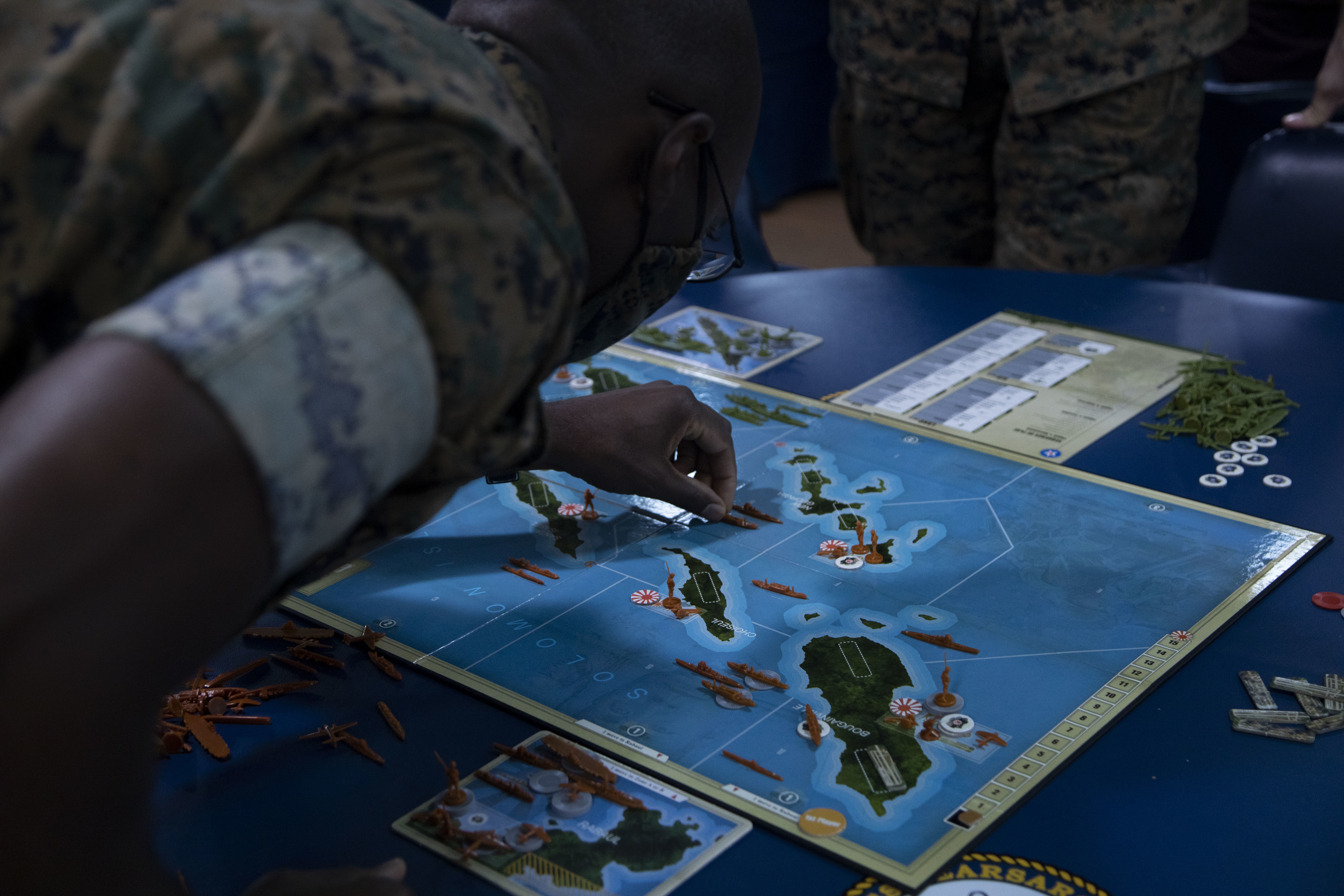
The U.S. Air Force's debut of WarMatrix at the March 27 GE 26 Benchmark Wargame, as reported by Defense News, marks a quiet but decisive inflection point: AI has moved from experimental curiosity to an operational decision-support tool inside real wargaming cycles. While the original coverage dutifully notes the system's ability to run simulations 10,000 times faster than real time, its human-machine teaming language, and the emphasis on transparency, it misses the deeper doctrinal and geopolitical rupture. WarMatrix is not merely faster Excel for planners; it compresses the OODA loop at machine scale, allowing thousands of branching scenarios, physics-based models, and tradeoff matrices to be evaluated between 'game-time moves' that previously took weeks.
This deployment must be read alongside two parallel developments. First, the Pentagon's Chief Digital and Artificial Intelligence Office (CDAO) has been quietly integrating similar machine-speed analytics into the Joint Warfighting Concept, building on lessons from Project Convergence and the Replicator autonomous systems initiative. Second, China's People's Liberation Army has poured resources into 'intelligentized warfare' simulations since its 2017 AI development plan, with state-affiliated labs publishing open-source work on multi-agent reinforcement learning for campaign-level wargames (RAND, 'Military AI in China,' 2024). A 2025 CNAS report on algorithmic escalation further warned that once opposing forces both possess high-speed simulation engines, crisis decision windows collapse from hours to minutes, increasing miscalculation risk.
What the Defense News piece underplays is the tension between the Air Force's reassuring rhetoric ('human judgment remains integral') and the structural reality of speed. When an AI system can generate, audit, and recommend 6,000 realistic 24-hour moves in a two-week event, the incentive to trust its assumptions grows. Traceability and auditability are marketed as safeguards, yet model opacity, training data bias, and the well-documented phenomenon of AI 'hallucinations' in complex systems remain unresolved. The original coverage also fails to interrogate coalition integration: sharing WarMatrix-derived insights with allies introduces new classification and vulnerability vectors that adversaries like Russia and China will actively target.
The broader pattern is clear. Military AI is following the same trajectory as precision-guided munitions and stealth: initial U.S. advantage, rapid peer emulation, then proliferation that ultimately favors the side willing to accept higher automation risk. By making wargaming truly iterative at machine speed, the U.S. has lowered the barrier to testing radical operational concepts (swarm tactics, preemptive strikes, cyber-nuclear coupling) that would be too expensive or politically risky to explore otherwise. The result is an acceleration of the global AI arms race that few outside specialized defense circles are discussing: not merely who has better AI, but whose machines can simulate and commit to conflict pathways faster than the opponent can respond.
The strategic implication is sobering. Traditional escalation ladders assumed human deliberation time. WarMatrix and its inevitable peer counterparts shrink that time toward zero. In future crises over Taiwan or the Baltic, commanders may face AI-generated 'optimal' recommendations backed by millions of simulated runs before diplomats even reach the phone. The age of hyperwar is not arriving with killer robots in the skies; it is arriving with algorithms in the briefing room that make human leaders feel strategically late before the first shot is fired.
SENTINEL: WarMatrix proves the U.S. is embedding AI into live operational planning cycles; China will accelerate its own classified equivalents within 18 months, creating mutual machine-speed simulation environments where crisis escalation may outrun human veto power.
Sources (3)
- [1]US Air Force debuts operational AI wargame system(https://www.defensenews.com/industry/techwatch/2026/04/15/us-air-force-debuts-operational-ai-wargame-system/)
- [2]Military Applications of Artificial Intelligence in China(https://www.rand.org/pubs/research_reports/RRA1424-1.html)
- [3]Algorithmic Escalation: The Risks of AI in Nuclear Crises(https://www.cnas.org/publications/reports/algorithmic-escalation)