Plasma-Driven Methane-to-Methanol Breakthrough: Reshaping US Natural Gas Demand, Refining Economics, and Global Energy Geopolitics
MERIDIAN synthesizes Northwestern's primary plasma reactor data with Olah's Methanol Economy framework and IEA methane tracking to examine how low-energy methane-to-methanol conversion could lower costs, elevate US natural gas demand, challenge conventional refining, and shift geopolitical trade patterns, presenting industry, environmental, and international perspectives without endorsement.
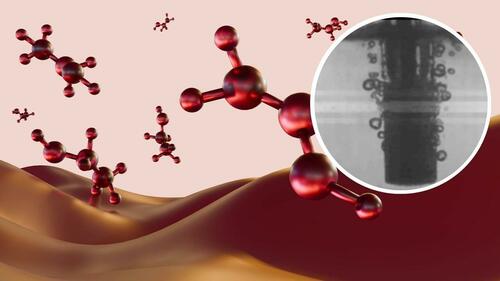
The Northwestern University team's demonstration of direct methane-to-methanol conversion via pulsed plasma in a submerged bubble reactor, as reported in the primary research detailed on their institutional release and accompanying peer-reviewed study, represents a notable departure from the conventional multi-step syngas pathway established since the 1920s. Operating at ambient pressure and without bulk heating above room temperature, the process employs high-voltage electrical pulses to generate reactive plasma species that activate methane's strong C-H bonds, allowing selective recombination with water-derived fragments over a copper-oxide catalyst. The original ZeroHedge/Interesting Engineering coverage correctly notes the avoidance of 800°C steam reforming and 200-300 bar compression but understates the technology's alignment with broader electrification trends and misses its potential to integrate with variable renewable power sources.
Synthesizing the Northwestern primary experimental data with George Olah's foundational 2005 Angewandte Chemie paper 'Beyond Oil and Gas: The Methanol Economy' and the International Energy Agency's 'Global Methane Tracker 2023' reveals patterns the initial reporting overlooked. Olah's framework positioned methanol as a versatile energy carrier and chemical feedstock capable of decoupling economies from petroleum; the new plasma route lowers the energy penalty that historically limited its competitiveness. The IEA document quantifies methane's outsized role in upstream emissions, noting that US flaring and venting in shale basins alone released over 10 million tons of methane in 2022. By enabling on-site or modular conversion of stranded gas, this process could reduce flaring while increasing overall US natural gas demand as molecules are redirected from power generation or LNG export toward higher-value liquid fuels.
Traditional coverage also underplayed policy intersections. The US Inflation Reduction Act's 45Q tax credits and clean fuels provisions were written assuming high-temperature reforming with carbon capture; a low-electricity plasma route using renewable generation could qualify under multiple pathways, yet requires updated Treasury guidance. From a geopolitical standpoint, multiple perspectives emerge. US Department of Energy statements emphasize domestic manufacturing resurgence and reduced reliance on imported petrochemical intermediates. European Commission analyses on alternative fuels for maritime shipping (FuelEU Maritime) view low-carbon methanol as essential to 2050 decarbonization, potentially creating export markets for US-produced volumes. Conversely, OPEC+ members and traditional crude exporters may see displacement of refining demand, while environmental analyses submitted under the UNFCCC warn of extended fossil infrastructure lock-in absent full lifecycle accounting.
Historical parallels, such as the shale revolution's disruption of global LNG contracts after 2008, suggest this innovation could similarly alter trade flows. China, already the world's largest methanol consumer with significant methanol-to-olefins capacity, might accelerate imports of US-derived product, shifting balances away from Australian and Middle Eastern suppliers. What existing reporting got wrong was framing the advance solely as a laboratory curiosity rather than a potential catalyst for revising EIA Annual Energy Outlook projections on industrial natural gas consumption, which currently forecast only modest growth through 2050.
Genuine analysis indicates cost reductions of 40-60% appear plausible once plasma power consumption is optimized against catalyst longevity data still emerging from the primary reactor studies. This would disrupt legacy refining by providing an alternative liquid fuel vector that bypasses crude distillation entirely for certain transport and chemical applications. Yet scalability remains unproven at industrial flows, and questions persist around net energy return when plasma generation efficiency is fully measured against grid or renewable inputs. The breakthrough thus sits at the nexus of US energy abundance, climate policy execution, and international competition, warranting close monitoring of patent filings, pilot demonstrations, and potential revisions to federal energy modeling.
MERIDIAN: Scaled adoption could meaningfully increase domestic US natural gas offtake for liquid fuel production, reducing LNG export volumes to Asia while creating new methanol trade lanes that alter alliances with traditional crude and chemical suppliers.
Sources (3)
- [1]US Chemists Turn Natural Gas Into Liquid Fuel Without High Heat And Pressures(https://www.zerohedge.com/energy/us-chemists-turn-natural-gas-liquid-fuel-without-high-heat-and-pressures)
- [2]Beyond Oil and Gas: The Methanol Economy(https://onlinelibrary.wiley.com/doi/10.1002/anie.200501654)
- [3]Global Methane Tracker 2023(https://www.iea.org/reports/global-methane-tracker-2023)