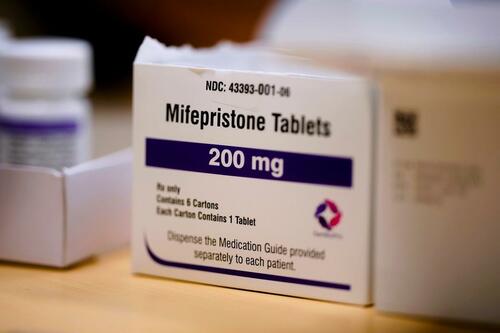
Fifth Circuit's Block on Mailed Mifepristone Deepens Reproductive Inequities and Signals Erosion of Digital Medical Privacy
The Fifth Circuit's May 1, 2026 temporary block on mailing mifepristone reinstates in-person requirements, disproportionately harming marginalized groups reliant on discreet telehealth access while raising alarms about declining medical privacy as digital and remote healthcare options are curtailed in favor of trackable physical visits.
A unanimous three-judge panel of the U.S. Court of Appeals for the Fifth Circuit issued a temporary nationwide order on May 1, 2026, reinstating the FDA's prior in-person dispensing requirement for mifepristone, effectively halting its distribution via mail or pharmacies through telehealth prescriptions. The ruling came in response to Louisiana's challenge, with the state arguing that the Biden-era 2023 expansion of access relied on insufficient safety data and had led to increased illegal abortions and Medicaid costs within its borders. Louisiana Attorney General Liz Murrill hailed it as a 'victory for life,' while the manufacturer Danco Laboratories immediately sought an emergency stay from the U.S. Supreme Court, warning of irreparable harm.[1][2]
Beyond the immediate restriction on medication abortion—which accounts for roughly two-thirds of U.S. procedures—this decision exacerbates longstanding inequalities in reproductive healthcare. Low-income women, rural residents, and those in states with strict abortion bans face disproportionate barriers: lack of transportation, inability to take time off work, childcare issues, and geographic distance from certified providers. Post-Dobbs, mail-order and telehealth options had become critical lifelines, allowing discreet access without traveling to out-of-state clinics often surrounded by protesters or subject to state tracking efforts. The ruling forces a return to visible, in-person encounters that can expose patients to social stigma, family discovery, or documentation in centralized medical records more vulnerable to subpoenas, data breaches, or law enforcement access.[3][4]
Connections often missed in coverage include the broader implications for privacy rights in the digital age. Telehealth abortions relied on encrypted prescriptions and mailed delivery to PO boxes or residences, minimizing digital footprints and third-party data sharing. Reimposing in-person requirements centralizes sensitive health data within clinic systems increasingly interconnected with insurance networks, state databases, and potential surveillance tools. This aligns with ongoing concerns about health data brokers, digital tracking of menstrual apps, and states' attempts to monitor cross-border reproductive care. One overlooked angle is its impact on miscarriage management, where mifepristone is also used, potentially complicating care for non-abortion patients and highlighting how abortion restrictions ripple into general women's healthcare. Disability rights advocates have noted that in-person mandates ignore mobility challenges for disabled individuals seeking timely care.[5]
The case, Louisiana v. FDA, underscores tensions between federal regulatory authority and state sovereignty in a fragmented post-Roe landscape. Legal experts anticipate further appeals, with the Supreme Court likely to weigh in amid parallel FDA safety reviews under the current administration. Critics, including the ACLU and reproductive rights groups, argue the decision prioritizes ideology over decades of evidence supporting mifepristone's safety, while supporters see it as correcting regulatory overreach. As this plays out, the ruling may foreshadow increased judicial intervention in telehealth models across medicine, eroding the privacy and autonomy once promised by remote care technologies.[6][7]
LIMINAL: This temporary block accelerates a shift from discreet digital reproductive autonomy to visible, recordable clinic visits, widening the gap between those who can navigate in-person hurdles and those who cannot, while normalizing state and corporate oversight of private health decisions in an increasingly surveilled digital ecosystem.
Sources (6)
- [1]US court blocks mail-order access to abortion drugs, for now(https://www.reuters.com/world/us-court-blocks-mail-order-access-abortion-drugs-now-2026-05-01/)
- [2]US appeals court blocks mail-order access to abortion drugs(https://www.theguardian.com/world/2026/may/01/us-court-blocks-mail-order-abortion-drugs-mifepristone)
- [3]Court blocks mailing of abortion pill nationwide(https://courthousenews.com/fifth-circuit-blocks-mailing-of-abortion-pill-nationwide/)
- [4]Appeals court blocks FDA rule that allows women to obtain abortion drugs by mail(https://www.cnn.com/2026/05/01/politics/mifepristone-access-fda-ruling)
- [5]Federal appeals court orders nationwide restrictions on common medication for abortion and miscarriage care(https://www.aclu.org/press-releases/federal-appeals-court-orders-nationwide-restrictions-on-common-medication-for-abortion-and-miscarriage-care)
- [6]US Supreme Court asked to restore abortion pill access(https://www.nytimes.com/2026/05/02/us/politics/supreme-court-mail-abortion-pill.html)