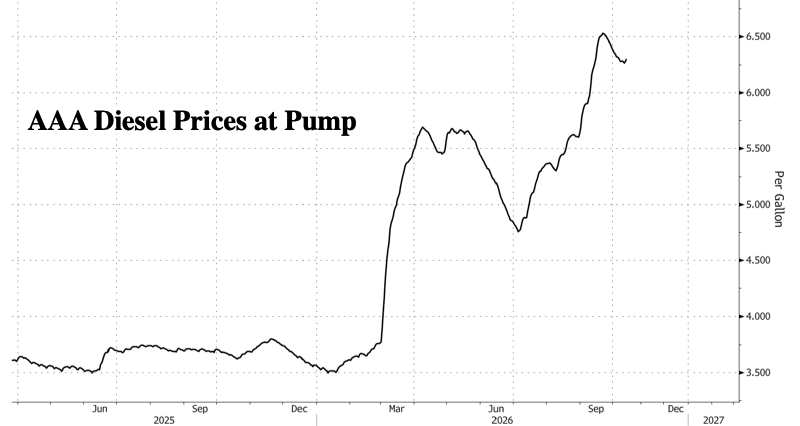
IEA Confirms Persistent Global Diesel Tightness Through 2027 Amid Geopolitical Supply Shocks
Credible IEA analysis and reporting confirm a prolonged diesel supply crunch into 2027 driven by Middle East and Russian disruptions, prompting government interventions including reserve releases and US-Russia supply arrangements, with ripple effects on inflation, demand, and energy policy.
The International Energy Agency's October 2026 Oil Market Report warns that global gasoil and diesel markets will remain tight well into the second half of 2027, with inventory replenishment unlikely before then even as refinery throughputs recover. Prolonged disruptions to Middle Eastern and Russian exports—totaling a combined 1.3 million barrels per day loss in September—have driven counter-seasonal stock draws, leaving markets short of buffer ahead of winter demand.[1][2]
This squeeze stems from a confluence of factors: conflicts affecting the Strait of Hormuz and Gulf exports, Ukrainian strikes on Russian refineries, and resulting export declines of roughly 700,000 barrels per day year-over-year. The IEA notes that while global refinery output is expected to rebound toward year-end, it will not fully offset the accumulated deficit from 2026, potentially requiring further demand destruction with heavy economic costs if Middle Eastern product supplies fail to recover.[3]
Governments are responding with emergency measures. The G7 and IEA members are accelerating releases from strategic reserves, prioritizing up to 100 million barrels of oil and diesel products. The Trump administration has pursued unconventional relief, including a deal with Russia for immediate delivery of over 300,000 metric tons of diesel (with more to follow) and temporary sanctions relief, alongside invoking the Defense Production Act to expand capacity at Delek's Tyler, Texas refinery for additional commercial and military-spec fuel.[4][5]
Beyond immediate pump prices—already exceeding $6 per gallon in parts of the US—the tightness risks broader effects: stoking inflation through higher transport and goods costs, pressuring industrial and agricultural sectors, and contributing to demand reductions that could slow economic activity. These dynamics intersect with longer-term energy transitions, as sustained high distillate prices may accelerate shifts toward efficiency, alternative fuels, or reduced consumption in heavy-duty applications, highlighting vulnerabilities in global refining infrastructure amid geopolitical volatility. Goldman analysts have flagged similar risks extending into gasoline markets if the diesel crunch persists.[6]
IEA: Prolonged diesel tightness will sustain upward pressure on global inflation and logistics costs through mid-2027 unless Middle Eastern exports rebound sharply, potentially forcing accelerated demand-side adjustments in transport and industry.
Sources (5)
- [1]IEA Oil Market Report - October 2026(https://www.iea.org/reports/oil-market-report-october-2026)
- [2]Global diesel shortages could persist well into 2027, IEA says(https://www.reuters.com/business/energy/diesel-shortages-could-persist-well-into-2027-iea-says-2026-10-14/)
- [3]Diesel squeeze to last until 2027 as Iran war disrupts supply: IEA(https://www.cnbc.com/2026/10/14/diesel-deal-oil-price-iea-report.html)
- [4]Moscow Hails Trump Diesel Deal, Promises Direct Exports to U.S.(https://www.themoscowtimes.com/2026/10/14/moscow-hails-trump-diesel-deal-says-exports-will-reach-us-a93977)
- [5]Trump administration to expand a Delek Texas refinery using Defense Production Act(https://www.reuters.com/business/energy/trump-administration-expand-delek-texas-refinery-using-defense-production-act-2026-10-13/)