First Commercial Nuclear-Powered Satellite Launches on SpaceX Mission, Opening New Era for Persistent Space Operations
City Labs' BOHR CubeSat launched July 7, 2026, on SpaceX Transporter-17, becoming the first commercial nuclear-powered satellite using a tritium betavoltaic battery. It received pioneering FAA approval under NSPM-20 with Sandia validation, demonstrating safe, compact nuclear micropower for sunlight-independent space operations and linking commercial, energy, and defense sectors.
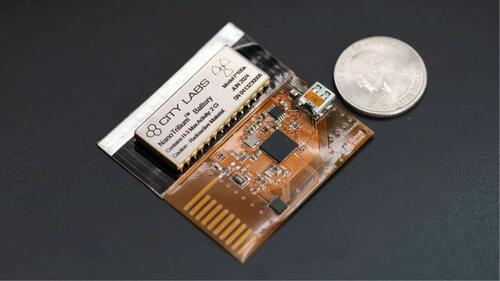
Miami-based City Labs has successfully launched BOHR (Betavoltaic Orbital High-Reliability), the world's first commercial nuclear-powered satellite, aboard a SpaceX Falcon 9 as part of the Transporter-17 rideshare mission on July 7, 2026. The softball-sized 1U CubeSat carries City Labs' proprietary NanoTritium betavoltaic battery, which generates continuous power from the beta decay of tritium rather than fission or solar arrays, enabling persistent payload operations independent of sunlight or battery degradation.[1][2]
The mission marks a regulatory milestone as the first commercial space nuclear payload approved under the Federal Aviation Administration's (FAA) launch approval pathway established by National Security Presidential Memorandum-20 (NSPM-20). City Labs led the safety analysis, independently validated by Sandia National Laboratories, with FAA authorization issued on September 30, 2025. The tritium-based system operates at ultra-low radiation levels with no moving parts, liquid electrolytes, or thermal risks, and the fuel decays harmlessly into stable helium-3.[3][4]
While the satellite's primary bus relies on solar power for routine operations, the nuclear battery powers a dedicated demonstration payload. This hybrid approach validates the technology for applications in deep space, permanently shadowed lunar regions, and long-duration autonomous sensor networks—capabilities aligned with NASA's Artemis program and broader national security interests in resilient space infrastructure.[4]
The launch connects commercial spaceflight with energy innovation and defense priorities, as betavoltaic systems could support persistent operations where traditional power sources fail. Multiple outlets, including Ars Technica, Space.com, and NucNet, have covered the event, highlighting its pathfinder role for future nuclear-enabled spacecraft in civil and security domains.[5][6]
LIMINAL: This demonstration accelerates hybrid power architectures in LEO and cislunar space, enabling defense and commercial constellations with always-on sensors while normalizing regulated nuclear micropower as a standard commercial tool.
Sources (5)
- [1]Miami-based City Labs achieves a first for commercial nuclear power in space(https://arstechnica.com/space/2026/07/miami-based-city-labs-achieves-a-first-for-commercial-nuclear-power-in-space/)
- [2]SpaceX just launched the 1st-ever nuclear-powered commercial satellite(https://www.space.com/space-exploration/launches-spacecraft/spacex-just-launched-the-1st-ever-nuclear-powered-commercial-satellite)
- [3]US Company Launches First Commercial Nuclear Satellite on SpaceX Mission(https://www.nucnet.org/news/us-company-to-launch-first-commercial-nuclear-satellite-on-spacex-mission-7-2-2026)
- [4]City Labs Launches World’s First Commercial Nuclear-Powered Satellite Aboard SpaceX Transporter-17(https://citylabs.net/first-commercial-nuclear-powered-satellite-aboard-spacex-transporter-17/)
- [5]On July 7, a small Miami company called City Labs put a tritium-powered battery... into orbit(https://spacedaily.com/sd-on-july-7-a-small-miami-company-called-city-labs-put-a-tritium-powered-battery-the-size-of-a-pencil-eraser-into-orbit-aboard-a-spacex-falcon-9-its-softball-sized-bohr-cubesat-becoming-th/)