Chinese Refining Contraction Reveals Policy Tensions Between Energy Security and Domestic Demand Signals
Analysis of Chinese refining slowdown examines customs data and policy directives, weighing official energy security claims against market indicators of weakening demand while noting overlooked resale activity and inventory dynamics.
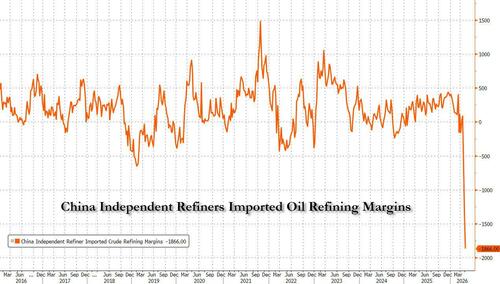
Recent data from China's General Administration of Customs shows April crude imports falling to 8.2 million barrels per day, a level last seen in 2020 amid pandemic disruptions. This decline coincides with independent refiners in Shandong province reducing throughput after margins turned deeply negative under Beijing's price stabilization directives. Primary records from the National Development and Reform Commission indicate these measures prioritize shielding consumers from global price spikes, yet they create inventory overhangs visible in Kpler-tracked floating storage rising 40 percent month-over-month. Multiple perspectives emerge: official statements frame reduced imports as prudent stockpiling adjustments, while market participants interpret the pattern as evidence of softening industrial activity. Cross-referencing with EIA monthly reports on global petroleum balances reveals parallel drops in Chinese product exports, suggesting the contraction is not isolated to crude purchasing. Earlier coverage overlooked how state-owned enterprises have begun reselling cargoes to European buyers, a move documented in shipping manifests that points to regional surplus rather than outright shortage. Geopolitical angles include sustained Iranian crude flows despite sanctions, contrasted with slower drawdowns from strategic reserves held under the National Oil Reserve Center guidelines. Broader patterns link this to post-pandemic demand rebalancing, where policy-driven refining runs mask underlying weakness in transport and manufacturing sectors without confirming outright recessionary signals.
MERIDIAN: Sustained low refining rates may prompt Beijing to adjust import quotas in Q3, altering physical crude flows to Asia without resolving underlying domestic demand softness.
Sources (3)
- [1]China General Administration of Customs Monthly Import Statistics(https://www.customs.gov.cn)
- [2]US Energy Information Administration International Petroleum Monthly(https://www.eia.gov/petroleum)
- [3]National Development and Reform Commission Fuel Pricing Directives(https://www.ndrc.gov.cn)