Tehran's Hormuz Rhetoric Meets Reality: Shipping Persists Amid Escalation and Sanctions Evasion
Iran's latest Hormuz closure declaration amid ongoing (reduced) tanker traffic highlights limited real leverage, embedded in sanctions-driven shadow fleets and Gulf conflict dynamics that allow partial transits despite rhetoric.
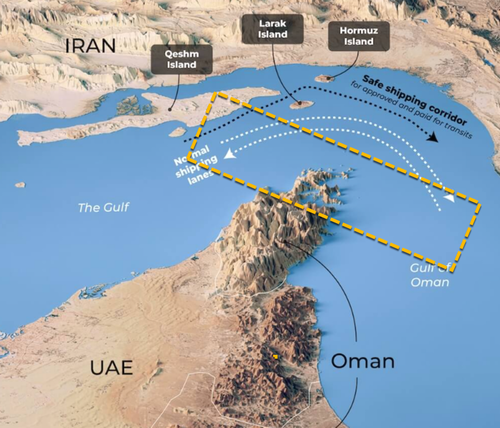
In the latest flare-up of the 2026 Iran-US conflict, Iranian state media and the Islamic Revolutionary Guard Corps (IRGC) announced the closure of the Strait of Hormuz 'until further notice' following strikes on vessels using 'unauthorized routes' and tit-for-tat US airstrikes on Iranian targets. Yet maritime tracking data and reports from the Joint Maritime Information Center (JMIC) indicate commercial traffic, including tankers, continued at reduced levels through both Omani and Iranian-controlled channels, underscoring a persistent gap between Tehran's declarative leverage and operational control over this critical chokepoint.
Multiple outlets, including Reuters and the Associated Press, documented the sequence: Iran struck a Cyprus-flagged container ship near the strait, prompting US Central Command strikes on Iranian coastal and energy facilities (Bushehr, Asalouyeh, Bandar Abbas). Tehran retaliated with missiles and drones targeting US-linked sites in Jordan, Qatar, Kuwait, Bahrain, and Oman, with some interceptions reported by Gulf states. Despite the closure declaration, shipping did not halt entirely, echoing earlier episodes in the crisis where traffic slowed but persisted.
This pattern reveals deeper structural realities. The strait's geography—shared with Oman—limits Iran's unilateral enforcement, as southern routes remain partially viable. Broader context includes years of sanctions driving Iran's reliance on 'shadow fleets' of older tankers using ship-to-ship transfers and flag-hopping to export oil, often bypassing formal chokepoint controls. Historical precedents (e.g., 1980s Tanker War) show similar rhetorical threats yielding incomplete results. Analysts note that while a full closure could spike global oil prices dramatically, partial disruptions have instead accelerated shadow fleet activity and insurance surcharges rather than total shutdowns. Policy coverage often overlooks these quantifiable adaptations, focusing instead on headline escalations without measuring sustained energy flows or evasion networks.
[Maritime analyst]: Tehran's declarations test enforcement capacity but geography and evasion tactics ensure trickle flows continue, muting immediate global energy shocks while sustaining shadow fleet economics.
Sources (5)
- [1]Iran says it hit vessel in Strait of Hormuz, declares route closed; U.S. announces retaliatory strikes(https://www.cbc.ca/news/world/iran-strait-of-hormuz-9.7267163)
- [2]Iran expands attacks on Gulf states after US strikes, says Strait of Hormuz closed(https://www.yahoo.com/news/articles/iran-declares-strait-hormuz-closed-232134793.html)
- [3]Tanker traffic through Hormuz picks up after slower flows due to crossing concerns(https://www.reuters.com/world/middle-east/shipping-slows-after-iran-says-it-has-again-shut-strait-hormuz-2026-06-21/)
- [4]US attacks Iran over ship being hit in Strait of Hormuz; Tehran responds by hitting Arab states(https://apnews.com/article/iran-usa-united-arab-emirates-attack-0764d17c09370a8c5cf1e8197a8878ab)
- [5]US and Iran exchange strikes as Tehran declares strait of Hormuz closed again(https://www.theguardian.com/world/2026/jul/12/us-and-iran-exchange-strikes-as-tehran-again-says-strait-of-hormuz-is-closed)