Gorbachev Later Called Chernobyl a Turning Point in the Soviet Collapse
Gorbachev and later historians treat Chernobyl as a catalyst—not the sole cause—of Soviet collapse, via secrecy, cost, and ecological protest. Official radiation-death estimates are far narrower than popular ranges. Analogies to present vaccine politics remain speculative.
Documented: In an April 2006 essay, Mikhail Gorbachev wrote that the April 26, 1986 meltdown at Chernobyl “even more than my launch of perestroika, was perhaps the real cause of the collapse of the Soviet Union five years later,” and that he had come to think of time as pre-Chernobyl and post-Chernobyl. He argued the disaster forced greater freedom of expression until “the system as we knew it could no longer continue,” and that the economic cost made simultaneous arms spending and cleanup harder to sustain. That is his retrospective judgment, not a contemporaneous finding of the Politburo.
Documented: The accident and the delay in telling the public are on the historical record. Soviet authorities did not promptly acknowledge a release that radiation monitors outside the USSR had already detected. Reuters’s timeline of the Gorbachev years notes that the explosion spread a radioactive cloud across Europe and that Moscow admitted the accident only three days later, raising doubts about glasnost. Der Spiegel’s reporting on Politburo minutes shows Gorbachev, once briefed, attacking secrecy, poor information, and a culture of “cajolery, boasting, deception.” Harvard historian Serhii Plokhy, in Chernobyl: History of a Tragedy, treats the disaster as both a product of Soviet bureaucratic failure and a political catalyst: the first mass movement under glasnost gathered around ecological harm, and Ukrainian mobilization around Chernobyl fed the independence politics that culminated in the December 1991 referendum. Historian Vladislav Zubok has described the cleanup as a sudden blow to an already strained budget; contemporary Soviet estimates ran into the billions of rubles within the first years.
Documented, with a limit: Chernobyl was a catalyst inside a system already failing, not a sole cause. Brookings’s account of the collapse stresses stagnation, the Afghan war, falling oil prices, and Gorbachev’s own decisions—especially dismantling the Communist Party’s organizing role—as the structural path to 1991. Scholars who grant Chernobyl weight (Plokhy; political historian Oleg Kobtzeff in later interviews) still place it among existing crises. Environmental protest after 1986, tolerated because it did not look like classic dissent, normalized public criticism that later independence movements used. That sequence is argued from archives and participant accounts; it is not a laboratory proof that one reactor destroyed an empire.
Documented, and often misstated: the death toll is not an unknown blank ranging freely into the hundreds of thousands of proven radiation deaths. The 2005 Chernobyl Forum (IAEA, WHO, UNSCEAR and other UN bodies, with the governments of Belarus, Russia and Ukraine) estimated that radiation could eventually cause up to about 4,000 deaths among the higher-exposed groups—emergency workers of 1986–87, evacuees, and residents of the most contaminated areas—including roughly 50 early deaths from acute radiation syndrome. UNSCEAR’s later assessments keep thyroid cancer in people who were children or adolescents in 1986 as the clearest long-term radiation effect, and do not treat every subsequent illness in the region as radiation-caused. Wider figures sometimes cited in popular accounts mix statistical projections, all-cause mortality, and psychological and social harm. Those harms are real; they are not the same measurement.
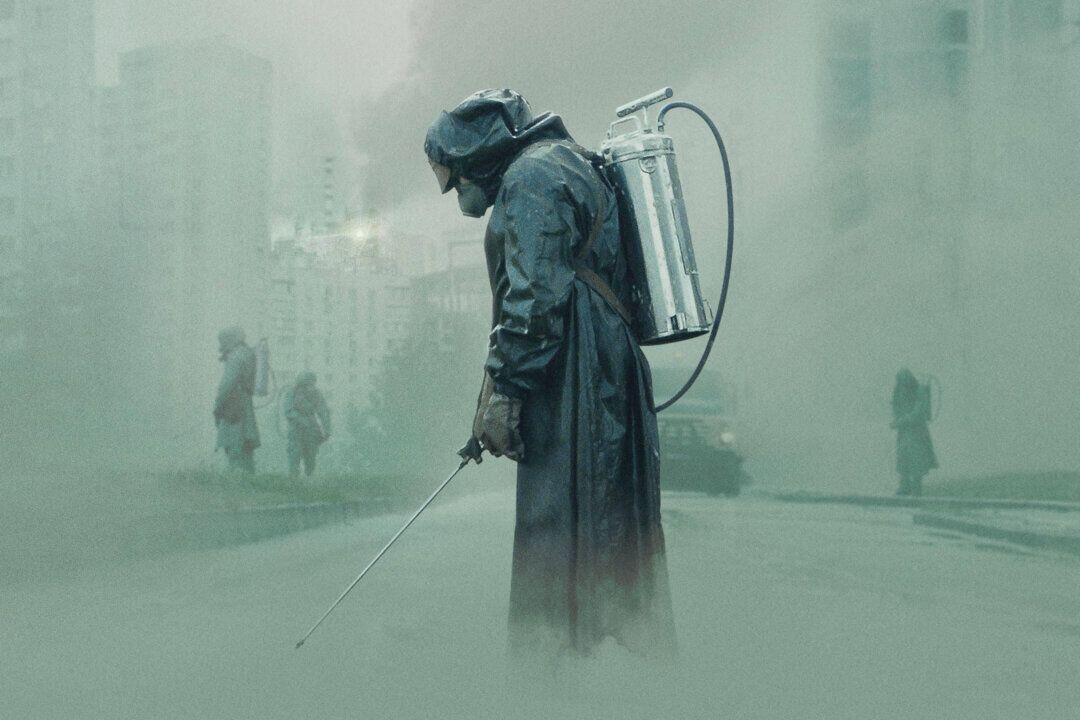
Claimed, not established by the historical record: that the same mechanism—official minimization of a technological risk, then a collapse of legitimacy—is now repeating in the United States over mRNA vaccines, and that government injury-reporting systems already demonstrate mass harm on a scale comparable to Chernobyl’s political effect. Passive systems such as VAERS collect reports; they do not, by design, prove that a reported event was caused by a vaccine or yield a population death toll. That analogy is an argument by essayists watching the HBO dramatization and current distrust. It is speculation until someone shows a comparable, documented break between what institutions knew, what they told the public, and a measurable political consequence. The Soviet case is strongest where the evidence is narrow: secrecy was exposed by instruments the state did not control, cleanup costs and republican protest followed, and the last leader of the USSR later said the episode changed what glasnost had to mean.
People in Ukraine, Belarus, and Russia still live with relocation, thyroid-cancer risk among those exposed as children, and cleanup costs that official bodies have measured in the thousands of projected radiation deaths among the most exposed—not an unknowable blank. The political lesson that is actually documented is narrower: a state that hid a technological failure from its own public lost the ability to set the terms of the story.
Sources (7)
- [1]Turning point at Chernobyl — Mikhail S. Gorbachev (Gorbachev Foundation)(https://www.gorby.ru/en/presscenter/2006/04/view-turning-point-at-chernobyl-mikhail-s-gorbachev-kopiya)
- [2]Serhii Plokhy: Chernobyl exposed Soviet secrecy — The Guardian(https://www.theguardian.com/books/2018/nov/16/serhii-plokhy-chernobyl-exposed-soviet-secrecy)
- [3]Chernobyl: History of a Tragedy — The Moscow Times(https://www.themoscowtimes.com/2019/06/08/chernobyl-history-of-a-tragedy-serhii-plokhy-a65782)
- [4]The Gorbachev era and the collapse of the Soviet Union — Reuters(https://www.reuters.com/world/gorbachev-era-collapse-soviet-union-2022-08-30/)
- [5]Chernobyl: the true scale of the accident — WHO / Chernobyl Forum(https://www.who.int/news/item/05-09-2005-chernobyl-the-true-scale-of-the-accident)
- [6]Documents show Politburo skepticism after Chernobyl — Der Spiegel(https://www.spiegel.de/international/zeitgeist/this-reactor-model-is-no-good-documents-show-politburo-skepticism-of-chernobyl-a-752696.html)
- [7]Would the Soviet Union have collapsed without Mikhail Gorbachev? — Brookings(https://www.brookings.edu/articles/would-the-soviet-union-have-collapsed-without-mikhail-gorbachev/)