Fed Minutes Show Almost All FOMC Participants Back Further Hikes, Flag Opaque AI Debt
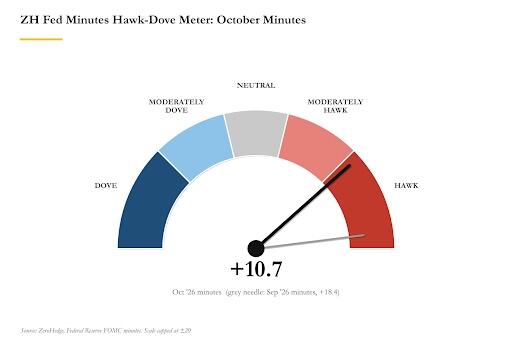
The Federal Reserve's October minutes showed almost all participants expected further rate increases and flagged opaque AI-related debt as a financial stability concern. The combination raises the stakes for credit markets, technology financing, and borrowers already facing higher rates. It also shows policy tightening is being assessed alongside a less transparent buildout of AI-linked debt.
The Federal Reserve released minutes of its October 27-28 policy meeting showing that almost all participants judged further increases in the federal funds target range would likely be appropriate to return inflation to 2 percent. The committee had held rates by a 10-2 vote, with Governor Lisa Cook and Cleveland Fed President Beth Hammack dissenting. Several participants had favored a 25 basis point increase at the meeting, while a few described the hold as a close call. The minutes said hawks saw inflation as too high and policy not sufficiently restrictive, warning delay could force larger tightening later. A couple participants said a hike of more than 25 basis points could be considered if inflation data were unfavorable. Since then, core CPI rose 0.3 percent for a third straight month, and Fed Governor Christopher Waller has publicly discussed a 50 basis point move at the December 9 meeting. Market pricing already reflected additional hikes. The committee's language ties monetary tightening to a newer vulnerability: financing for artificial intelligence investment. Participants discussed the durability of AI spending and financing conditions, while the source account describes opaque AI-related debt as a concern. That links two policy channels. Higher rates can slow credit creation and asset valuations, while concentrated or poorly disclosed debt tied to AI buildout can transmit stress through private credit and banks. The minutes do not quantify the exposure, leaving its scale uncertain. The record matters because it shows a policy path and a risk lens together. Borrowers, banks, insurers, and technology investors face a higher-rate environment that can compress returns and raise refinancing costs. For regulators, the concern is that AI-linked debt may be distributed through nonbank lenders, structured vehicles, or private credit, where disclosure is thinner. The documented divergence is narrow: officials agree on inflation direction but differ on speed, while the financial system adjusts to both tighter policy and opaque capital flows.
It affects borrowers, banks, insurers, and technology investors by tying higher rates to a less transparent AI credit buildout, increasing refinancing and financial stability pressures.
Sources (2)
- [1]Original source(https://www.zerohedge.com/markets/hawkish-minutes-show-almost-all-fomc-members-see-more-hikes-fed-frets-over-opaque-ai-debt)
- [2]Federal Reserve FOMC calendar and documents(https://www.federalreserve.gov/monetarypolicy/fomccalendars.htm)