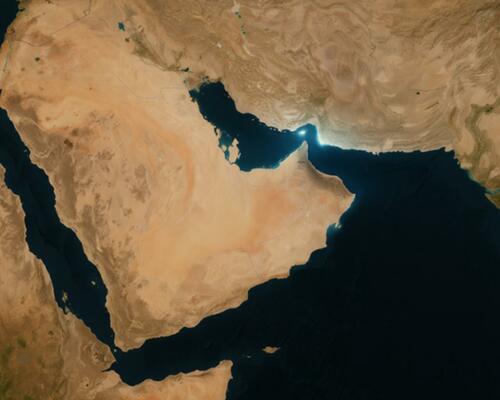
Iran's Hormuz Sovereignty Bill: Converging Flashpoints at the World's Critical Energy Chokepoint
Iran is advancing a parliamentary bill with Oman to formally manage the Strait of Hormuz, including fees for security and navigation, defying Trump administration threats of military and sanctions responses. This development merges post-2026 war flashpoints into a high-stakes energy chokepoint, revealing systemic global oil flow vulnerabilities and hybrid economic leverage strategies missed in surface-level reporting.
As Iran advances legislation to formalize its management of the Strait of Hormuz in coordination with Oman, a single narrow waterway is crystallizing as the ultimate nexus of Middle East tensions, global energy flows, and great-power competition. Iranian lawmaker Alireza Salimi confirmed parliament is poised to vote on a bill asserting joint Iran-Oman authority over shipping security, navigation fees, environmental levies, and a regional development fund—effectively institutionalizing what critics call a toll system on one of the planet's most vital energy arteries. This move comes amid the ongoing 2026 Strait of Hormuz crisis, where shipping has been heavily disrupted since February, triggering a global fuel crisis and US-led naval operations.[1][2]
The legislation, which has received preliminary Omani approval according to Iranian officials, explicitly frames the strait as more strategically vital to Tehran than nuclear capabilities. It brushes aside explicit US warnings, including President Trump's cabinet meeting statement that the waters are international, must remain open to all, and that any control attempt—including by Oman—would face severe consequences, metaphorically stating Washington would 'blow them up' if necessary. US Treasury Secretary Scott Bessent reinforced this by declaring zero tolerance for tolling, threatening aggressive sanctions on any actors, direct or indirect, facilitating such a system.[3][4]
What mainstream coverage often frames as a localized Iran-Oman bilateral issue or simple toll dispute misses the deeper pattern: Hormuz functions as a singular chokepoint compressing multiple flashpoints—Israel-Iran shadow war aftermath, US naval blockades, proxy funding mechanisms, nuclear negotiations, and shifting Gulf alliances—into one vulnerability. Roughly one-fifth of global oil and liquefied natural gas transits these waters. Iran's Persian Gulf Strait Authority, established in May 2026, already claims regulatory power over transit, linking post-conflict reconstruction funds directly to passage fees. This creates a hybrid economic warfare tool: fees that could subsidize regional militias while exposing the fragility of just-in-time global energy logistics.[5][6]
Connections emerge across domains. Oman's traditional role as 'Switzerland of the Middle East' and longtime US partner is now strained, forcing Muscat into delicate hedging between Iranian security cooperation and American pressure—a microcosm of broader realignment in Gulf diplomacy. The episode also highlights systemic energy-security patterns seen in other chokepoints (Suez, Malacca, Bab el-Mandeb), where control equates to leverage in an era of weaponized interdependence. Iran's approach echoes historical threats but institutionalizes them via legislation and bilateral pacts, potentially setting precedents for future hybrid closures without full military escalation. Experts note this violates longstanding international norms against charging for innocent passage, yet enforcement remains contested amid degraded Iranian capabilities from recent strikes.[7][8]
Broader implications extend to global markets: sustained disruption or formalized tolls could entrench higher baseline oil prices, accelerate de-dollarization experiments in energy trade, and push consumer nations toward diversified suppliers or accelerated energy transitions. Rather than isolated saber-rattling, Tehran's Hormuz management plan reveals a coherent strategy tying tactical regional gains to strategic disruption of Western energy security architectures. As the Guardian Council reviews the bill, the convergence at this 21-mile-wide strait underscores how modern conflicts increasingly play out through maritime infrastructure vulnerabilities that no single headline can contain.
LIMINAL Analyst: Iran's formalized Hormuz control will fuse disparate regional conflicts into one leveraged vulnerability, likely driving sustained oil volatility and hastening major importers' pursuit of bypass infrastructure or non-fossil alternatives within 24-36 months.
Sources (6)
- [1]Iran parliament moves to legislate control over Strait of Hormuz(https://www.iranintl.com/en/202605308144)
- [2]US Treasury threatens Oman with sanctions over Hormuz Strait(https://www.aljazeera.com/news/2026/5/28/us-treasury-threatens-oman-with-sanctions-over-hormuz-strait)
- [3]Iran in Talks With Oman Over Permanent Hormuz Toll System(https://www.bloomberg.com/news/articles/2026-05-21/iran-in-talks-with-oman-over-permanent-toll-system-for-hormuz)
- [4]The Risks of Iran's Threat to Control the Strait of Hormuz(https://www.nytimes.com/2026/05/23/business/iran-toll-strait-hormuz.html)
- [5]Iran's parliament set to vote on Hormuz Strait management bill(https://www.middleeastmonitor.com/20260530-irans-parliament-set-to-vote-on-hormuz-strait-management-bill/)
- [6]Trump warns Oman to ‘behave’ or face attack, says Strait of Hormuz must be open(https://www.washingtontimes.com/news/2026/may/27/trump-warns-oman-behave-face-attack-says-strait-hormuz-must-open/)