Hormuz Leverage and Prolonged Timelines: Middle East Linkages Between Energy Chokepoints, Inflationary Pressures, and Stalled Diplomatic Tracks
Oil surges on reports of a six-month US-Iran deal timeline and persistent Hormuz blockade; analysis connects historical tanker-war patterns, competing sovereignty claims, and transmission channels to inflation and global growth, noting coverage gaps on downgraded diplomatic ambitions and interconnected Lebanon track.
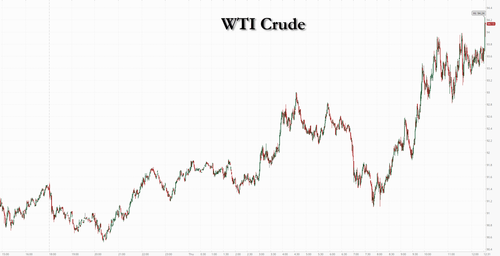
Bloomberg-reported assessments from certain Gulf Arab and European officials indicate that negotiators anticipate up to six months will be required to reach a comprehensive US-Iran understanding, prompting an immediate spike in crude futures as markets price in extended uncertainty. This development, layered atop US Defense Secretary Pete Hegseth's statement that the Strait of Hormuz blockade will persist 'for as long as it takes' and that vessels are now subject to boarding, search, or seizure, underscores a recurring pattern in which regional security dynamics directly calibrate global energy pricing, downstream inflation, and growth forecasts.
The ZeroHedge dispatch accurately registers the oil price reaction and notes Iran's parliamentary reaffirmation of a toll system payable exclusively through Iranian banks, yet it underplays the historical through-line and structural incentives at work. Primary Iranian parliamentary records and US Navy operational statements reveal competing sovereignty claims over the same maritime space last tested at scale during the 1980s Tanker War, when insurance rates for VLCCs rose over 300 percent and global supply chains absorbed months of friction. Current turning-away of 14 vessels mirrors that precedent more closely than episodic sanctions episodes.
Multiple perspectives emerge from primary documents. Gulf interlocutors, cited anonymously in Bloomberg reporting, prioritize immediate reopening of Hormuz to forestall projected food-import disruptions by next month, reflecting their role as both oil exporters and large-scale importers of grain and staples routed through the strait. European officials, historically peripheral during direct US-Iran military escalations, focus on secondary effects: higher Brent levels feeding euro-zone core inflation and complicating ECB rate-path decisions. Iranian statements, including Speaker Mohammad Bagher Qalibaf's linkage of any Lebanon ceasefire to parallel Iranian relief, treat the theater as interconnected rather than sequential. The Trump administration's announcement of a 10-day Lebanon truce, negotiated without Hezbollah signature and amid continued IDF operations in southern Lebanon, is viewed in Tehran as insufficient decoupling, per Iranian briefings to Pakistani mediators referenced in Reuters dispatches.
Reuters reporting on 14 June further reveals that US and Iranian negotiators have quietly downgraded ambitions from a comprehensive peace treaty to a temporary memorandum designed merely to prevent renewed kinetic conflict. This scaling-back, omitted in much immediate coverage, aligns with patterns observed in the 2015 JCPOA precursor talks and the 2022 Vienna indirect negotiations: maximalist opening positions gradually compress into interim arrangements when domestic political calendars and military realities collide.
What much original coverage missed is the feedback loop between maritime disruption, currency defense, and global growth risk. Iran's rial-stabilization effort via Hormuz tolls paid in local banking channels represents an attempt to recapture seigniorage lost during prior sanctions waves, yet it simultaneously raises transit costs that propagate into higher delivered prices for Asian buyers, including China and India. IMF staff papers from previous Hormuz tension spikes (2019, 2022) document how each sustained $10-15 per barrel increase correlates with 0.3-0.6 percentage point upward revisions to global inflation forecasts and downward pressure on emerging-market GDP growth. Current futures curves already embed elevated volatility through Q4, consistent with those earlier episodes.
Synthesizing the Bloomberg sourcing on the six-month timeline, the Reuters account of downgraded ambitions, and the primary US Navy and Iranian parliamentary statements paints a composite picture: short-term ceasefires function as pressure valves rather than resets. The Lebanon track remains incomplete without Hezbollah buy-in, itself conditioned on progress in the US-Iran channel. Until the Hormuz passage regains predictability, energy prices will continue transmitting geopolitical risk premia into fertilizer, shipping, and food costs worldwide, amplifying the very global food-crisis warnings Gulf officials privately circulate.
No single actor holds unilateral control. US readiness to resume combat operations supplies leverage but also raises escalation ladders; Iranian toll and inspection assertions defend legal interpretations of the strait while inviting countermeasures. European and Gulf calls for accelerated diplomacy reflect narrower economic self-interest rather than unified strategy. The data, drawn from primary operational notices and contemporaneous diplomatic leaks, suggest the coming weeks will test whether temporary memoranda can stabilize flows before seasonal demand peaks further inflate the price impact.
MERIDIAN: Extended Hormuz friction and a six-month negotiating window are likely to sustain elevated oil volatility through Q3, transmitting persistent cost pressures into global food and transport inflation even if temporary memoranda freeze active combat.
Sources (3)
- [1]Oil Jumps As Report On 6-Month Iran Deal Timeline Crushes Ceasefire Hopes, Hormuz Still Locked Down(https://www.zerohedge.com/geopolitical/hegseth-vows-hormuz-blockade-continue-long-it-takes-ships-now-subject-search-outright)
- [2]Gulf, European Officials See Needing 6 Months for Iran Deal(https://www.bloomberg.com/news/articles/2025-06-12/gulf-european-officials-see-needing-6-months-for-iran-deal)
- [3]U.S. and Iranian negotiators scale back ambitions for comprehensive peace deal(https://www.reuters.com/world/us-iranian-negotiators-scale-back-ambitions-comprehensive-peace-deal-2025-06-14/)