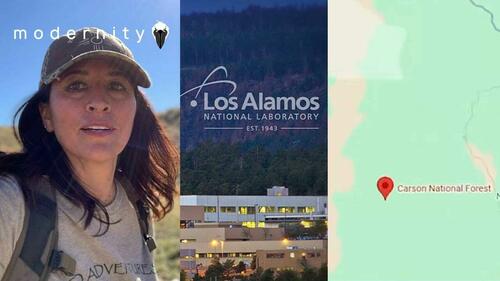
Unresolved Remains of Los Alamos Administrative Assistant Highlight Security Gaps at Nuclear Lab
Discovery of Melissa Casias's remains in Carson National Forest after 11 months, with undetermined cause despite nearby handgun, highlights potential security and personnel vulnerabilities at Los Alamos National Laboratory amid a reported pattern of similar cases among defense-linked scientists. Mainstream sources confirm facts but largely avoid deeper ties to LANL's history of secrecy and threats.
The discovery of Melissa Casias's remains in New Mexico's Carson National Forest nearly 11 months after her disappearance has drawn renewed attention to personnel security at Los Alamos National Laboratory (LANL), the historic birthplace of the Manhattan Project and a cornerstone of ongoing U.S. nuclear weapons stewardship. A hiker found the remains on May 28, 2026, in the McGaffey Ridge area; New Mexico State Police and the Office of the Medical Investigator confirmed the identification, noting a handgun recovered nearby. As of early June 2026, both the cause and manner of death remain undetermined pending further anthropological and forensic analysis.[1][2]
Casias, 53, an administrative assistant at LANL whose husband also worked at the facility, was last seen walking eastbound on State Road 518 near Ranchos de Taos on June 26, 2025. She had left her phones, identification, and other belongings at home after factory-resetting at least one device. Family members described unusual behavior that morning, including a claim of forgetting her security badge. Reports indicate she had lost her own security clearance amid financial difficulties, with relatives and private investigators attributing her actions to personal stress rather than external foul play. New Mexico State Police have described the case as appearing voluntary.[3][1]
Yet the circumstances raise uncomfortable questions about vulnerabilities at one of America's most sensitive installations. LANL maintains the nation's nuclear stockpile and conducts classified research; even administrative personnel can encounter sensitive information or observe patterns tied to restricted programs. A former FBI official previously cited in coverage warned that administrative assistants in high-clearance environments "would basically be in the know" and have been targeted in the past. The remote forest location—within a zone where active restoration crews began work in December 2025—has also prompted scrutiny of the thoroughness of initial searches.[4]
This case does not exist in isolation. NewsNation and other outlets have connected Casias's vanishing to a broader pattern of deaths and disappearances involving scientists, engineers, and defense contractors tied to NASA, nuclear propulsion, aerospace, and JPL-related work. By spring 2026, at least 11 such cases had drawn national coverage, including the February 2026 disappearance of retired Air Force Maj. Gen. William Neil McCasland shortly after directives on classified file releases. While President Trump has publicly stated the incidents are unconnected, online speculation and independent tracking have persisted, with some labeling multiple prior cases as suspicious "suicides." Mainstream reporting acknowledges the cluster but stops short of endorsing conspiracy narratives.[5]
LANL's history adds context often glossed over. From the Manhattan Project through Cold War espionage scares, the Wen Ho Lee controversy, and repeated concerns over insider threats and data security, the laboratory has long navigated tensions between scientific openness and stringent classification. The Casias case—occurring against renewed pushes for UFO/UAP disclosure and releases of classified files—invites examination of whether financial, psychological, or external pressures on cleared personnel represent an under-addressed insider risk vector. If an administrative employee with proximity to sensitive operations can vanish for nearly a year before remains surface under unresolved conditions, it suggests potential weaknesses in welfare monitoring, threat assessment, and rapid-response protocols for staff at premier nuclear sites.
As the medical investigator's office continues its work, the episode underscores that security at facilities like LANL extends beyond perimeter fences and clearances to the human element. Without transparent resolution, such incidents risk fueling distrust and speculation that obscures genuine vulnerabilities in America's nuclear enterprise.
[LIMINAL]: Unresolved high-clearance personnel cases at nuclear labs like LANL risk compounding insider vulnerabilities that adversaries could exploit, demanding clearer independent oversight beyond official dismissals of broader patterns.
Sources (6)
- [1]New Mexico identifies remains of nuclear lab employee missing for a year(https://www.theguardian.com/us-news/2026/jun/01/melissa-casias-remains-found-new-mexico)
- [2]Remains of Los Alamos National Laboratory employee missing for nearly a year found in New Mexico forest(https://www.cnn.com/2026/06/01/us/melissa-casia-body-found-new-mexico)
- [3]Remains found in New Mexico national forest ID'd as those of Melissa Casias, who vanished last year(https://www.nbcnews.com/news/us-news/remains-new-mexico-melissa-casias-vanished-rcna347794)
- [4]Human remains found southeast of Taos identified as missing LANL worker(https://www.santafenewmexican.com/news/local_news/human-remains-found-southeast-of-taos-identified-as-missing-lanl-worker/article_7683a0e0-016b-4dcf-bd82-9f61211b0470.html)
- [5]Remains of missing New Mexico lab staffer found in national forest(https://www.newsnationnow.com/missing/remains-missing-los-alamos-employee-found/)
- [6]Melissa Casias' body found in New Mexico a year after disappearance(https://www.bbc.com/news/articles/c0723mr8j3po)