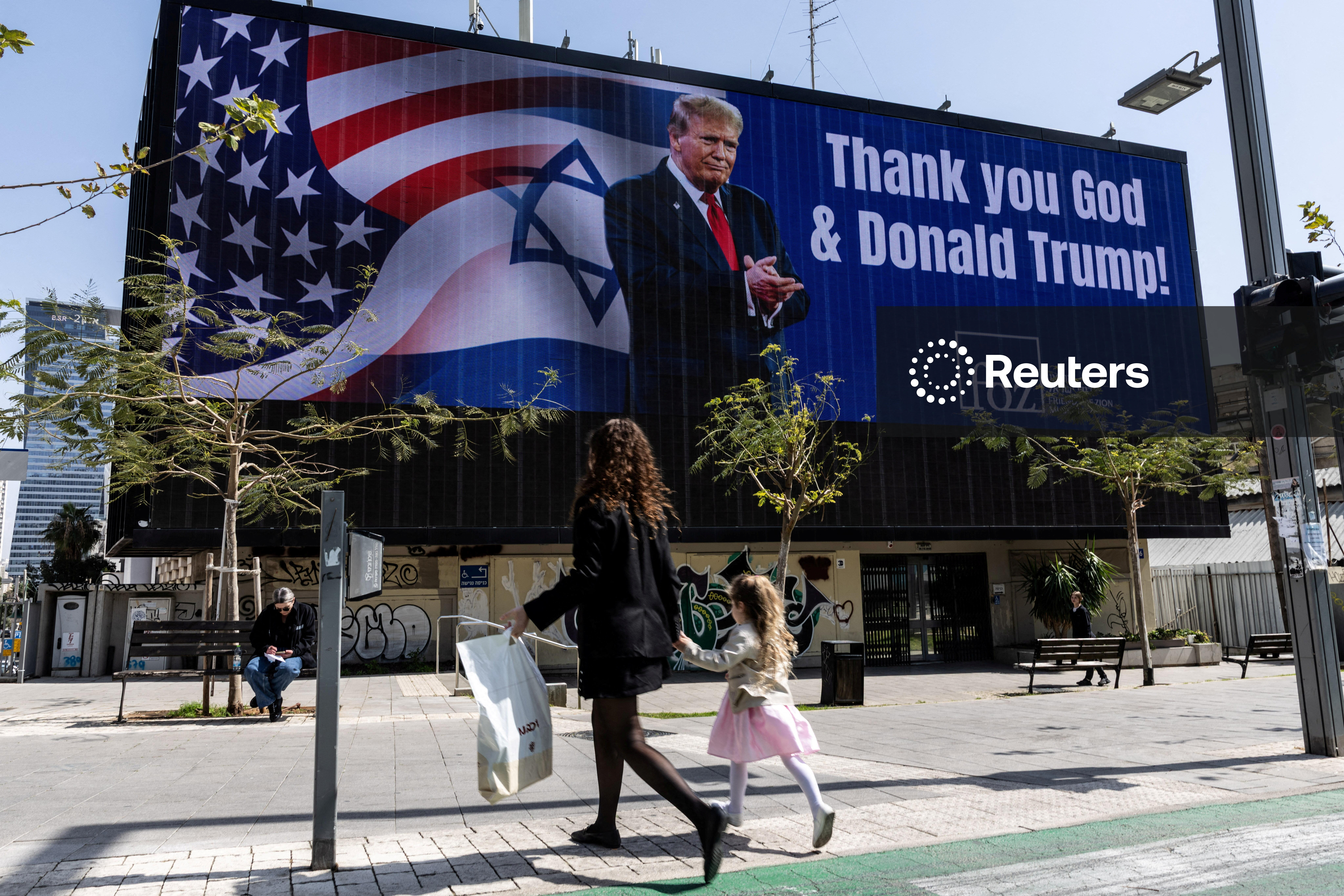
Senate GOP Endorsement of Trump Israel Arms Deals Signals Irreversible US Commitment, Fueling Middle East Escalation Spiral
Senate Republicans blocked Democratic efforts to halt Trump administration sales of bombs and bulldozers to Israel, revealing entrenched bipartisan fractures, precedent-setting bypass of oversight, and heightened risks of regional arms races and prolonged multi-front conflict with Iranian proxies.
The U.S. Senate's rejection of Bernie Sanders' resolutions to block $450 million in military sales to Israel—$295 million for militarized D9 Caterpillar bulldozers and $152 million for 12,000 BLU-110 1,000-pound unguided bombs—represents far more than routine alliance management. It reveals a structural deepening of American political commitments under the Trump administration that prioritizes unconditional support over restraint, with direct consequences for conflict duration, arms proliferation, and U.S. strategic positioning across the region.
While the Defense News report correctly captures the vote tallies (59-40 and 63-36 against the measures) and the modest Democratic defections, it misses critical context on precedent and second-order effects. The Trump administration's early use of emergency declarations to bypass standard congressional review—echoing the 2019 Saudi emergency arms transfers documented in Congressional Research Service Report R44716—normalizes executive unilateralism in weapons exports. This diminishes Congress's already limited leverage under the Arms Export Control Act and sets conditions for future sales without meaningful civilian protection conditions.
The bulldozers, frequently characterized as engineering assets, are in practice armored vehicles central to Israel's 'roof knocking,' tunnel neutralization, and punitive home demolition campaigns across Gaza, the West Bank, and southern Lebanon. SIPRI's 2025 Arms Transfers Database shows U.S. equipment now constitutes over 78% of Israeli major weapons imports, a concentration that has grown 27% since 2023. A concurrent RAND Corporation study on regional arms dynamics (2025) warns this one-sided supply is prompting compensatory procurement by Iran from Russia and China, including precision-guided munitions and air defense systems, creating a classic security dilemma.
Original coverage also understates the intelligence and legal exposure dimensions. These 'dumb' bombs, when paired with Israeli AI-assisted targeting systems that have drawn scrutiny from the International Court of Justice provisional rulings in 2024-2025, entangle the United States in potential complicity claims under the Geneva Conventions. The bipartisan tradition that once insulated Israel policy is visibly eroding: the increased Democratic support for restrictions compared to July's votes (from 24-27 to 36-40) foreshadows policy whiplash should party control shift, undermining the consistency adversaries rely upon when calculating risk.
Synthesizing the Senate action with IISS Strategic Survey 2025 and a Brookings Institution analysis on U.S.-Israel relations under renewed Trump leadership, a clear pattern emerges: American policy is locking in escalation dominance rather than deterrence. By removing red lines on munitions and demolition equipment amid active operations against Iranian proxies, the U.S. is effectively subsidizing a prolonged multi-theater campaign. This reduces Israel's incentive to pursue political off-ramps and increases the likelihood of direct Iranian retaliation against U.S. bases or maritime assets.
The deeper risk lies in feedback loops. Unfettered arms flows encourage Israeli operational tempo that sustains recruitment for Hamas, Hezbollah, and Houthis. Meanwhile, perceived U.S. blank-check support complicates American diplomacy with Gulf partners seeking normalized relations without being dragged into Iran-Israel shadow wars. What conventional reporting frames as partisan solidarity is, through a security lens, the entrenchment of a high-risk strategy that narrows strategic choices for the next decade, with rising probability of direct U.S. force commitments by 2027.
SENTINEL: Republican solidification of unconditional arms flows to Israel under Trump removes critical off-ramps, likely accelerating Israeli operations against Iranian proxies while provoking enhanced Russian-Chinese resupply, elevating risks of direct U.S. military entanglement before 2027.
Sources (3)
- [1]Senate Republicans back Trump military sales to Israel(https://www.defensenews.com/news/pentagon-congress/2026/04/16/senate-republicans-back-trump-military-sales-to-israel/)
- [2]SIPRI Yearbook 2025: Arms Transfers and Military Expenditure(https://www.sipri.org/yearbook/2025)
- [3]RAND Corporation: Arms Race Dynamics in the Middle East 2025(https://www.rand.org/pubs/research_reports/RRA2900-1.html)