Space Economy Growth: Government Priorities and Alliance Structures in US-China Competition
Government budget records and alliance frameworks show space sector expansion driven by defense priorities and rival lunar programs, with US allocations exceeding combined peers and coalitions differing in membership.
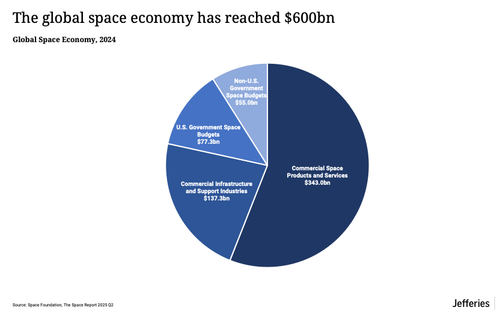
The SpaceX IPO coincides with documented increases in US federal space allocations, as outlined in the FY2025 Space Force budget justification, which shows a 40% rise tied to integrated missile defense architectures. Primary records from the Department of Defense indicate Space Force funding at approximately $40 billion alongside Missile Defense Agency allocations nearing $10 billion, exceeding NASA's enacted $24.4 billion. China's 15th Five-Year Plan, released through official State Council channels, designates space capabilities as a strategic domain without PPP-adjusted expenditure figures publicly detailed. The Artemis Accords, hosted on NASA.gov with 67 signatories as of late 2024, establish voluntary principles for lunar activity, contrasting with the China-Russia International Lunar Research Station framework limited to under 20 partners per bilateral statements. Japan’s Basic Plan on Space Policy, updated under the Cabinet Office, lists space among priority sectors. Jefferies analysis projects overall market expansion from $600 billion to $1.8 trillion by 2035, yet primary budget documents reveal defense categories outpacing commercial infrastructure growth rates. Coverage centered on individual firms overlooks how codified executive orders on space superiority and multi-layered sensor networks create sustained procurement pathways across contractors. Perspectives from US alliance documents emphasize coalition scale, while PRC planning documents stress independent timelines for crewed landings by 2030 and outposts by 2035, without direct comparison metrics.
MERIDIAN: Official budget and planning documents indicate defense-driven space spending will sustain multi-year growth trajectories separate from IPO events, while coalition sizes reflect differing approaches to lunar coordination.
Sources (3)
- [1]Space Force Budget Justification FY2025(https://www.spaceforce.mil/Portals/1/Documents/FY25%20Budget%20Justification.pdf)
- [2]Artemis Accords(https://www.nasa.gov/specials/artemis-accords/)
- [3]Outline of the 15th Five-Year Plan(https://www.gov.cn/zhengce/content/2021-03/13/content_5592681.htm)