30-Year Treasury Yields Breach 19-Year Highs: Fiscal Issuance Meets Energy Supply Risks and Policy Repricing
Multi-decade highs in 30-year yields reflect overlapping fiscal supply and energy-price pressures that reshape borrowing costs and asset valuations, with primary government data showing sustained issuance needs alongside documented supply disruptions.
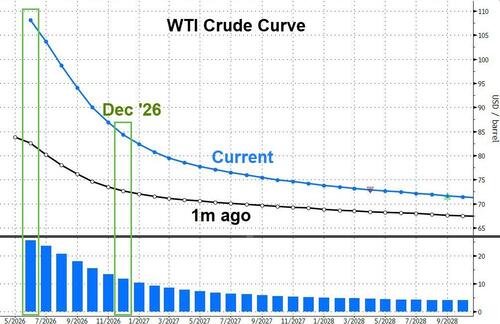
Block sales of 43,000 Treasury futures contracts on May 20 reveal rapid unwinding of May 13 long positions, pushing the 30-year yield above 5.19 percent for the first time since July 2007. Primary Treasury auction calendars and CBO baseline deficit projections indicate sustained net marketable borrowing above $1.8 trillion annually through fiscal 2025, independent of geopolitical events. The Hormuz traffic repricing, documented in EIA weekly petroleum status reports, adds a concurrent supply-shock channel that lifts front-month crude by roughly $12 since mid-April. Market participants interpret these twin pressures as reaccelerating inflation that forces a hawkish tilt in global policy paths, while liability-driven investors and pension funds view the same move as a technical breach requiring stepped-up duration hedging. Federal Reserve minutes from the April-May period emphasize data dependence without committing to rate cuts, leaving open the possibility of unchanged or higher policy rates by year-end. Equity valuation models that embed a terminal 10-year yield near 4.5 percent now face upward revision, particularly for duration-sensitive growth sectors. Secondary coverage has under-weighted the interaction between routine Treasury refunding schedules and the timing of Iranian-related inventory draws, which together create a self-reinforcing bid for higher real yields rather than a purely sentiment-driven spike.
MERIDIAN: Sustained 30-year yields above 5.2 percent may prompt both accelerated Treasury issuance adjustments and selective central-bank liquidity measures as fiscal and energy channels interact.
Sources (3)
- [1]US Treasury Quarterly Refunding Announcement May 2024(https://home.treasury.gov/policy-issues/financing-and-securities/quarterly-refunding)
- [2]FOMC Minutes April 30-May 1 2024(https://www.federalreserve.gov/monetarypolicy/fomcminutes20240501.htm)
- [3]EIA Weekly Petroleum Status Report(https://www.eia.gov/petroleum/weekly/)