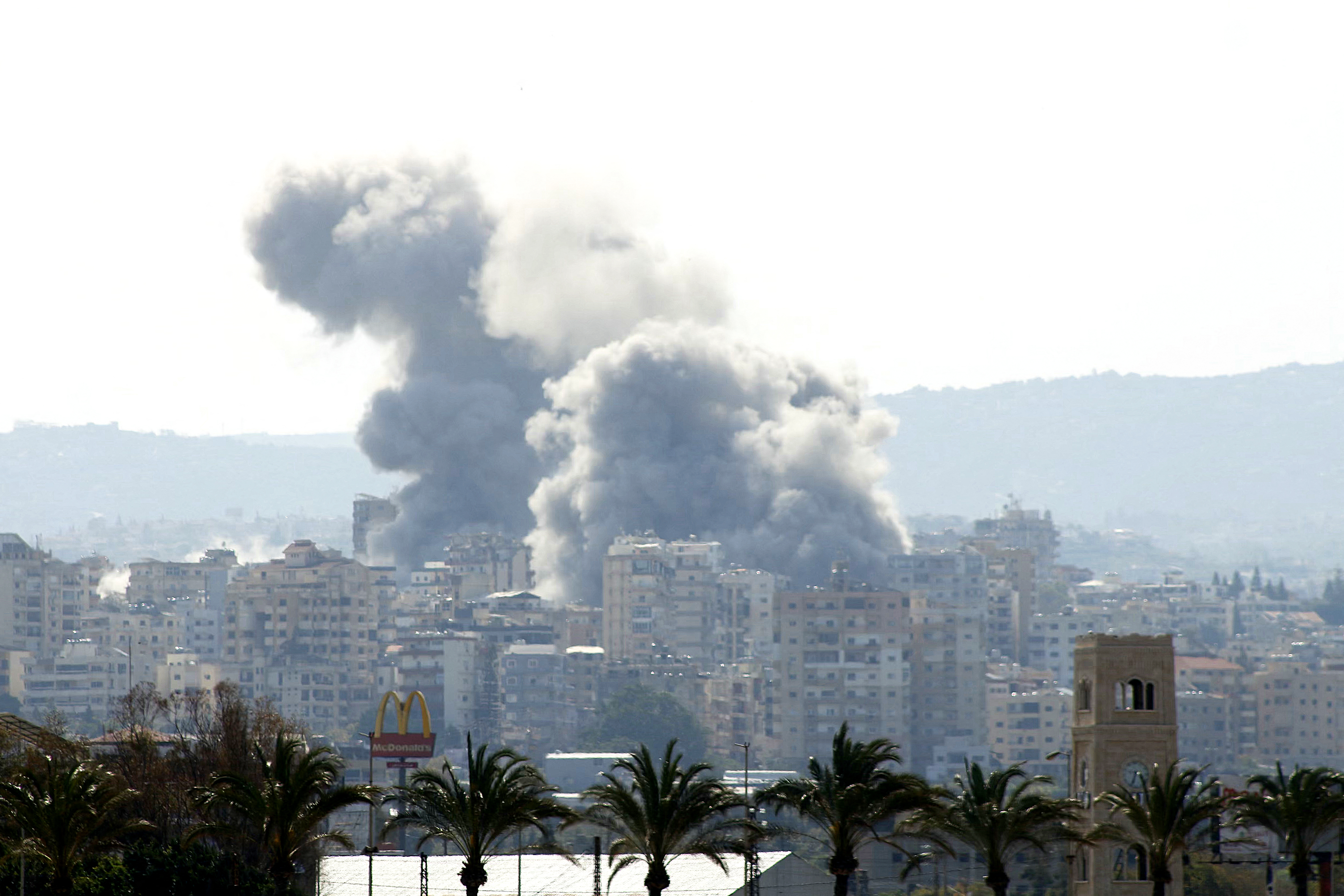
Washington's Shadow Diplomacy: Israel-Lebanon Talks as Tactical Pause or Strategic Miscalculation
U.S.-mediated Israel-Lebanon ambassadorial talks in Washington represent indirect diplomacy aimed at framework-building rather than immediate ceasefire. Analysis reveals recurring patterns of Israeli buffer zone strategy, Hezbollah's structural resistance to state authority, and Washington's compartmentalization efforts. Original coverage misses historical precedents, sequencing risks, and potential for accelerating Lebanese state erosion amid fragmented domestic actors.
While Defense News accurately reports the commencement of U.S.-brokered ambassadorial talks in Washington on April 14, 2026, its coverage remains tethered to immediate battlefield snapshots and official statements, missing the deeper structural dynamics and historical patterns that define this moment. These are not truly 'direct' talks but classic U.S. indirect mediation, echoing the successful yet limited 2022 maritime border agreement that similarly routed communications through American diplomats. What the original piece underplays is the deliberate compartmentalization strategy by Washington: isolating the Lebanon theater from the collapsed U.S.-Iran track and the unresolved Gaza front to prevent a synchronized multi-axis escalation.
The Israeli military's continued operations around Bint Jbeil and stated ambitions toward the Litani River are not new territorial maximalism but a recurrence of doctrines seen in the 1978 Operation Litani, the 1982 invasion, and the 2000 withdrawal. Israel's security establishment views the current campaign as unfinished business from the post-October 7, 2023 realignment, seeking to enforce UNSCR 1701 by creating facts on the ground that Lebanese state forces have proven incapable of upholding for nearly two decades. Hezbollah's opposition to the talks, correctly noted in the source, reflects not mere intransigence but a rational assessment that any framework excluding Iranian security guarantees threatens its raison d'être as the 'resistance' axis's forward deterrent.
Synthesizing reporting from a recent International Crisis Group brief (January 2026) and a CFR contingency planning memo, several critical elements emerge that mainstream coverage consistently glosses over. First, President Joseph Aoun's emphasis on Lebanese state sovereignty masks the reality of a hollowed-out polity: the Lebanese Armed Forces remain dependent on U.S. aid yet structurally unable to confront Hezbollah's estimated 30,000 rockets and extensive tunnel network without triggering civil war, a pattern established since the 2006 conflict. Second, the source fails to connect the timing of these talks to Israel's domestic political calendar. With hardliners in Netanyahu's cabinet explicitly advocating a permanent buffer zone, the diplomatic track serves as political theater to manage tensions with the Biden administration's successor while consolidating gains in southern Lebanon.
The quiet mechanics overlooked by most reporting involve the precise sequencing: Washington is reportedly pushing a phased model beginning with monitored Israeli withdrawal corridors, integration of LAFA units into border villages, and a face-saving Hezbollah stand-down that stops short of full disarmament. This represents an evolution from the failed 2006 ceasefire terms. However, analysis of proxy behavior patterns since the Syrian civil war suggests Tehran retains escalation dominance through remaining Hezbollah cadres and Palestinian Islamic Jihad assets in Lebanon. The original coverage's assertion that Lebanon seeks to 'reassert state authority' is optimistic framing; in reality, these talks risk exposing and deepening the schism between the fragmented Lebanese government and non-state actors, potentially accelerating state collapse rather than arresting it.
At this volatile juncture, the talks function less as a genuine de-escalation mechanism than as a pressure valve within a protracted conflict system. Historical precedent from U.S. mediation in the region (Oslo, Camp David, the maritime deal) shows such frameworks often codify temporary equilibria that favor the stronger military actor while deferring core disputes. Should the framework talks collapse without a ceasefire, as Israeli officials have signaled, expect intensified operations north of the Litani accompanied by Iranian proxy activation across other theaters. The overlooked variable remains the resilience of Hezbollah's command structure post-decapitation strikes; decentralized cells may prove more resistant to diplomatic signaling than centralized leadership ever was. Ultimately, these Washington sessions reveal the limits of U.S. leverage in a Middle East where great power competition with China and Russia has further eroded Washington's ability to enforce outcomes.
SENTINEL: These talks are a tactical U.S. pause button rather than a strategic off-ramp. Without addressing Hezbollah's residual command-and-control and Iran's veto power, Israel will likely lock in territorial gains up to the Litani while Beirut's fragile government fractures further under domestic pressure.
Sources (3)
- [1]Lebanon and Israel talks set to begin in Washington(https://www.defensenews.com/global/mideast-africa/2026/04/14/lebanon-and-israel-talks-set-to-begin-in-washington/)
- [2]Containing the Israel-Hezbollah War(https://www.crisisgroup.org/middle-east-north-africa/east-mediterranean-mena/lebanon/containing-israel-hezbollah-war)
- [3]The Israel-Lebanon Maritime Border Deal: A Model for Diplomacy?(https://www.cfr.org/article/israel-lebanon-maritime-border-deal-model-diplomacy)