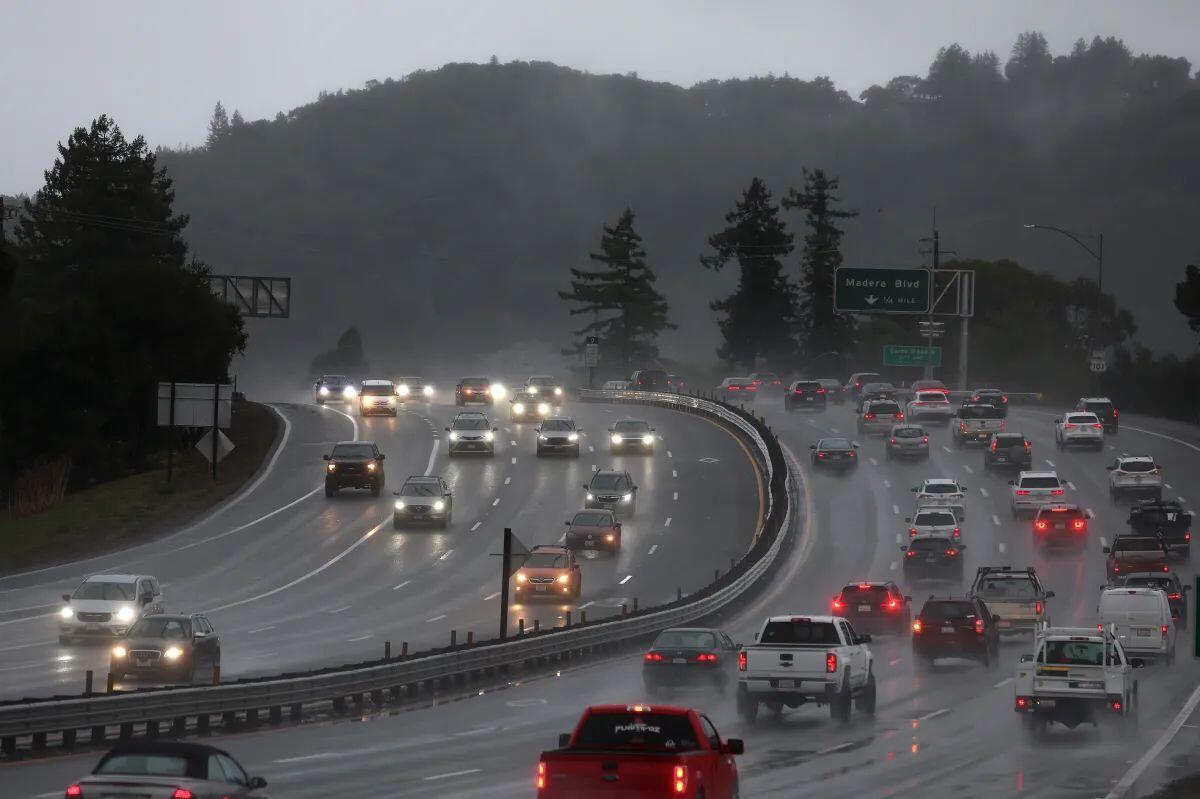
Forecasters warn coastal storms could snarl Thanksgiving travel from Florida to Maine and on the West Coast
AAA and INRIX have published near-record Thanksgiving travel volumes and specific peak-congestion windows, while FOX Weather, CNN, and The Weather Company forecast coastal storms that could add rain, wind, flooding, and mountain snow to those trips. The weekend East Coast system is the firmer threat; the Thanksgiving Day storm and parade-balloon risk remain track-dependent forecasts.
Documented: AAA projects 81.5 million Americans will travel at least 50 miles from home between Tuesday, Nov. 24, and Monday, Nov. 30, 2026, including 72.9 million by car and about 5.96 million on domestic flights. That is a slight dip from last year’s record, not a collapse in demand. Traffic firm INRIX, whose timing tables AAA uses, identifies Sunday, Nov. 29, as a peak return day, with the worst congestion nationally between noon and 8 p.m. local time, and advises leaving before 11 a.m. Outbound peaks are expected Tuesday afternoon and Wednesday afternoon. Some large metros, including New York, Washington, Boston, and Los Angeles, are flagged for peak delays that could more than double normal travel times on the worst corridors.
Claimed, as a forecast, not as an event that has already happened: On Nov. 20, FOX Weather’s forecast center said storms could disrupt travel across more than 20 states. In the East, a system is expected to develop along the Southeast coast around Wednesday and spread heavy rain and gusty winds from the Mid-Atlantic into the Northeast on Thanksgiving Day, with possible accumulating snow near the Great Lakes and in higher terrain of the interior Northeast and New England. On the West Coast, FOX Weather said trouble could start Tuesday, with heavy rain and gusty winds that could delay flights at Seattle-Tacoma and San Francisco, flash-flood risk in already wet parts of California, and snowfall measured in feet in parts of the Sierra Nevada, Cascades, and Rockies. The Weather Company described a similar pattern—West Coast systems Tuesday and Wednesday, and a potential major Northeast storm on Thanksgiving—while stressing that details this far out are not locked in.
A separate, nearer-term coastal storm is already better documented. CNN reported that eastern Florida had already seen more than 16 inches of rain in places, with flooding and water rescues, and that rain and gusty winds were expected to spread north along the coast into the weekend and early next week, overlapping early Thanksgiving travel on I-95 and at Southeast and Northeast airports. The National Hurricane Center, cited by AccuWeather reporting, gave an offshore low a modest chance of becoming a tropical or subtropical cyclone; the center also said strong winds, dangerous surf, rip currents, and coastal flooding were expected along the Southeast and Mid-Atlantic regardless of whether the system is named. CNN and The Weather Company both treat a second East Coast storm around Wednesday into Thanksgiving as a separate, lower-confidence feature. FOX Weather’s own language for the Friday-through-Sunday return is conditional: the biggest question is whether disturbances “rapidly intensify into major storm systems.”
Documented rule, conditional impact: New York City regulations, in place since the late 1990s after balloon incidents, bar full-size Macy’s Thanksgiving Day Parade balloons if sustained winds exceed 23 mph or gusts exceed 34 mph. Whether those thresholds are reached on Thursday is a forecast, not a fact. Rain alone does not cancel the parade.
Speculated: That Sunday will be a “travel nightmare,” that parade balloons will be grounded, and that mountain snow will be measured in feet at specific passes. Those outcomes depend on storm track and intensification that multiple outlets say are still uncertain. What is actionable now is narrower: the travel volume and the INRIX timing windows are published; the weekend coastal storm is already affecting Florida and is forecast to move up the seaboard; and both coasts are in a stormy pattern that airlines and highway agencies can change with little notice. Travelers on I-95, at major coastal hubs, and over Sierra, Cascade, and Rockies passes should recheck forecasts the day before departure rather than treating a Nov. 20 outlook as a fixed itinerary.
About 81.5 million people are already booked into a Thanksgiving travel week, most of them by car, and published traffic data says Sunday afternoon is one of the worst windows to be on the road. Coastal storms now in the forecast can turn those ordinary delays into flooded highways, grounded flights, and, if winds hit long-standing city limits, a constrained Macy’s parade.
Sources (5)
- [1]FOX Weather: East and West coastal storms forecast to disrupt Thanksgiving travel(https://www.foxweather.com/weather-news/thanksgiving-east-west-coastal-storms-travel)
- [2]CNN: Storm flooding Florida to disrupt East Coast Thanksgiving travel(https://www.cnn.com/2026/11/20/weather/florida-floods-storm-kyle-thanksgiving-travel-climate)
- [3]The Weather Company: Thanksgiving week storms on both coasts(https://weather.com/2026/11/20/holiday/thanksgiving/thanksgiving-travel-weather-forecast-us-storms)
- [4]AAA Northeast: Thanksgiving travel forecast of 81.5 million(https://magazine.northeast.aaa.com/daily/newsroom/aaa-forecasts-slight-drop-in-thanksgiving-travel-ending-three-year-record-streak/)
- [5]Axios: INRIX best and worst Thanksgiving drive times(https://www.axios.com/2026/11/20/thanksgiving-traffic-best-worst-times-drive)